Tuesday, May 29, 2018

25 Sales Questions to Qualify Your Leads Faster

You can attribute a lot of great relationships to perfect timing.

When you connect with the right person at the right time, everything seems to just fit.

This is especially true for sales.

Connecting with your lead too early means they won’t be ready to buy.

But if you wait too long, they may have moved on to a competitor.

Unfortunately, finding the perfect time to connect with a customer is complicated.

It’s not like you can set a timer that will ding when they’re ready to connect.

Instead, you need to qualify your leads yourself.

It’s always important to connect with your leads to figure out where they’re at in the buying process.

Asking questions, getting feedback, and building a relationship can set you on the right path for being available when they’re ready to buy.

To help you qualify your sales prospects, here are 25 questions you should be asking.

Establishing the relationship

The relationship is the most important part of closing a sale.

When it comes time to make a purchase, your consumers aren’t going to buy from just anyone.

Instead, they’re going to turn to someone they know they can trust. Unfortunately, only 3% of people trust marketers and salespeople.
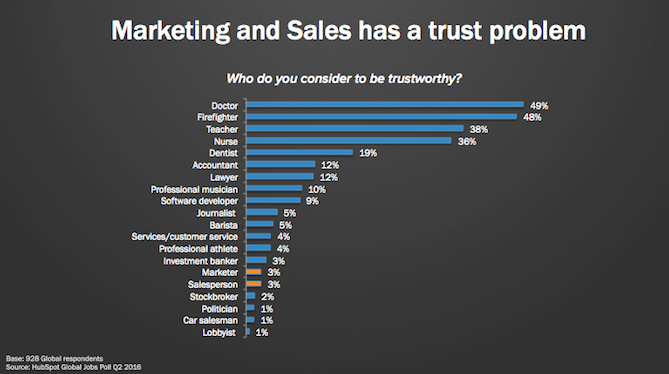
marketing and sales have a trust problem

In order to be there when they’re ready to buy, you want to work on establishing the relationship early on.

To lay the foundation for the business relationship you’re creating, here are a few questions you should be asking.

1. How did you hear about us?

Sales leads should be coming to you from a variety of angles.

In fact, buyers typically consult almost five different information sources when deciding on products, vendors, or services.
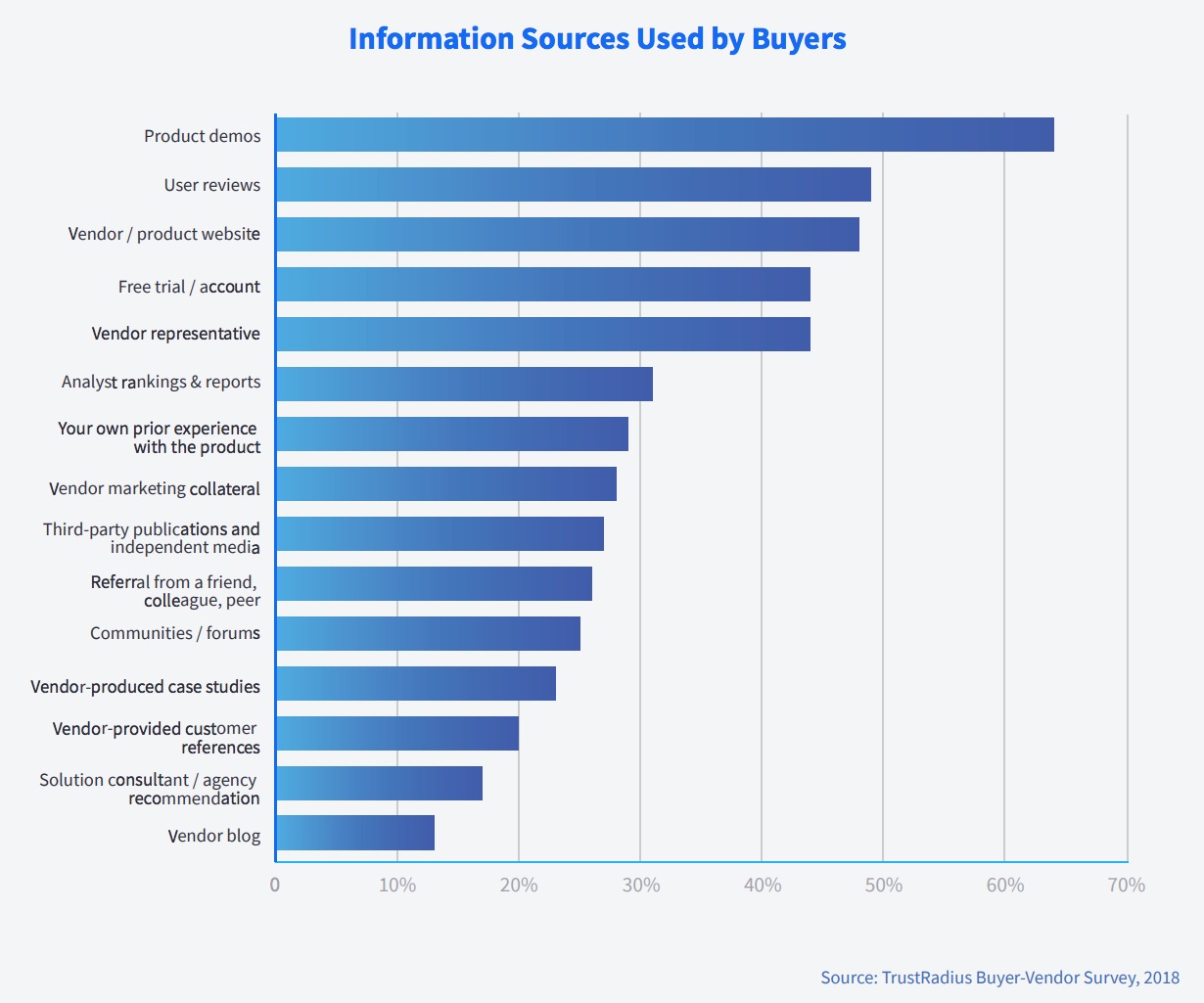
information sources used by buyers

Some may find you on social while others may have participated in a webinar that you hosted.

Referrals are another popular way new sales prospects tend to find potential vendors or agencies.

Customers or clients who come to you by referral actually have a 16% higher lifetime value.

Knowing how the lead found you can help you understand the best way to move forward.

If the lead is a referral, this can strongly influence their willingness to work with you.

You can leverage that relationship to win over the lead and convince them to purchase.

If they found you through a more traditional lead generation source, you can get a better understanding of what aspect of your brand interests them.

2. What are you looking for in a new vendor or agency?

Ask your leads what their “dream” vendor or agency would look like.

Have them point out three key factors that they’d expect out of a new vendor or agency.

For buyers, the most important factors of a new pairing are adapting to fit processes, scaling with growth, and providing measurable results.
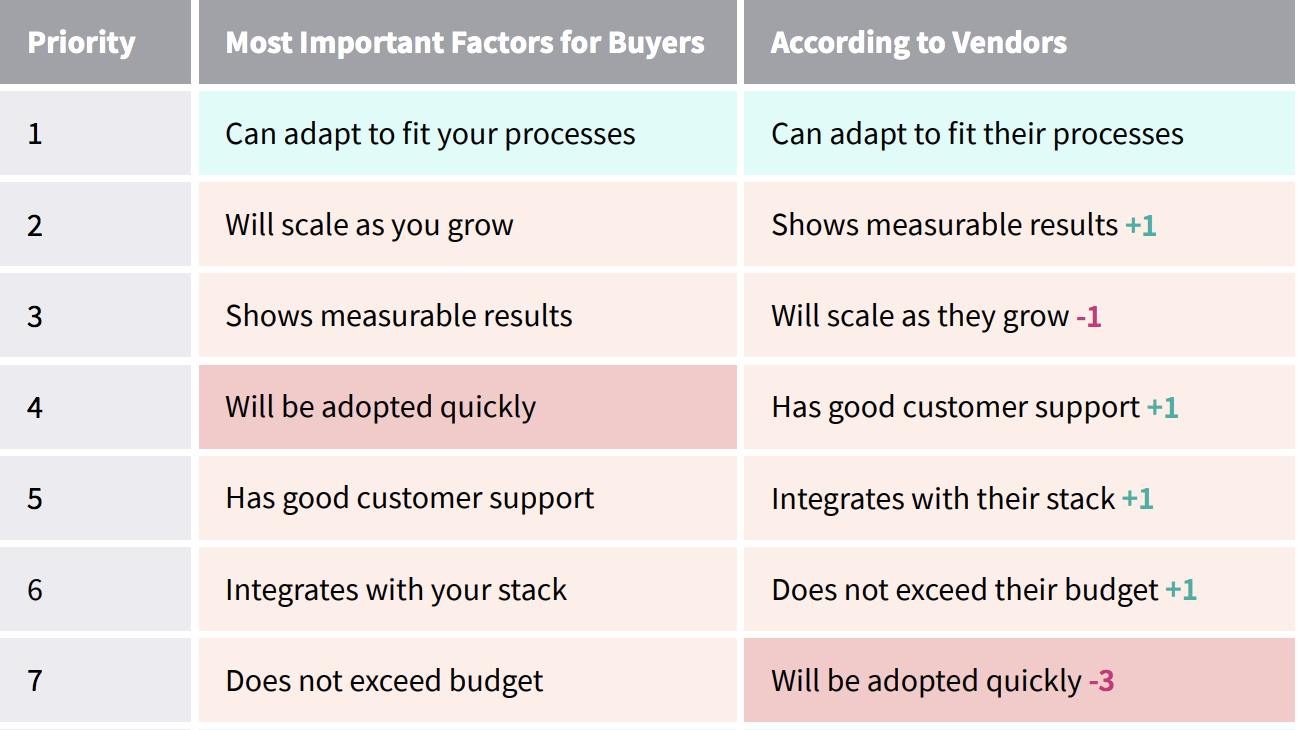
priority mismatch in sales

While you may not fit this description perfectly, it can help you better understand what they’re really looking for.

Then, think of ways that your company fits the description they’ve created.

However, don’t try to trick them into believing that you’re exactly what they’re looking for – especially if you’re missing some key components.

Instead, be upfront and honest about what you can provide and how you can help.

This kind of honesty can do wonders for the relationship you’re creating.

3. What attracted you to our brand?

Try to find the characteristics or qualities that made you stand out to your prospect.

Whether it’s your unique branding or your pricing strategy, understanding why the lead likes your brand can help you better understand where their priorities lie.

Knowing their favorite points about you can also give you an angle to focus on during your conversations.

For example, say that a lead mentions that your pricing attracted them to you the most.

This means they’re probably sticking to a tight budget.

As you nurture the lead into making a purchase, you can focus conversations around pricing and budgets.

This personalized approach can convert leads faster and help the prospect feel like you’re taking care of them.

4. How can we best help you make this decision?

Every sales prospect has something holding them back.

Whether it’s budget or not being entirely sure what they need, you want to find the hurdle that’s preventing them from pulling out their credit card.

Finding where that obstacle is can help you qualify your leads faster.

Ask your sales prospect what you can tell them about or offer them that will help them say “yes” to a deal.

Remember to listen to their unique challenges and fears.

Even if you’re trying to qualify multiple leads at once, you want each to feel special.

5. Who else is part of this decision-making process?

On average, 6.8 people are part of the B2B decision-making process.

Unless you’re working with very small business, you’ll probably need to convince more than just one person that you’re the right agency or vendor for them to work with.

However, 90% of individuals stated that there is usually one member who pushes the decision their way.
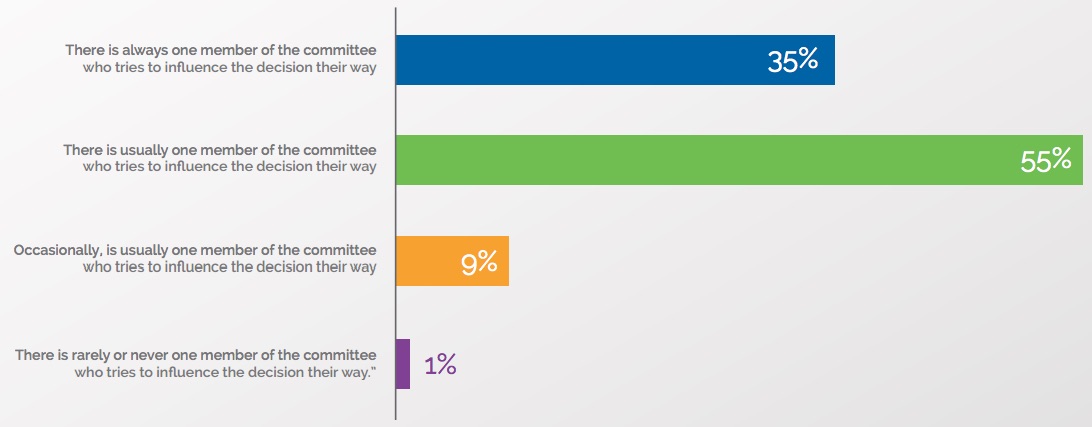
decision making process in sales

To ensure you’re establishing a relationship with all the right people, you want to find out exactly who is involved in the process of making decisions.

You’ll also want to find out where this individual fits within that process.

Knowing if you’re dealing with the CEO or the manager can make a major difference in how you pitch your solutions.

Discovering the problem

Before a lead can make a decision to work with you, they need to understand why they need a change.

You can do this by helping them find the problem with what they’re currently doing.

According to Gong.io, discovering business issues should make up the majority of your discovery calls.
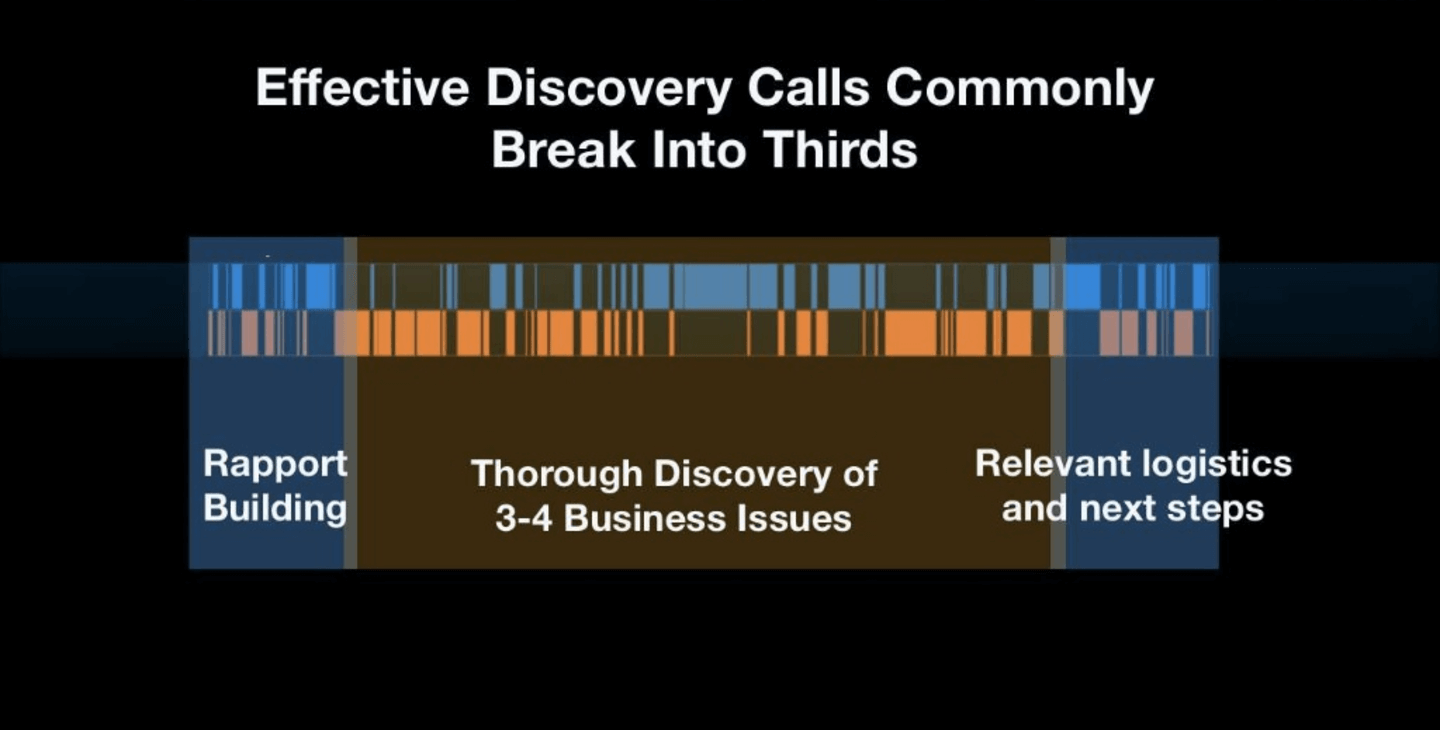
effective sales discovery calls

Chances are, they probably know something isn’t right.

However, they may not know exactly what needs to change, so they don’t know why they need your help.

By bringing the problem to the surface, you’re making your leads more aware of where they’re falling short.

Focusing on where they’re going wrong or falling behind can encourage them to look for a solution faster.

You can help them find their problem with these questions.

6. What resources or solutions have you tried in the past? What happened?

Ask your prospects to talk about what they’ve already tried.

This can help see if you can offer different solutions.

It also helps the lead recap what they’ve already been through.

By going back and covering all the things they’ve tried and failed with, they can begin to understand what solution they might be looking for.

Additionally, covering the things that have brought success can give you some insight into their audience’s behavior.

Arjun Varma, Sales Manager at Quantcast, uses the tactic “ask, define, explore” to get more from his prospects.

He says:

“Ask discovery questions to uncover the largest business challenges a prospect is facing. Define the implications of these challenges. Explore a partnership or sale that addresses the defined challenges and helps the customer do more business.”

You can then use this information going forward to provide them with solutions that are more likely to work.

7. Why weren’t you happy with your last vendor or agency?

Sometimes, it isn’t the attempted solution that isn’t working. It’s who they’re working with.

Letting your lead discuss the problems they’ve experienced with their current agency or vendor can help you better understand what they’re expecting out of a new partnership.

Maybe their current agency isn’t working fast enough.

Maybe they aren’t giving them the personalized attention they had hoped for.

Or maybe they’re just looking for something new and different.

However, knowing what they don’t like can help you become what they do like.

8. What are you hoping to accomplish in a new partnership?

Bouncing off their unhappiness with their current vendor, try to see what they’re hoping for in a new partnership.

Try to go beyond simple business goals.

Instead, focus on what they’re looking for in the actual relationship with your business.

And remember: use collaborative language.

Sales representatives who used “we” instead of “I” or “you” were more than twice as likely to get a deal.
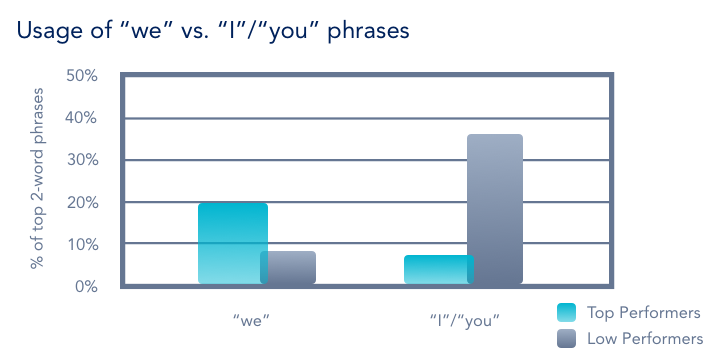
usage of we i you in sales

As you talk about what a new partnership would look like, start creating an image in the prospect’s mind of the two of you working together.

9. Why are you choosing to look for a new agency or vendor now?

Try to get to the root of what happened to push the lead to connect now.

Was there a particular event that made them realize they need to make a change?

Are they fed up that others aren’t meeting their expectations?

Are they looking to launch a new product or service and needs some additional hands on deck?

Customers tend to leave companies when they feel like the company is ignoring them, when they find a better deal, or when they have a bad experience.

When you know their purpose behind connecting, you can get a better idea of when and why they’re looking for a new deal.

10. What are your greatest strengths and weaknesses?

Take a minute to try and understand the lead’s perspective about their own business.

Ask your sales prospect to outline where they believe they shine and where they think they may be lagging behind.

Knowing how they view themselves can help you understand their priorities.

Finding a solution

Once you’ve discovered the problem and agitated it, you want to help your leads find a solution.

By working with them to discover what their next move should be, you’re establishing trust and confidence that you can help them through the next stage of their business.

Here are a few questions that can help you and your lead discover the right solution for them.

11. Where do you see your competitors surpassing you?

Ask your lead who they believe their competitors are.

Then ask how they believe their competitors are surpassing them.

By getting them to think about the areas their competitors are doing better in, they can better understand the solutions they need to implement to see similar success.

This can give both of you a better idea of what steps you need to take moving forward.

12. What is your budget?

The budget is arguably the most important part of a new partnership.

That’s why almost 60% of buyers want to discuss pricing on their first sales call.
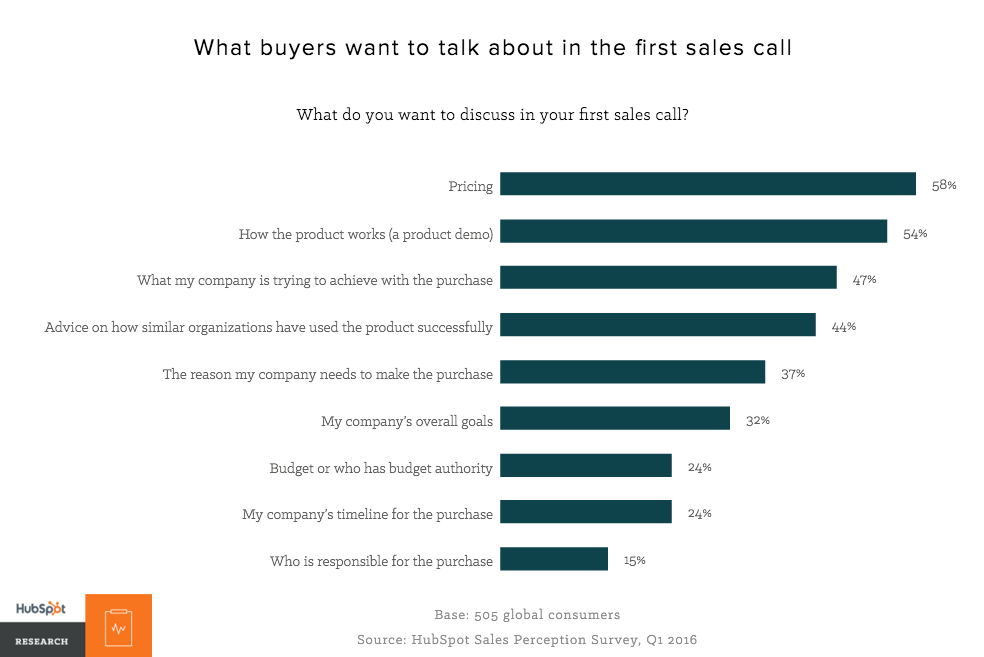
what buyers want to talk about in first sales call

For both you and your lead, you need to find a way to create a deal everyone is happy with.

Talking about budget expectations up front can help you understand where the lead falls in becoming ready to purchase.

You can also get an idea of where they can fit within your pricing strategy and if they’ll be able to afford your products or services.

13. What is more important: money or productivity?

Unfortunately, you typically can’t have more productivity on a smaller budget.

Asking your leads if they’d rather grow quickly or save cash can allow you to get a feel for where their current priorities lie.

If they’re looking to move quickly, they may be more likely to make a purchase sooner.

However, if they’re looking for a new budget-friendly option, you can provide them with the marketing materials they need to see you as the right financial fit.

14. What requirements or deal-breakers are there for working together?

Requirements and deal-breakers can sometimes be a difficult thing to talk about.

However, discussing these requirements up front can make it easier for you to tell if you’re the right fit for each other.

Regardless of the direction the conversation goes, it’s always important to be open and honest about your product.

Buyers find vendors more influential when they are honest about their product or service – even if it means admitting it isn’t the best fit.
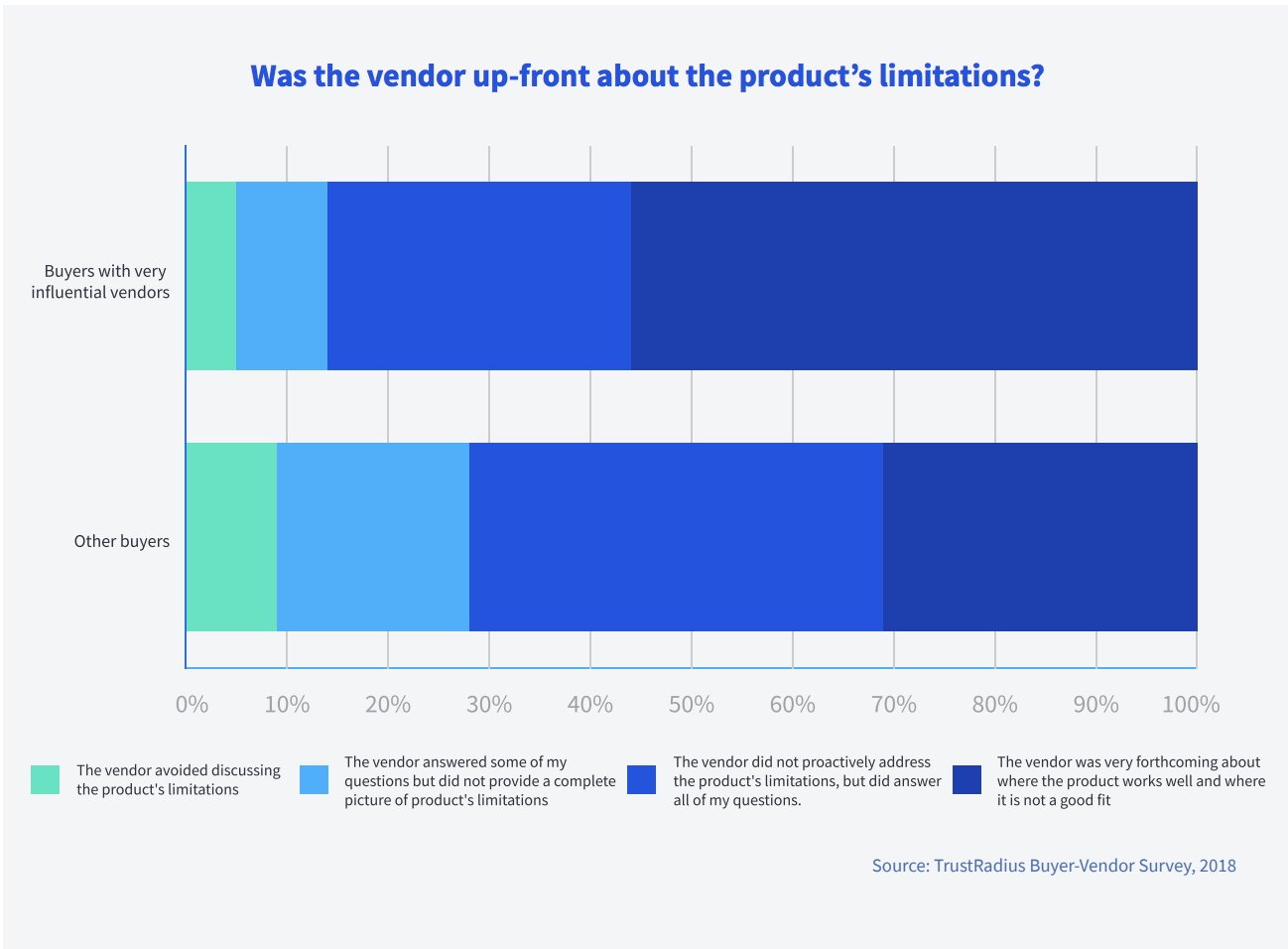
product limitations mentioned in sales

Trying to deceive the customer into believing you offer the perfect solution will only cause headaches and frustration down the road.

15. What is your biggest priority right now?

When a new lead comes to you, they probably have a few ideas about what they’d like to accomplish.

Unfortunately, it isn’t likely that you’ll be able to tackle all of these problems at once.

Talk about what the customer’s main priority is at that time.

This can give you a better idea of what solutions they’re really looking for.

Discovering a timeline

Timing errors or miscommunications can cause serious problems in new deals and partnerships.

Discussing a timeline up front can also help you identify when the prospect might be willing to buy and what commitment they’re looking for from you and your team.

By determining your prospect’s ideal timeline, you can then get a better idea of where they are in the buyer’s journey.

The more you know about when they’re looking to buy, the more specific content you can provide them with.

Here are a few questions you should ask to learn more about your prospect’s purchasing timeline.

16. When do you hope to get started?

There is a big difference between starting in a week and starting in three months.

However, 63% of people requesting information about your business will take at least three months to buy. Another 20% will take more than twelve months.

If you know that your lead isn’t looking to buy for another year, you can focus your nurturing efforts further down the line.

However, if they’re looking to get started immediately, you’ll need to be more aggressive about the way you promote.

Although it may not be exact, ask your prospect for a timeframe of when they’re looking to get started.

17. What is the timeline for your goals?

Talking about goals is great, but it’s more important to know when they’re hoping to accomplish those goals by.

Getting a timeline for when they’d like to achieve their priorities can help you better understand what kind of commitment they’re looking for.

If they need to accomplish their goals within just a few weeks, they may be looking to hire a committed team immediately.

On the other hand, if they have no idea when they’d like to accomplish their goals, they may need some more nurturing and education.

18. Do you have any outside factors influencing your timeline?

Your leads may have an idea of when they’d like to get started or complete their goals by.

However, it isn’t always in their control.

Sometimes, outside factors constrain our leads.

External due dates and other factors can make your job more complicated. At times, they can influence when a deal can actually go through.

They can also add some restriction about when a prospect is really ready to make a purchase.

Whether they have a contract they need to see through or they have a deadline they’re scrambling to meet, you’ll want to ask if there are any outside factors that will influence the timeline.

19. What could stop us from working together?

Unfortunately, lots of things can make a deal fall through.

In fact, the average lead-to-deal conversion rate for B2B sales is only 0.08%.
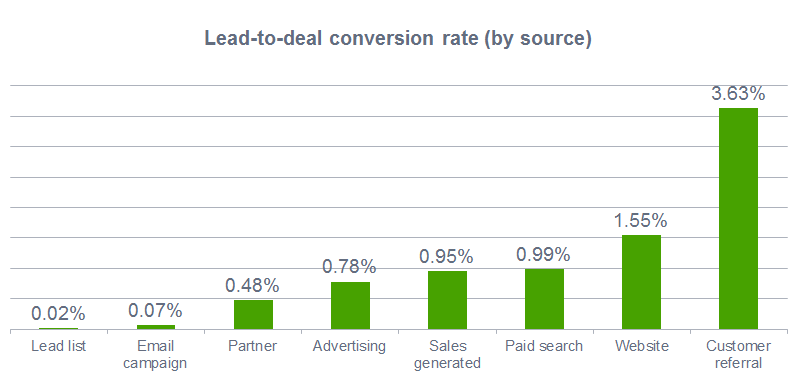
lead to deal sales conversion rate by source

Maybe your lead found a better deal elsewhere or they decided that they didn’t need your product or services after all.

Regardless, discuss what potential events could prevent you from working together.

Head sales experts like Geoffrey James use this type of “reverse selling” trick.

In an article that Inc. published, Geoffrey sites “The Reverse Close” as one of his five key ways to close a deal.

Once you know what might inhibit a deal, you can find solutions to ensure that the sale goes through.

20. How soon do you want to see results?

Knowing what kind of turnaround your prospect is expecting can help you better understand when they may be willing to make a commitment.

If they want to see results in just a few weeks, you’ll want to get started right away.

However, if they have no idea when they’d like to start their progress, they’re probably not yet ready to make a purchase.

Establishing future success

It’s always more efficient to gain repeat customers than it is to constantly connect with new prospects.

This is why you should always plant the seed of a long-term relationship when you’re still in the nurturing process.

Letting your sales prospects know how you can help them through growth and changes can help you secure long-term relationships with them.

Here are a few questions you should ask to help establish a future relationship.

21. What hurdles might we run into down the road?

It’s impossible to know exactly what hurdles will show up when you’re working with a new client or customer.

However, determining what they could be can help you plan ahead.

Discuss which hurdles might arise and what solutions they may need.

22. How do you measure success?

Small business owners are becoming increasingly confident in their success.
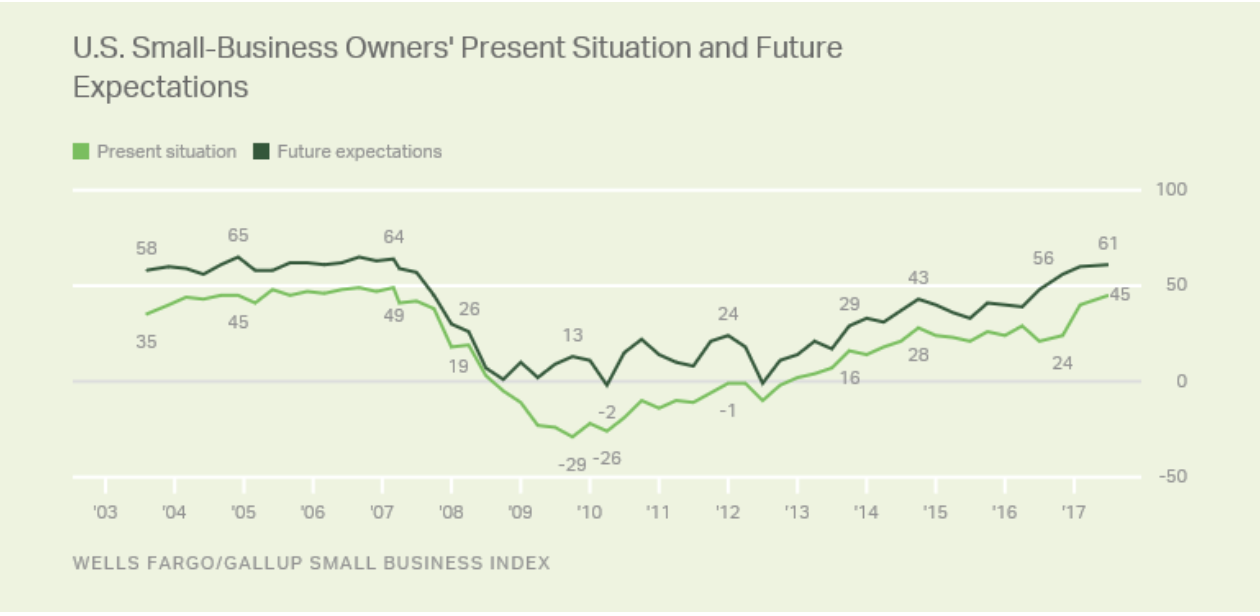
small business owners present and future situations

However, success can mean different things to different people.

Some simply see success in dollar signs while others focus on the number of happy customers who keep coming back for more.

Knowing how your sales prospect defines success can help you determine what will keep your customer happy and what they’re ultimately looking for from you.

23. What are your long-term goals?

Chances are, you’ve already discussed some goals at this point.

However, you really want to dig deep to find out what long-term goals the individual or company is hoping to achieve.

Ask what they’re looking to accomplish further down the road – even if those dreams are too far out of reach at this time.

24. How do you see your needs changing as you grow?

Your sales leads are looking for a solution for now.

But if you can also provide a solution for the future, you can help them achieve growth with a smoother progression.

Helping them understand how their needs may change as they grow – and how you can be there to help them solve new problems or meet new goals – can help set you up for a long-term partnership.

25. Where do you see this relationship going moving forward?

Find out early if they’re only looking for a short-term deal.

Are they just looking for someone to help with their current goals, or do they want a long-term partner who can help them overcome future hurdles?

For PJ Pereira of Pereria & O’Dell, a willingness to collaborate is one of the most important factors when choosing a new agency to work with.

Showing your prospects that you’re thinking about how you can keep the relationship going as they grow might encourage them to work with you over a competitor.

Conclusion

Quit playing the guessing game when it comes to connecting with sales prospects.

If you want to stop missing out on high-quality leads, stop assuming that you know when they’re ready to make a purchase.

Instead, let them tell you when they’re ready – even if they don’t realize they’re doing it.

By asking these 25 questions, you can get a better idea of who your prospect is, what they’re looking for, and how you can help them.

What questions do you like to ask your sales prospects?

About the Author: Neil Patel is the cofounder of Neil Patel Digital.

Thursday, May 24, 2018

Your Business Needs More Negative Reviews. Here’s Why

Do you work hard to earn great reviews for your business?

If so, you’re not alone. Most businesses strive to get as many five-star reviews as possible. And it’s not hard to imagine why.

Before you buy something online, drive across town to a restaurant you’ve never tried, or download an app, what’s the first thing you do?

You probably check the reviews. If they’re bad, you probably won’t purchase an item or try a new restaurant. But if they’re good, you’ll likely give it a try.

So you should do everything in your power to try and get five-star reviews across the board and prevent any negative reviews, right?

Actually, that shouldn’t be your goal.

Believe it or not, earning perfect reviews isn’t critical for your business. In fact, negative reviews can actually help your business in ways you may have never expected.

If you’ve put all of your focus on avoiding negative reviews, you’re going about reviews all wrong.

You may find that hard to believe, but it’s true.

Here’s why you need negative reviews and some of the ways that they can be beneficial for your business.

The importance of negative reviews and how they can help your business grow

Before the digital era, we all relied on our friends and families for testimonials. But now, we rely on so many other factors to make our final decisions about companies.

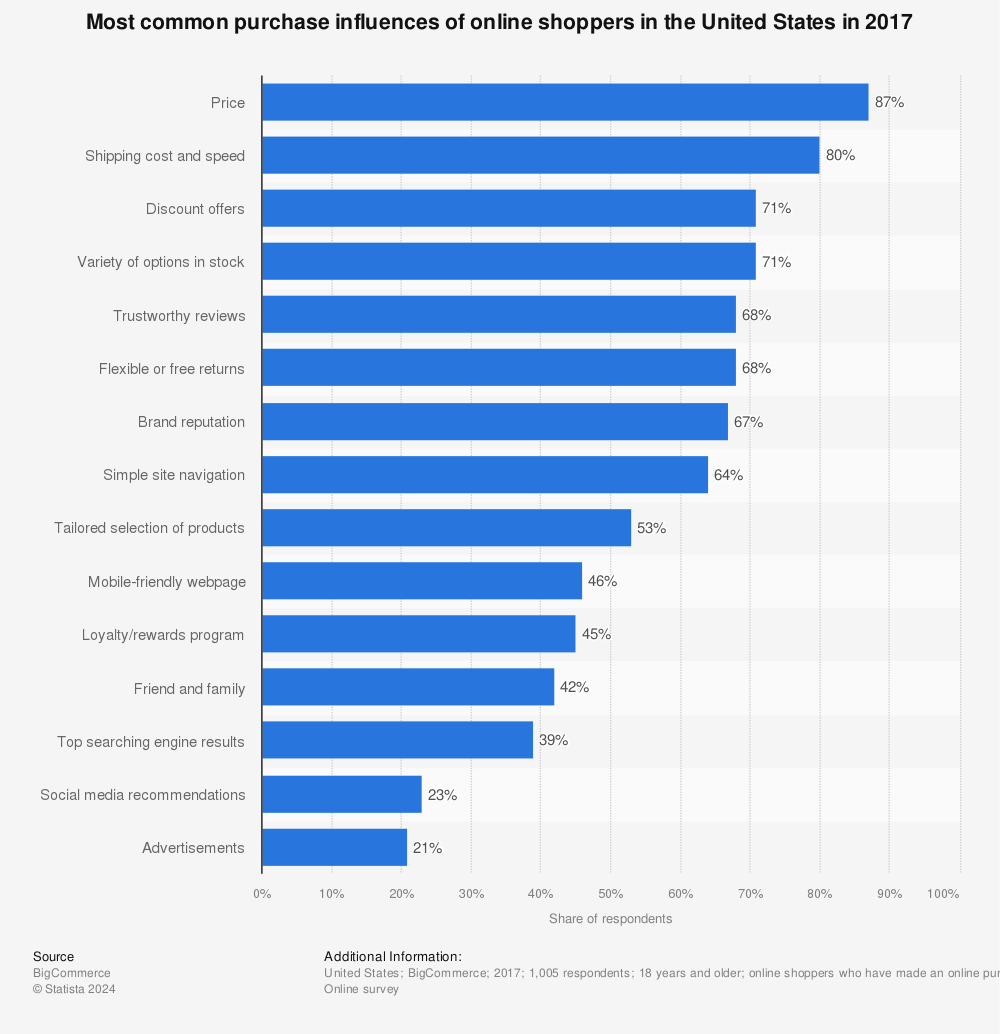
Statistic: Most common purchase influences of online shoppers in the United States in 2017 | Statista
Find more statistics at Statista

It appears that trustworthy reviews now have a bigger influence on online purchase decisions than family and friends do for 68% of US shoppers.

Recommendations from friends and family influence only 42% of consumers.

Instead, rewards programs, brand reputation, and trustworthy online reviews have taken the place of good, old-fashioned word-of-mouth recommendations.

A 2017 study by Power Reviews once again confirms the growing consumer dependence on ratings and reviews.

Today, 97% of consumers read product reviews before making a purchase decision. 89% of them consider online reviews to be an essential resource in the process.

On the flip side, 85% of consumers look for negative reviews in order to make informed purchase decisions. And this number skyrockets to 91% among consumers from the ages of 18-29.

Why?

Because bad reviews give customers a sense of the worst-case scenario. They want to know what can go wrong to understand just how much it will matter to them.

Too many positive reviews can seem fake to some shoppers, so you have to watch out.

But how do consumers determine if a review is truly authentic and trustworthy?

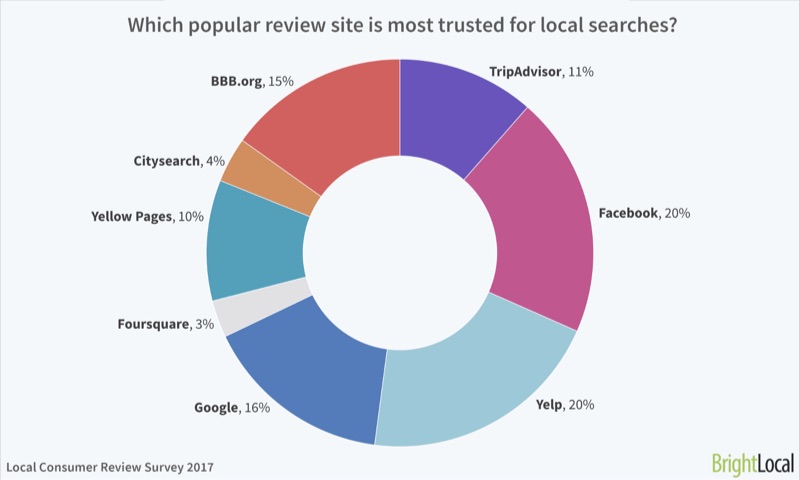
BrightLocal’s study shows that Facebook and Yelp are the two most-trusted review sources for local searches. Google comes in third.

review site most trusted for local searches

Out of all these review platforms, Yelp seems to have the most strict rules and regulations.

This explains the fact that the average review score on Yelp is 3.65, which is the lowest out of these platforms. The average reviews on the others major platforms are 4.42 on Facebook, 4.3 on Google, and 4.25 on Tripadvisor.

Therefore, Yelp may be the most reliable place to gauge reviews.

And these ratings matter for your bottom line. An extra rating star on Yelp translates into a 5% to 9% revenue growth, which is an impressive but dangerous correlation.

Reviews really can make or break your brand’s growth. But on any platform, you will inevitably receive some negative reviews. So, how do you respond to them?

You should start by coming up with a game plan.

Create a game plan before you respond to negativity

The way that a business treats a negative review can tell you a lot about them.

Don’t panic. Don’t ignore them. Instead, embrace them.

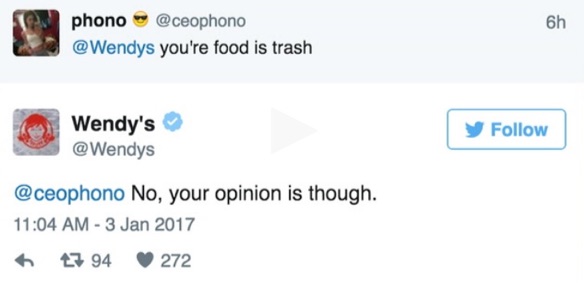
Some brands like Wendy’s are even using negative reviews as a chance to make a splash on social media and go viral.

wendys your food is trash tweet

However you choose to embrace negative reviews, you need to come up with a game plan before you say anything back to your customers.

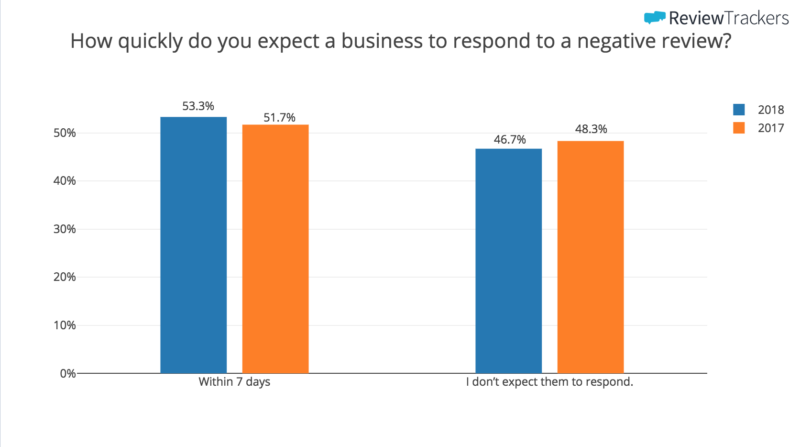
But customers expect businesses to respond to their reviews quickly. 51.7% of consumers expect businesses to respond to their negative review within seven days.

how quickly do you expect a business to respond to a negative review

So if you do happen to receive a negative review, you need to act fast.

Being aware of your customers’ complaints should be your number-one priority for customer service.

The first thing you need to keep in mind is that not all negative reviews are valuable.

There are two types of negative reviews.

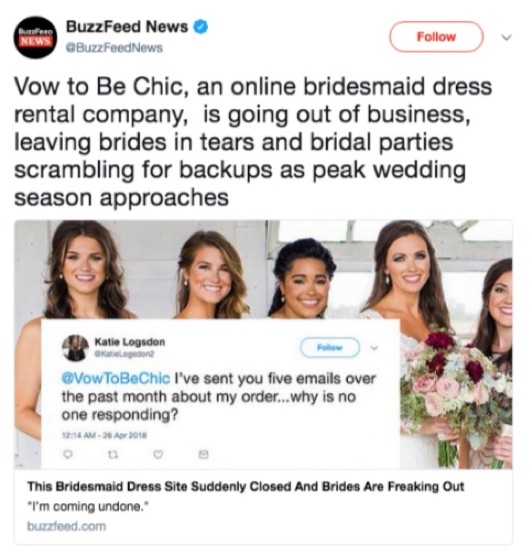
The first type is reviews from disappointed customers who have had a real negative experience like those who were part of the Vow to Be Chic wedding rental scandal:

vow to be chic buzzfeed tweet

And then, there are the troll types who seek attention and potential monetary gain.

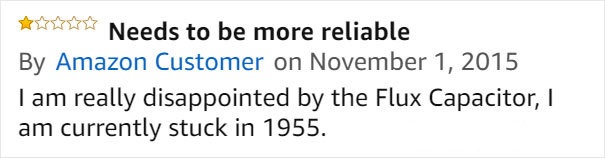
flux capacitor needs to be more reliable amazon review

Some people might want to take advantage of the leverage that leaving a bad review might give them by blackmailing you or threatening to leave a bad review if you don’t give them a refund.

And you can’t insure your business against trolls.

Constructive feedback, on the other hand, is a gold mine for any business. It is a form of valuable, direct, instructional feedback from the people who matter most.

And a negative review will only stay negative forever if you ignore it and never address it.

So having a game plan to respond to these complaints is what will set you apart from companies who choose to ignore them.

Decide on a communication strategy that will match your brand identity and tone of voice. Try to keep it consistent across all review platforms.

Zappos never fails to respond to negative customer reviews, and they give their responses a positive twist. Take a look at a recent response they gave to a complaint on their Facebook page.

zappos facebook review response

The brand offered to send the customer a new replacement pair, and they recommended that she keep or give away the shoes that don’t fit.

It’s pretty hard to argue with an attitude like that.

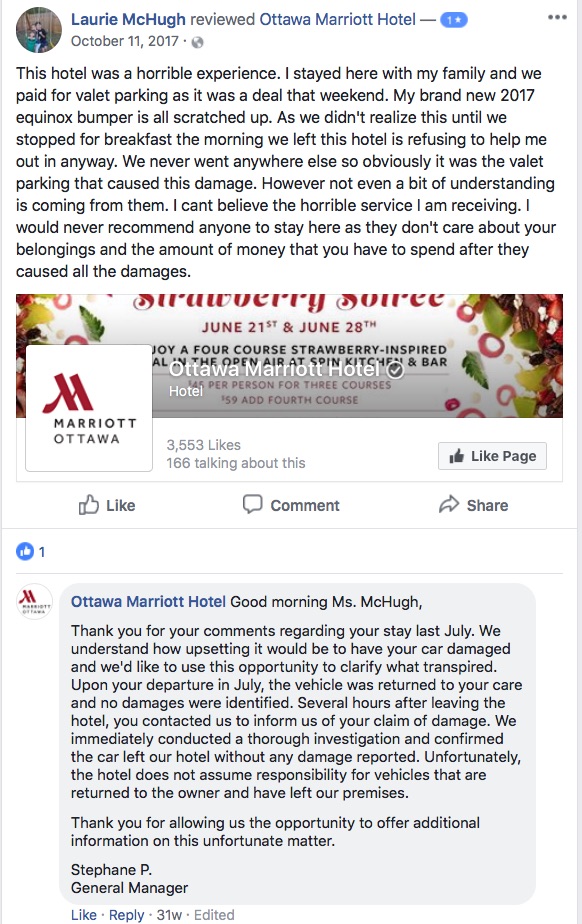
Depending on the personality of your brand, you can choose to be friendly and conversational like Zappos or more formal but tactful like Marriott.

marriott facebook review response

Whichever way you choose to go, make sure that you remain genuine. Don’t answer with a template. Take the time to actually investigate each issue and respond accordingly.

You should think of each negative review as an opportunity to show your customers that you care.

Here’s what Marina Cheal, Chief Marketing Officer at Reevoo, said at the Motor Trader Summit last year:

“Rich reviews drive engagement and people stay on site longer. Bad reviews are a brilliant way of showing that if something does go wrong you have credibility in how you deal with the issue. It shows you care about the customer.”

Believe it or not, bad reviews have the power to improve your conversion rates, too.

Bad reviews improve your conversion rates

If your business gets only positive reviews, consumers might question whether those reviews are legitimate or not. Not everyone will, but those who are a little bit more cautious might.

And with so many fake and paid reviews circulating on almost every review platform, this is becoming a real issue.

Amazon’s fake positive review problem has recently become huge.

amazon fake review problem

As the average rating has risen, the average review weight has taken a huge nosedive.

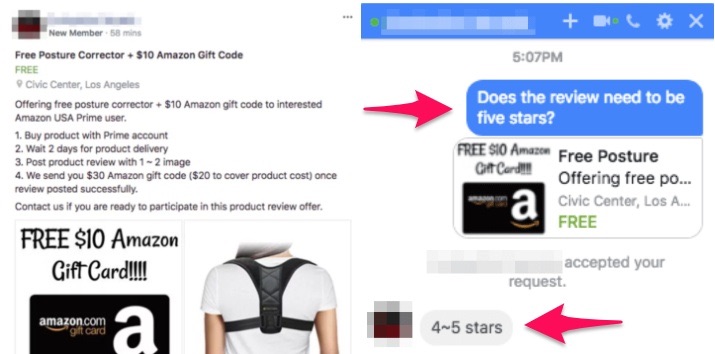
There are even Facebook groups that incentivize people to write fake reviews of Amazon products.

facebook group incentives fake reviews

On the other hand, having a healthy mix of both positive and negative reviews will help build trust in your business more quickly.

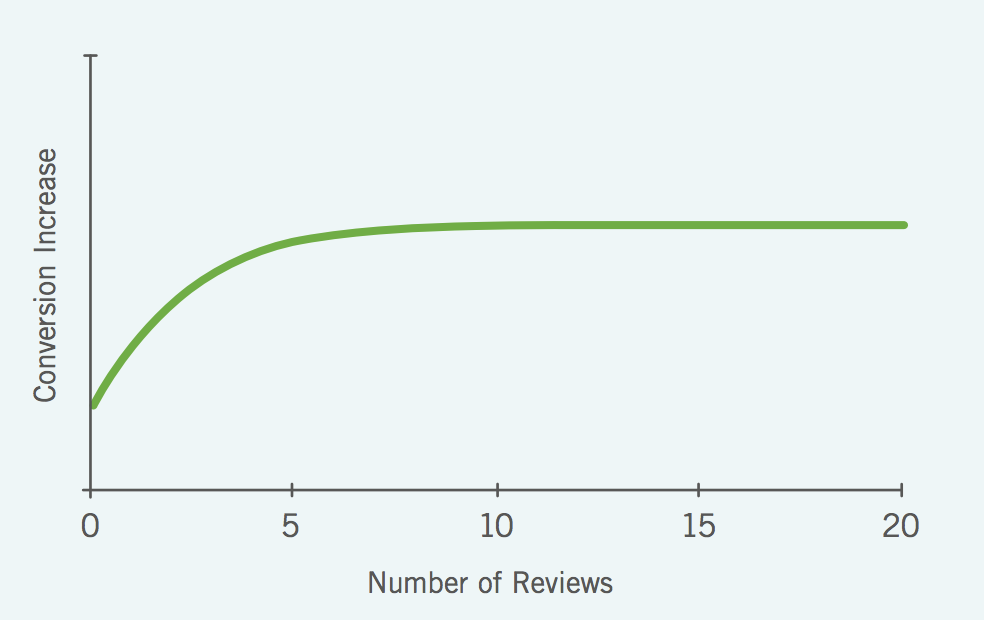
A study by Northwestern University’s Spiegel Research Center discovered that likelihood of someone purchasing a product with five reviews is 270% greater than a product with no reviews.

number of reviews and conversion increases

That means having five reviews, whether good or bad, can increase your number of purchases by nearly four times.

And a mixture of good and bad is helpful so that you don’t fall into the “too-good-to-be-true” category.

So, what is a healthy mix of good and bad reviews?

What amount of bad reviews will boost your conversion rates instead of driving customers away?

Anywhere between 4.2 and 4.5 stars is an ideal average.

More stars does not equal more sales. When your positive reviews appear with a few negative reviews, you reduce buyer skepticism.

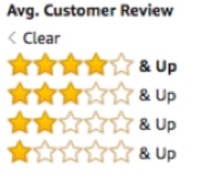
But you obviously you don’t want to end up with too low of an average. A lot of customers use rating filters to simplify their searches, so you may not even show up when they search for products if your average reviews are below four stars.

amazon customer review stars

If your ratings are low, don’t fret. It actually doesn’t take a lot to increase your ratings.

A recent study of TripAdvisor found that one-third of the hotels were able to increase their rounded ratings by half a star or more within six months of their first management response.

In a nutshell, here’s the logic that this all boils down to:

Customers actively seek authentic and trustworthy businesses. No business is perfect, so negative reviews will assure those who read them that the reviews are authentic.

Negative reviews show your human side

Negative reviews are a perfect stage for you to shine as a business with top-notch customer service. It is an opportunity to show that there are actual people behind your business.

Customer service is not just about assisting a purchase. It’s about solving any problems that come up before, during, or after a purchase and preventing them from happening again.

Poor customer service will cost your company big time.

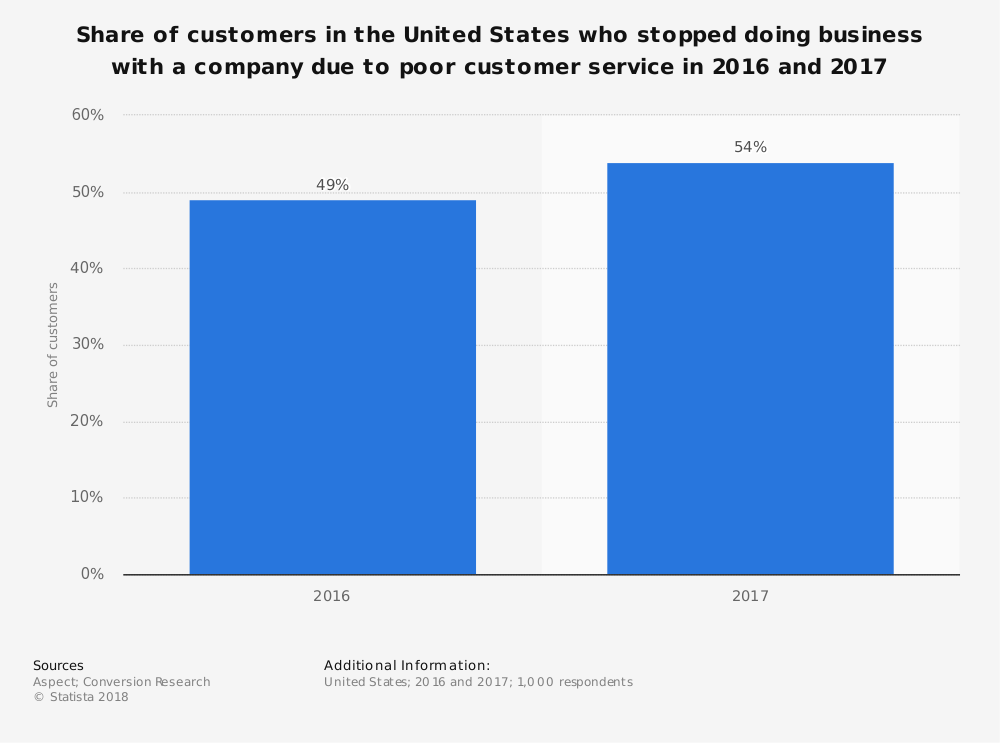
Tons of consumers have abandoned a business due to poor customer service. As you can see, this figure has grown over the last couple of years.

cost of poor customer service

And it’s only going to keep increasing.

So customer service is still a huge deciding factor for customers making purchase decisions and for you retaining existing customers.

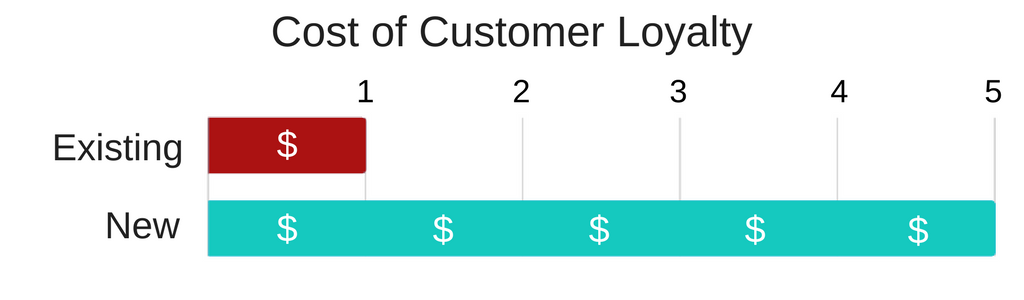
According to numbers from Kingfisher Inc, acquiring a new customer is five times as expensive as retaining an existing customer.

cost of customer loyalty

Responding to negative reviews will help you keep your current customers coming back for more.

It’s a good idea to respond to all reviews — both good and bad.

On the one hand, your negative reviews give your company a chance to show it’s human side.

On the other, responding to positive reviews will help you show appreciation for your happy customers, whose reviews matter most in the long run.

The biggest challenge to responding to every review is that you may receive an overwhelming quantity of reviews. Quite often, it requires a whole team of customer service heroes to handle reviews on all channels.

And all of your customer service reps need to know how to respond well.

Here are some essential tips to keep in mind when replying to negative reviews.

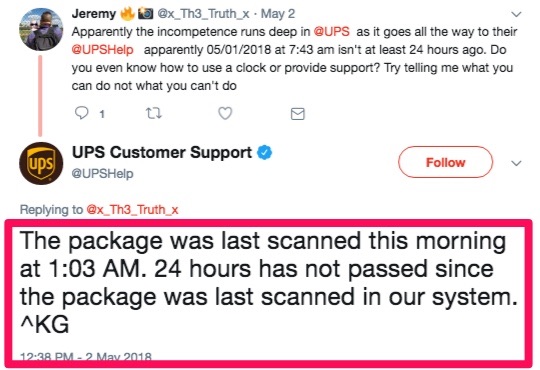
1. Get to the bottom of the issue. Always try to verify what the reviewer says by conducting a quick internal investigation with your staff.

UPS customer support on twitter

You always want to try to understand what happened.

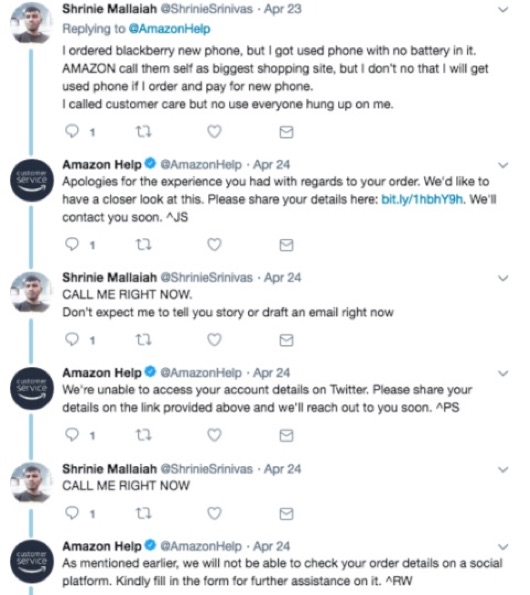
2. Hold back your emotions and do not get defensive. Sometimes, the reviews will be unfair and even false. Remember to always stay respectful and factual in your response like Amazon in the example below.

amazon dealing with crazy customer on twitter

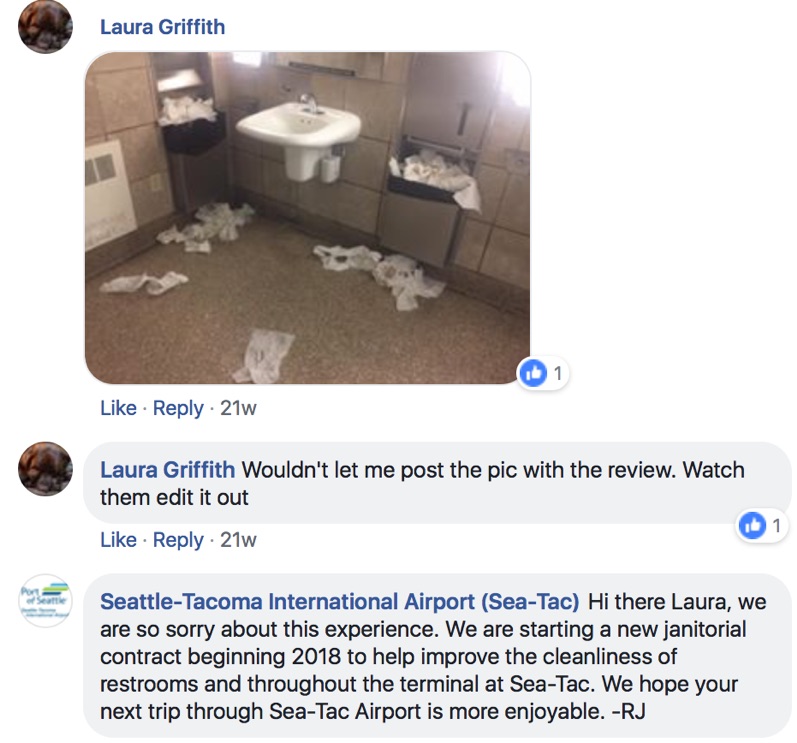
3. Show genuine empathy. Sometimes, the only thing that a disappointed customer needs is a simple apology.

seattle airport facebook apology

When you respond to reviews with an honest apology, your customers will know that you truly care.

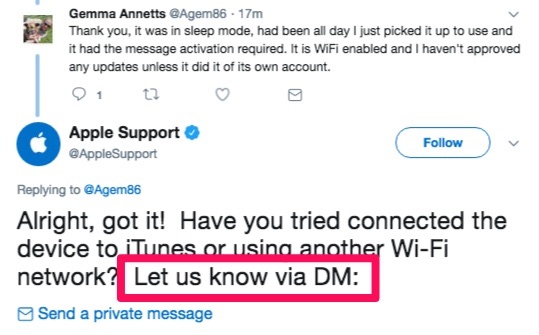
4. Take the problem offline. If you feel like the issue is escalating, it makes sense to continue the discussion privately rather than commenting back and forth.

apple support tweet let us know via DM

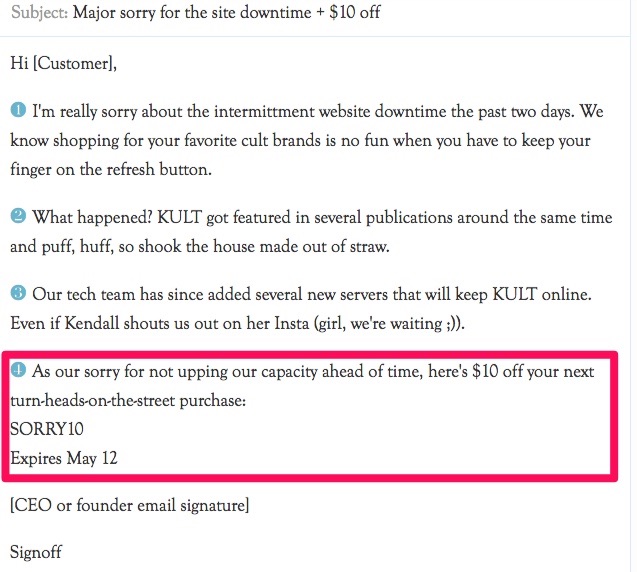
5. Respect the rules. Many businesses offer discounts and coupons to make up for their mistakes, but some platforms consider this a violation of trust or even bribing.

major sorry for site downtime

Like in the example above, email the coupon or discount instead of posting it on a social media site.

Never forget to tell your side of the story to defend your brand, either.

Don’t be afraid to tell your side of the story

Bad reviews are not always your fault. But when a number of things add up to a negative customer experience, your business might suffer.

If somebody were to falsely accuse you of a crime, you would do anything in your power to prove your innocence.

When a review is simply untrue, you might need to do the same.

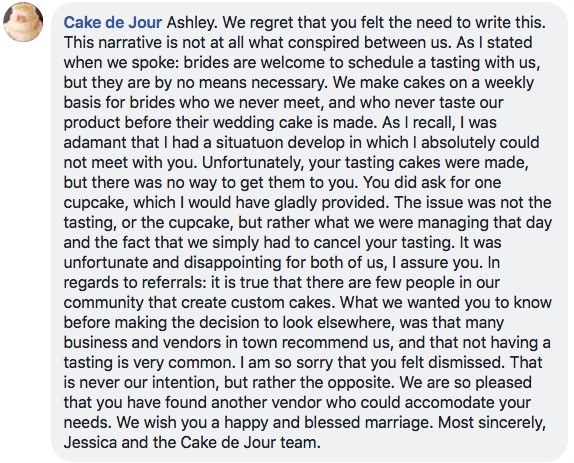
Sometimes, you need to share your side of what really happened.

cake de jour facebook post

That way, future customers who come across your page and see negative reviews can read your account of the story and make an informed decision for themselves about what really happened.

When you can gracefully articulate the facts and show off the benefits of your business at the same time, you can take a negative situation and spin it into a positive one.

When you satisfy your customers, you’ll encourage them to stay loyal to you.

Satisfying unhappy customers encourages loyalty

Answering each and every customer review is a must. But it’s even more important to actually solve your customers’ problems.

Nothing is more disappointing than a regular “we apologize for any inconvenience caused” type of response with nothing but a bunch of meaningless words.

That’s not helpful or satisfying. It’s annoying.

And being timely with your detailed solution is also important.

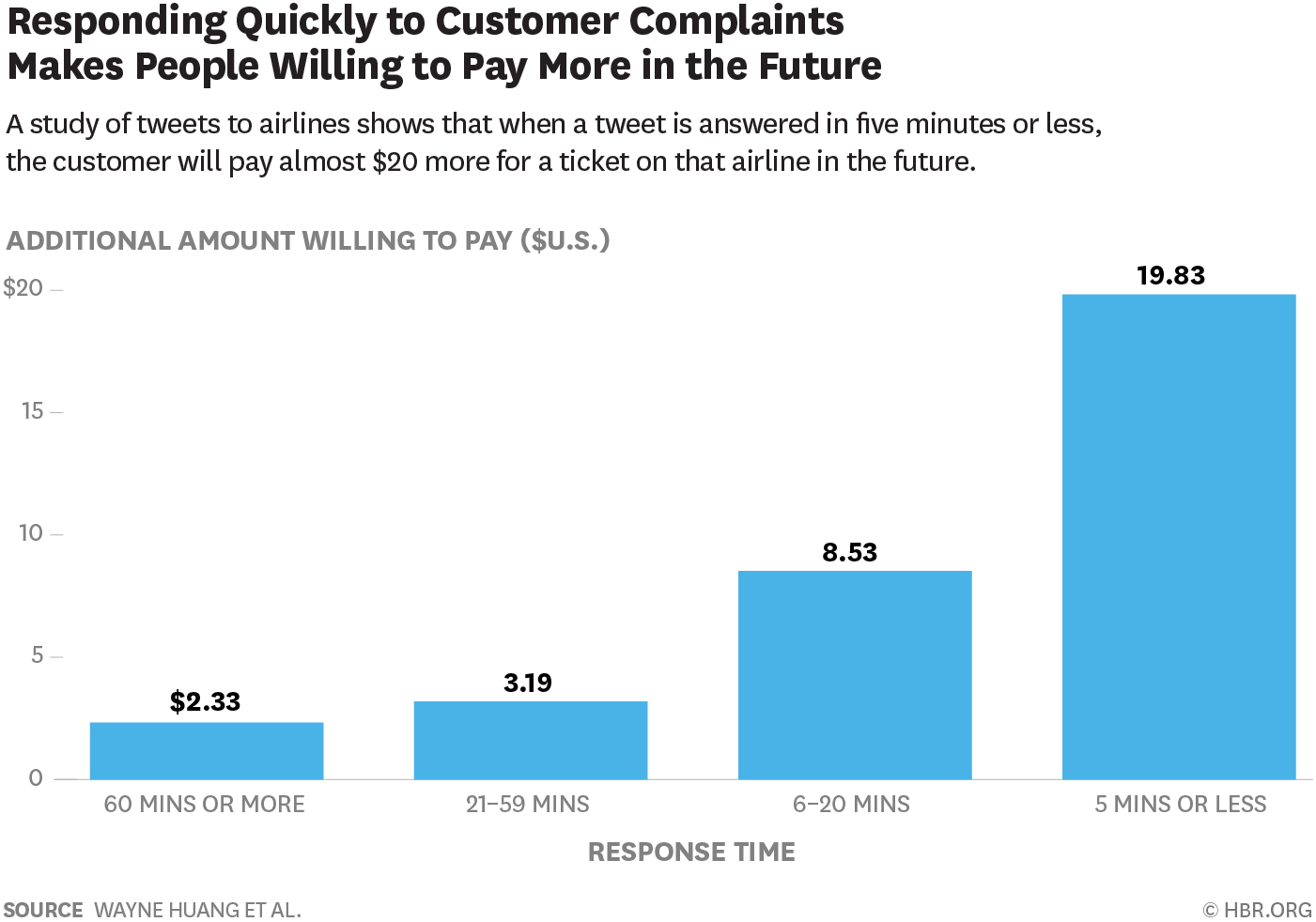
Data from HBR shows that brands that respond to customer issues quickly have more chances to retain customers.

responding quickly makes customers want to pay more

The quicker you respond, the more customers will be willing to pay for your products and services in the future.

In this study, customers were willing to spend almost $20 more for a ticket from an airline that responded to their complaints in less than five minutes.

That same study found that customers of wireless carriers who got their issues resolved with customer service reps were willing to pay $8 more for their wireless plans.

But what is even more fascinating is that customers were willing to pay an extra $6 for wireless services from the brand even if the carrier didn’t solve their problems. Just getting a response was enough to make willing to pay a little bit more.

Obviously, there are customer problems that you can’t resolve for a number of reasons.

But this study shows that even a simple expression of empathy can go a long way in diffusing frustration and providing good customer service.

Delta’s pizza party is a great example of how brands can provide good customer service through empathy.

delta pilot sharing pizza

They ordered 600 pizzas for their passengers who experienced delays because of severe weather in Atlanta.

Here’s what Julieta McCurry, Delta’s Managing Director of U.S. Marketing Communications and Sponsorships, said:

Empathy always has and continues to drive our experience design, service and delivery. With a new year, we renew that commitment.”

Another benefit of responding to angry customers is engaging them in a conversation. Making a personal connection with a dissatisfied customer can make all the difference.

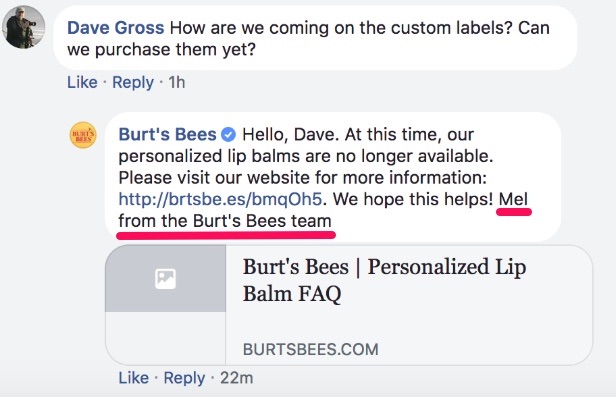
When your customer service reps do this, it’s a good idea to have them sign their initials or names when responding.

This way, customers will feel more comfortable following up on their issues later on. Many brands use this, including Burt’s Bees.

burts bees customer inquiry

Encourage customer service agents to add their names to tickets and responses for a personal touch.

All in all, you should always think of negative feedback as a chance to improve.

Negative feedback is an opportunity to improve

Customer satisfaction has never been more important than it is today.

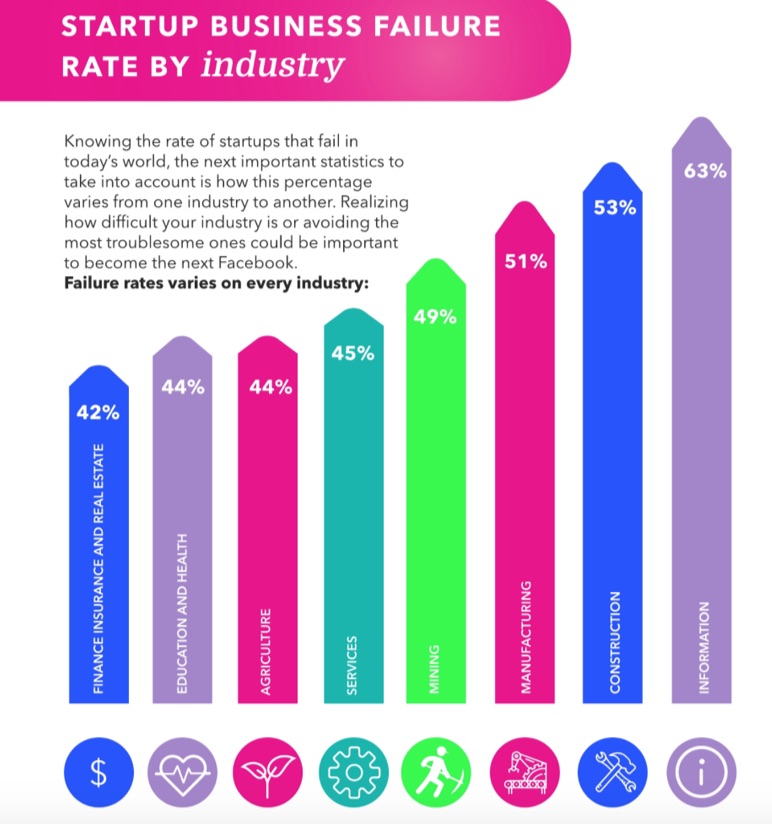
Around half of all startups fail. And that’s not just true about tech startups. That’s true of businesses in nearly every industry.

Take a look at this 2017 graph from Failory. The highest failure rate occurs in the information industry where 63% of startups fail.

startup business failure rate by industry

But having a sound customer retention strategy can increase your odds of success, and review management is a big part of it.

Treat every kind of feedback you receive as a gift. It is a free piece of information that you can use to improve and grow your business.

There is no better way to know if your business does well than asking your customers.

That’s why there are so many businesses carry out customer surveys every year.

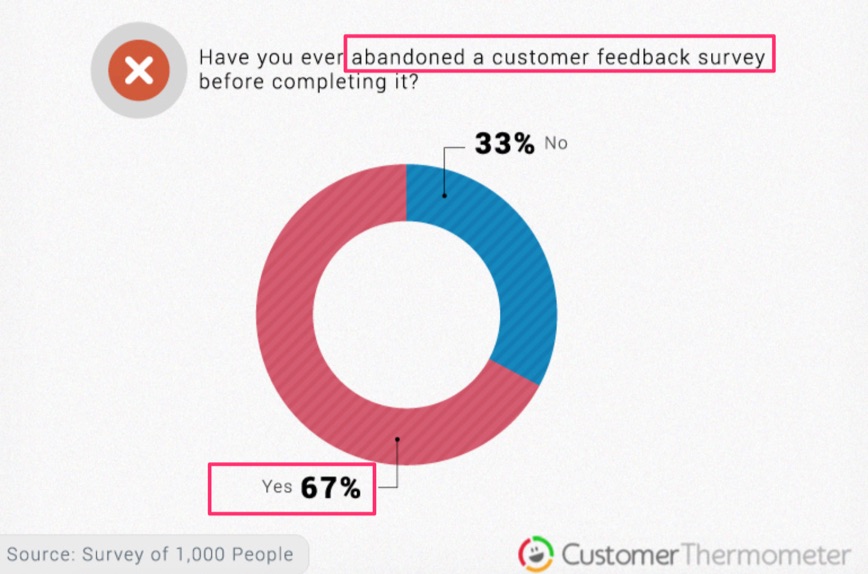
Big brands spend tons of resources on conducting customer satisfaction surveys even though customers often abandon them without finishing them.

customer feedback survey abandonment

As you can see, it’s difficult to get customers to complete surveys. That means that getting voluntary feedback is invaluable.

It can help you uncover and resolve key consumer pain points. This, in turn, can help your business grow.

Just look at how Domino’s recovered from the viral prank video scandal back in 2009 calling their product “edible cardboard.”

Their stock went from $4 per share in 2008 to $215 per share in 2017.

Keep in mind that not every customer will bother to leave a negative review.

However, the ones that do are probably not alone. There will be a lot of customers who feel the same way but never express their opinions. They just leave without you even knowing.

It’s always good to show love to your unhappy customers and strive for a second chance with them. But that’s not the only way to use negative reviews for your business growth.

If you dig deeper into those reviews, you will be able to find actual business ideas. This is especially true for digital businesses like SaaS or other web-based services.

Many of these businesses utilize tools like UserVoice to bring customers into the product development process itself.

Here’s how it works.

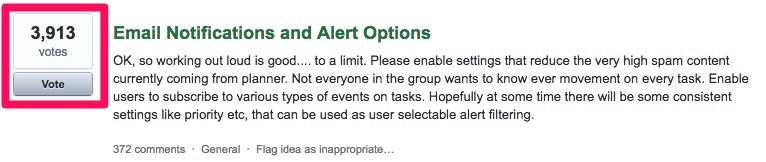
When a customer is unhappy about certain aspects of the product, customer service agents encourage the user to submit a feature request in UserVoice.

If the feature gets enough upvotes, it ends up on the product roadmap.

uservoice voting

No one can tell you how to improve your services or products better than your own customers, so never miss a chance to listen to what they have to say.

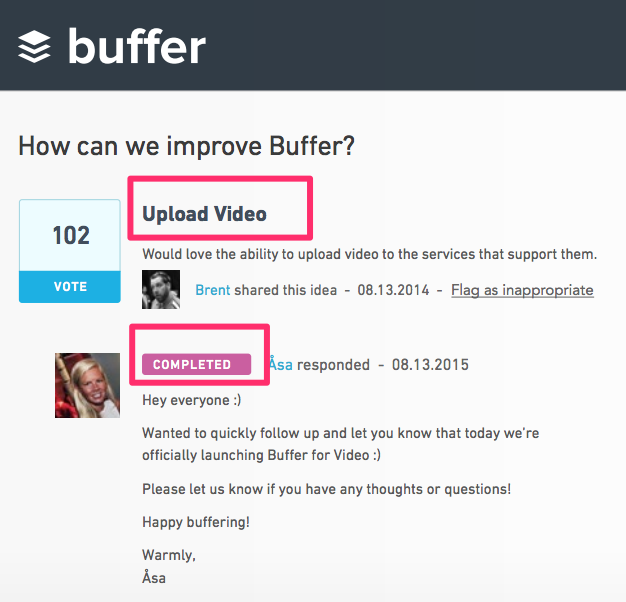
For instance, Buffer used customer feedback to validate the idea of having a video upload feature. This idea came from a customer request.

buffer customer feedback on uservoice

Buffer soon implemented this feature, and it was a success in terms of customer collaboration.

Don’t view all of your negative reviews as threats. Strive to learn from them and use them to improve as a company.

Conclusion

Most businesses do everything they can to avoid negative reviews. And in many ways, this makes sense.

But not all negative reviews are bad. In fact, they can be helpful in several ways.

Bad reviews help build trust. Today, buying fake reviews is as easy as getting any other service, which makes it difficult for shoppers to identify businesses with trustworthy ratings.

Negative reviews create a healthy balance and help shoppers see that your public reviews are trustworthy. Ultimately, they’ll trust your business more because of them.

Negative feedback is also a gold mine of opportunity. But you need a game plan before you respond to a customer.

When it comes to customer interactions, do you want to be casual, formal, or somewhere in the middle? You should decide this before you begin responding.

Customer complaints are a powerful tool to uncover internal problems on time and fix them before they go out of control. For this reason, they can help to boost your conversion rates.

So, it is important to monitor all review platforms regularly.

This feedback provides invaluable insights into customer satisfaction, which would otherwise require more effort and resources.

It also provides a chance to showcase your customer care excellence and your human side. Be empathetic with reviews and apologize when you should.

You shouldn’t ignore any reviews whether they’re positive or negative. Answering your customers’ feedback promptly and consistently translates into actual sales increases.

This means that every review that remains unanswered is a lost opportunity to retain existing customers and attract new prospects.

You also need to address reviews that aren’t true. You need to defend your brand against false claims. In most cases, that’s better than ignoring them.

When you satisfy unhappy customers, you’ll be encouraging brand loyalty. And negative feedback is simply an opportunity to improve overall.

But never forget to treat your happy customers with as much care and attention as the ones who complain. Happy customers are the best marketing. And it’s a free opportunity.

Each review is a free piece of information that you can use to grow your business. Treat each one as a gift.

In what ways have negative reviews benefited your business?

About the Author: Neil Patel is the cofounder of Neil Patel Digital.
Wednesday, May 23, 2018

Stop Targeting Keywords and Start Targeting Customers

For years we’ve all been taught that the first step to creating content that ranks is to target keywords.

For years, the ability to rank high in SERPs seemed to rely heavily on two things. First, pick keywords that are high traffic and low competition. Then, practice keyword density.

This is no longer true.

In fact, Google views too high of a density as keyword stuffing, which they will punish.

Keyword research is still important, but the way we should be implementing it has changed.

Why?

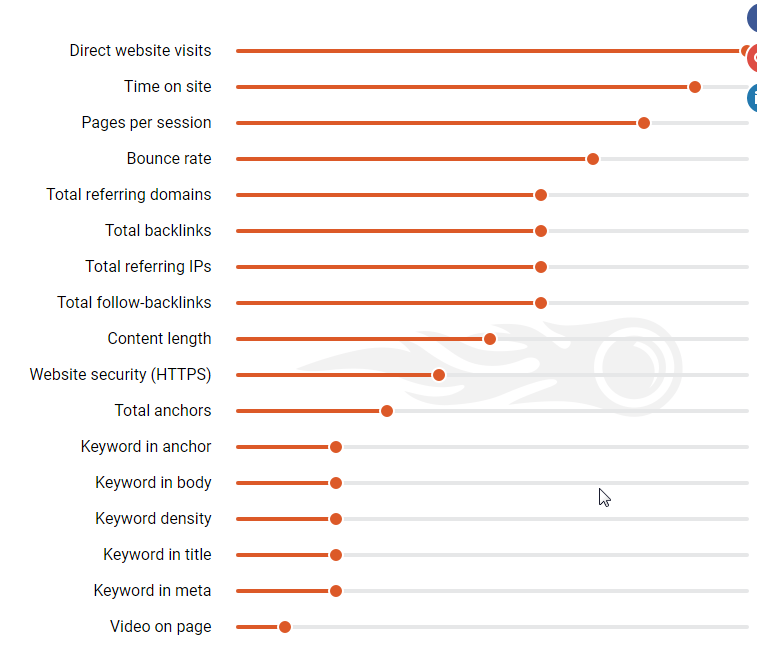
First, SEMRush did a study of Google’s ranking factors and found keywords were pretty far down the list. The first keyword related metric came in at 12th place.

That’s well below customer engagement metrics such as time on site and bounce rate.

Second, although meta tags are useful for users, they no longer influence rankings.

Google’s algorithm has become more sophisticated. It’s now smart enough that it no longer has to rely on simple keywords to tell it what your content is about.

If you want to be rank high in SERPs in 2018, you’re going to need to start targeting your customers and not just keywords.

Don’t worry. I’m going to walk you how to do this step-by-step.

But first, let’s look at the algorithm changes that have led to this shift.

Algorithms are becoming more human

In 2011, Google rolled out Panda which was designed to target and penalize sites that were producing thin and low-quality content.

Why?

People had learned that they could follow a practice called keyword stuffing to rank high in search results.

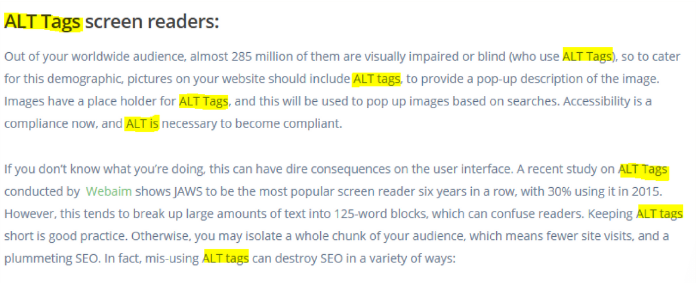
Here’s an example of keyword stuffing for the phrase ‘ALT Tags’:

alt tag screen readers

Keyword stuffing may have helped rank your content in search engines, but it tended to result in an unnatural flow that didn’t resonate with readers.

Google recognized this and decided to find a way to penalize the practice.

This was just the beginning of Google reducing the effectiveness of keywords in SERPs.

The next year brought the introduction of the Knowledge Graph.

This was the beginning of Google being able to interpret strings rather than just isolated words.

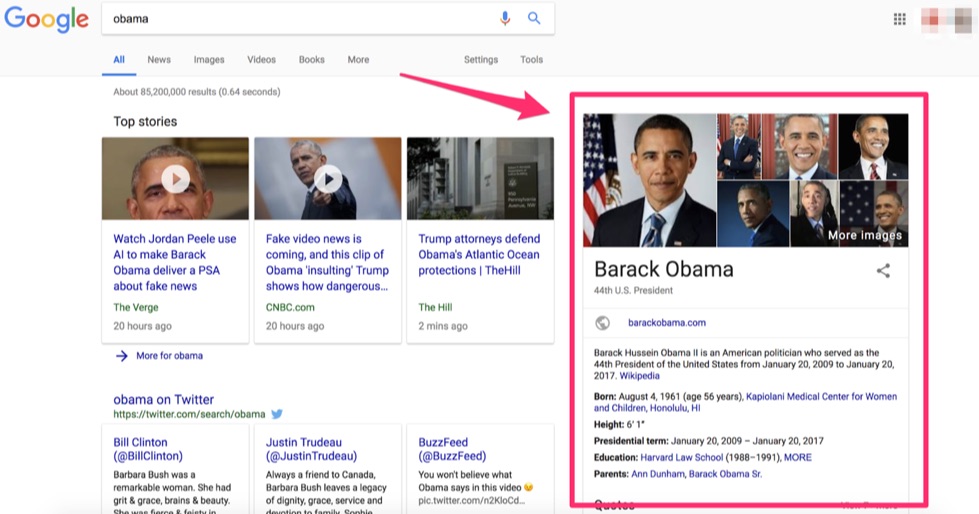
For example, Google understands that when someone types in the keyword “Obama,” they probably are referring to the US President Barack Obama.

google knowledge graph of barack obama

The knowledge graph can connect this one word with not only an actual person but also with some connections to other people, places, and things.

In 2013, there was even further advancement with the introduction of Hummingbird.

It was a huge change and a big step further in Google’s ability to handle “conversational search.”

Even five years ago, Google was beginning to understand and answer intent.

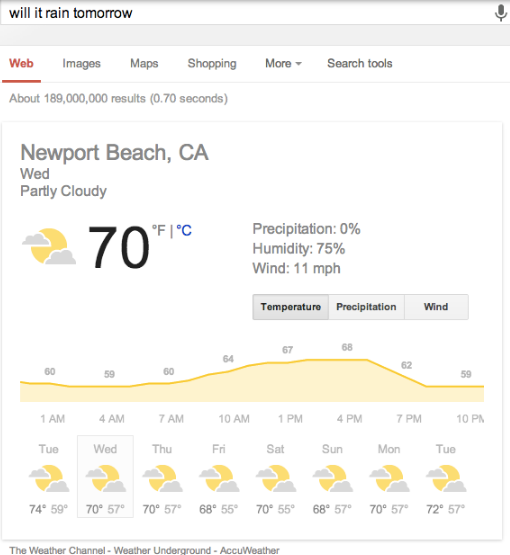
This 2013 example shows the simple question of, “will it rain tomorrow?

will it rain tomorrow google search

The question did not have to state a location or ask for a weather forecast. Google simply knew the searcher’s location and knew that rain was related to weather.

In 2015, an even bigger change came, when Google announced the launch of machine-learning artificial intelligence that it had dubbed RankBrain.

Within months of it being launched, Google claimed it was their third-most important ranking factor inside their search engine algorithm.

Why?

RankBrain was designed to help identify and respond to intent, instead of just words.

What does this mean?

Well, for example, if I search for ‘RankBrain’ I’m not really telling Google what my intent is, am I? All I’ve given it is the one word.

However, check out the search results:

rankbrain google search

Now, look at the search results for ‘what is RankBrain?’

what is rankbrain google search

They’re the same.

RankBrain has been able to use machine learning to understand that both of these keywords have the same intent for the majority of people.

This is how Google can make sure it’s bringing back the most relevant content to its users.

The first search result is FAQs on RankBrain. If you check it out, the article mentions RankBrain 52 times in 2,660 words, which is just under 2% of the time.

Optimal keyword density in this new world is between 0.5% and 2.5%. There was definitely no keyword stuffing done to achieve ranking.

This just goes to show that keywords alone will no longer grab you the top spot in search results.

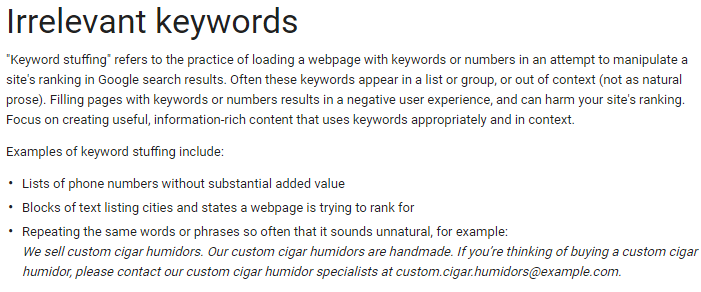
In fact, keyword densities that are too high will be penalized.

irrelevant keywords

With the move to mobile-first indexing and the growth of voice search, algorithms have had to get even better at deciphering intent rather than words.

There is an increasing trend toward voice search using apps such as Google Assistant.

It’s available on more than 400 million devices. Some estimates indicate Google sold over 10 million Google Home units last year alone.

This impacts the way search results work in two ways:

1. Digital assistants are beginning to influence search results.

Smartphone assistants will answer basic queries with three different listings.

They’ll also blend these requests with your own personal, historical data to tailor results.

Google Home will also provide you with the answer in the featured snippet for that search.

barack obama height google answer

If you want your content to be the result heard by searchers, you need to obtain the featured snippet spot.

2. Voice search allows for conversational phrasing.

Users of voice search want to be able to speak naturally and still get the results that they ask for.

That means you need to consider conversation, content, and context.

To meet these needs, algorithms and marketers are increasingly required to focus on conversational language and keyword clusters, rather than specific keywords.

For example, Haahr previously explained that if a user is searching for “Walmart,” they don’t want to see results about the head office.

They expect results showing them the Walmart store closest to them.

So how do we target customer engagement instead of targeting keyword use?

Understand the intent of your audience

I mentioned earlier how Google’s RankBrain was designed to interpret the intent of searchers.

Search engines are putting customer needs, wants and desires first, and we should be doing it too.

So, how do we capture this intention and focus on it rather than specific words?

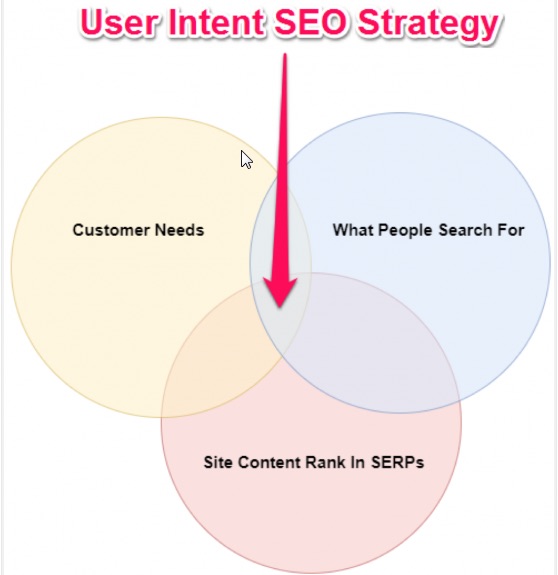
First, let’s look at what a user intent SEO strategy really is.

user intent seo strategy

We know that we need to understand the overlap between what phrases people are actually searching for and what they really mean.

We also have to pinpoint where this intersects with our content marketing strategy.

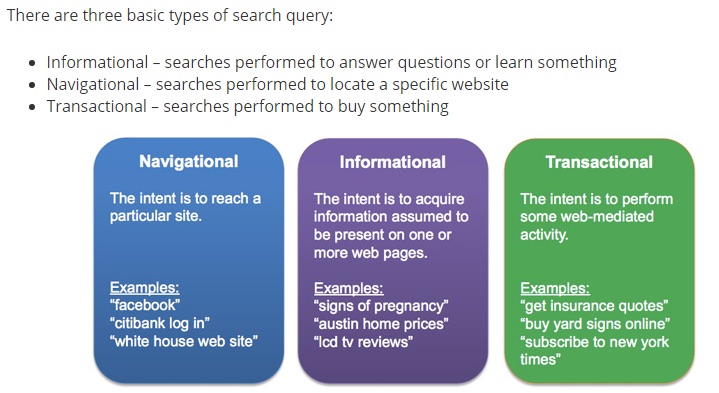
It’s important to understand that some general keywords can be classified into either navigation, research or conversion keywords.

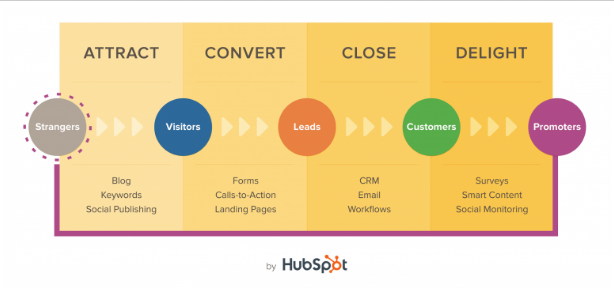
These classifications align with the stage of the conversion funnel that a searcher is in.

conversion funnel stages

Content needs to take into account where customers are in the funnel, as well as what keywords they’re using, to properly target intent.

Research keywords are typically used with informational intent.

These searches are likely looking for broad informational guides such as walk-throughs, how-tos, and step-by-step procedures.

Conversion keywords imply transactional intent. Users are getting ready to convert or buy.

Common phrases they may search for are:

  • “Coupon”
  • “Discount”
  • “Shipping”
  • “Where to buy”
  • “[product one] versus [product two]”
  • “Best [product] under [price]”
  • “Best [product] for [consumer group]”

Incorporating these words into your keyword research can help identify long tail phrases that better match intent.

Navigation keywords are typically used when a shopper is already looking for a specific brand, company or site.

types of search query

For example, “content marketing” may be an informational keyword, but “Content Marketing Institute” implies someone is specifically looking to navigate to that company.

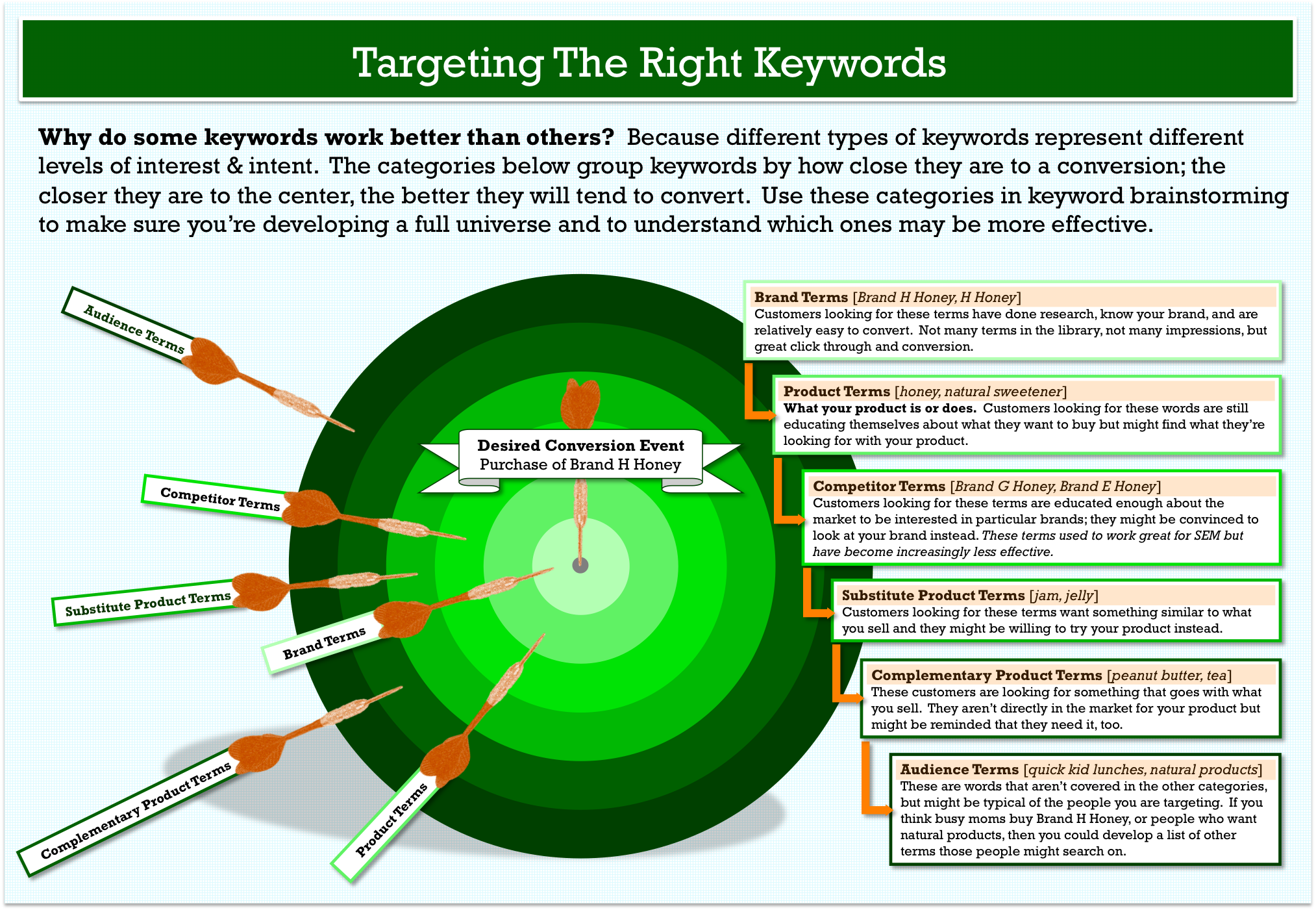
Keywords should line up with customers’ level of interest as well as their intent.

keyword research target model

The better able you are to understand customer intent, the easier it will be for you to target customers instead of just keywords.

There are a number of tools you can use to help you better understand the intent of your current customers.

Heat Maps

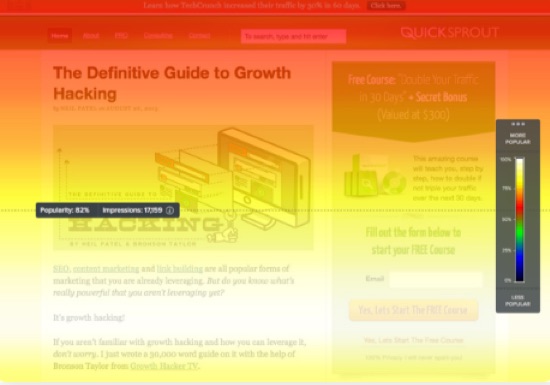
Heat maps such as Crazy Egg allow you to see where visitors clicked on your site.

You can also use them to see which content was scrolled through.

scroll map

This helps you better understand, even within an article or a page, exactly what it was searchers were looking for.

The more you focus on what your customers really want instead of focusing on just the few words used, the better your content will perform.

Focus on content packages

To bridge the gap between targeting keywords and targeting customers, we need to look at how we package our content.

As we discussed earlier, Google is getting better at showing searchers the best results that match their intent.

If you want to rank above what’s already there for a certain keyword, you need to create better content.

Short, light fluff pieces will not suffice.

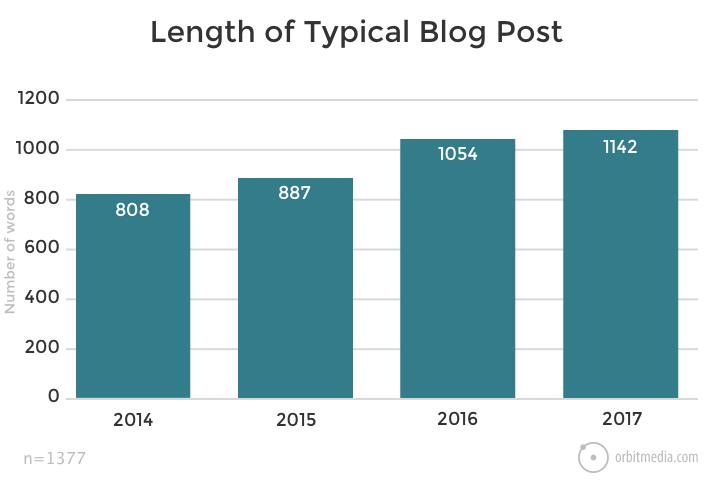
This can be seen by looking at how the length of time taken to create content keeps going up every year.

the average time it takes to write a blog post

Just as the time invested has increased, so has the number of words.

According to Ann Handley of Marketing Profs, the big takeaways from this is that quality matters and “we don’t need more content. We need more relevant content.”

You can use Google AdWords Keyword Planner to come up with hundreds of related keywords. But how do you package them in a way that is relevant to your customer interest and intent?

Use topic clusters.

A good way to start creating a topic cluster is to select a broad topic and build an initial pillar page about it.

Then you would create a separate post for each cluster content area referenced in the pillar page.

This might sound a bit confusing, so let’s look at an example.

Local marketing is such a broad subject that the intent could be very different depending on who typed in the keyword.

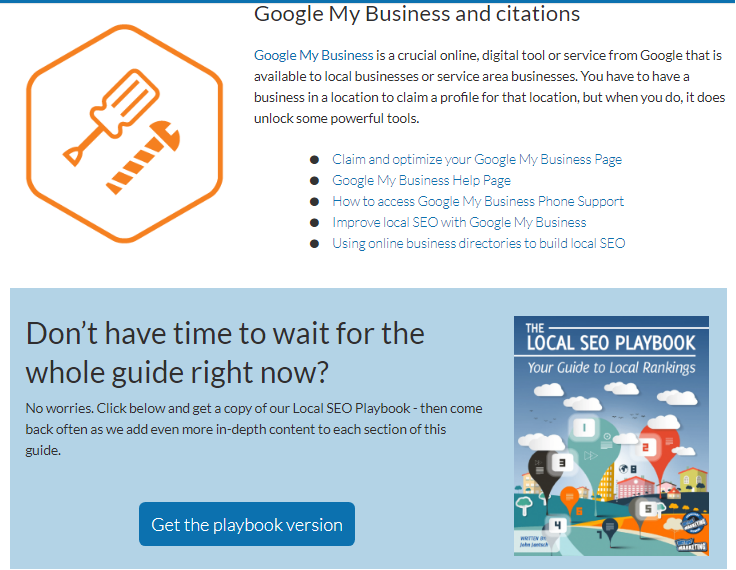
That’s why this was the broad topic Duct Tape Marketing choose for their pillar page, The Ultimate Guide to Local Marketing.

google my business and citations

The Ultimate Guide is a page on their website which offers various content across multiple mediums such as the downloadable playbook and an embedded video.

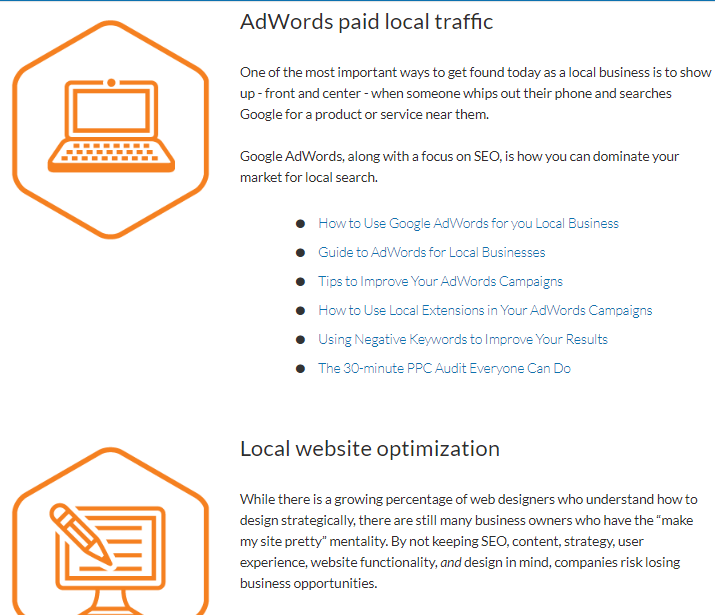
This page then goes on the link out to many other posts on their site. Each one dealing with a content cluster, or a specific subset of local marketing.

adwords paid local traffic ultimate guide

Not only that but each one of the ‘subset’ posts links back to the Ultimate Guide.

subset posts link back in post

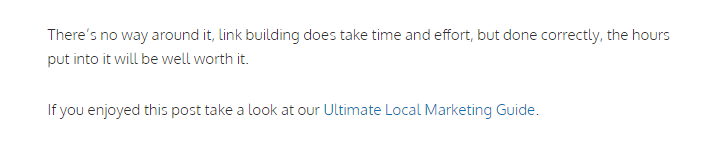
All of the posts are meticulously linked together using categories, backlinks, and anchor text.

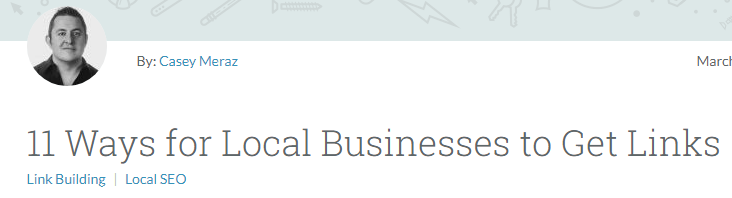
Where the author did not yet have sufficient depth of a subject covered, he linked out to curated content from high authority sites like Moz.

11 ways for local businesses to get links

This allowed him to build a deep, insightful topic cluster with a wealth of backlinks and content to answer a “local marketing” keyword search no matter the intent.

Every time a new related post is created, it will be linked back to the Ultimate Guide, keeping the content updated and fresh.

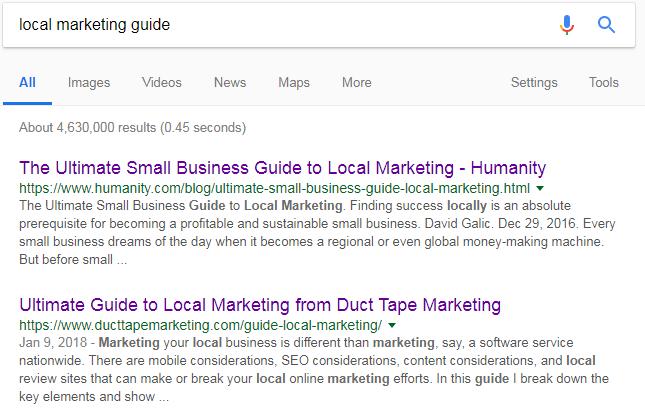
The keyword the author had targeted was “local marketing guide,” for which he currently ranks second overall in Google.

local marketing guide google search

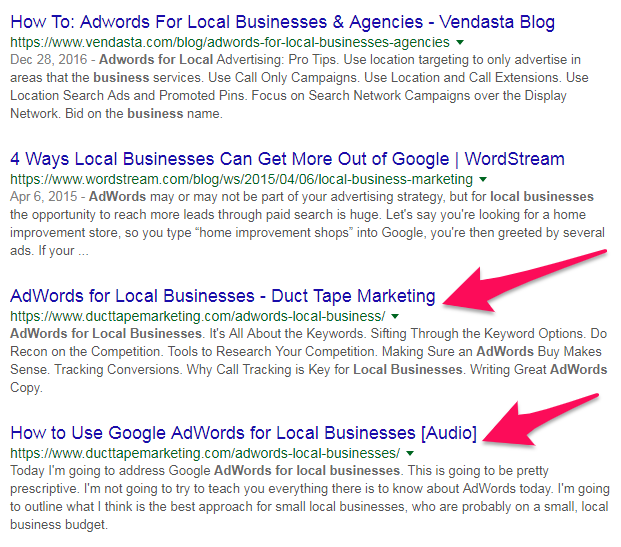
The interlinking has also helped several of the other subposts end up on the first page of search results, such as Adwords for local businesses.

adwords for local businesses google search results

Why do topic clusters work so well?

One reason is that the main page has so much content and so many links that people tend to stay on the page and the site.

Duct Tape Marketing’s bounce rate for their Ultimate Guide is almost zero. Google translates this to be high engagement, which is exactly what it’s looking for.

So how do you create a content package?

There are tools on the market that help you do this.

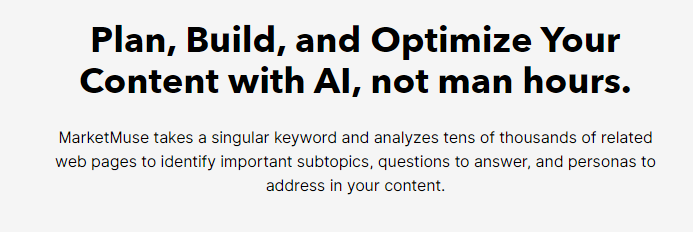
MarketMuse

MarketMuse helps you to identify content gaps within your website and in the market.

marketmuse value prop

It can help you to build, organize, and optimize your content by the topic cluster to optimize your organic SEO.

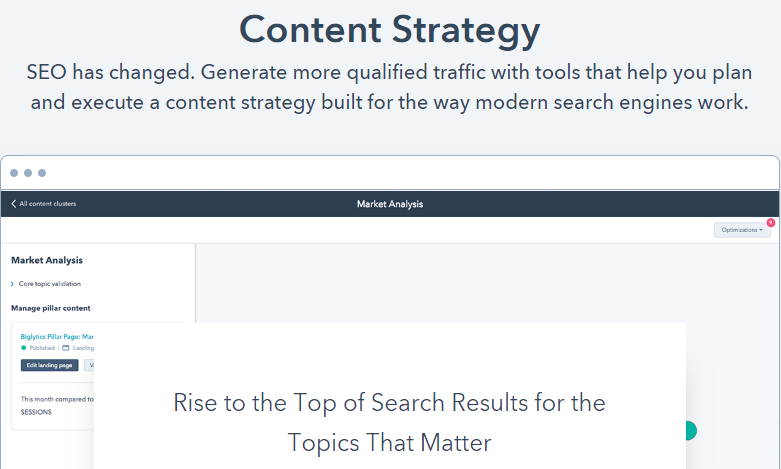
Content Strategy

HubSpot has also launched their own content strategy tool.

hubspot content strategy headline

They have designed it to help you create, publish, and report on your content by topic grouping.

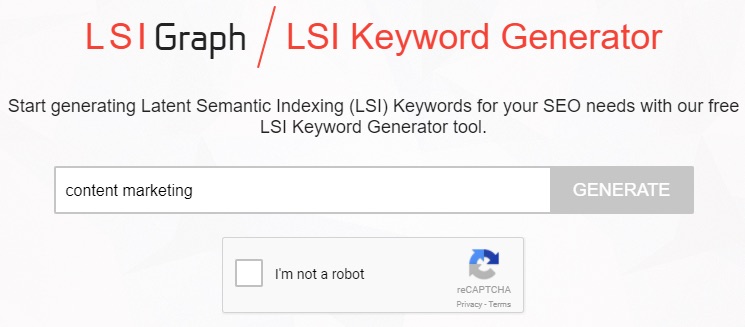
LSIGraph

Another option is to use an LSI generator such as LSIGraph to identify keywords that are related to each other.

lsi graph

It’s a free tool that will provide you with related keywords for whatever term you search.

Google Search

Finally, Google is always an option.

After all, Google wants to provide searchers with the best results. This means it’s to their benefit to help you create the best content.

You can find relevant topic clusters using Google in three different ways:

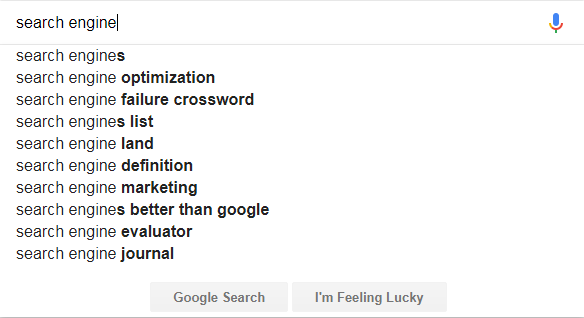
1. Auto-suggest. As soon as you start typing, Google starts automatically populating suggestions of what it thinks you might be looking for.

For example, this is what I see when I start typing “search engine” into Google.

search engine autosuggest

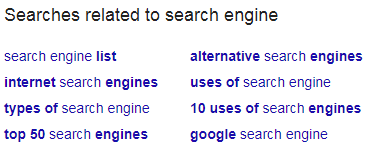
2. Related searches. After you hit enter, you can scroll down to the bottom of the search results page.

google related search terms

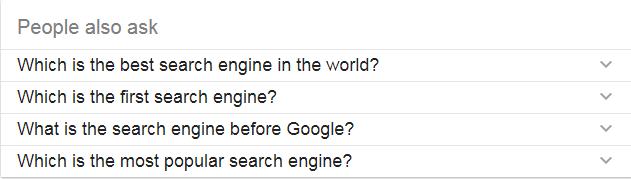
3. People also ask. For some searches, Google will also provide you with a “People also ask” section.

people also ask google search

These are common questions Google is asked that it thinks are similar to what you’re trying to find.

Make sure your pillar topic is sufficiently broad enough to be the umbrella for the rest if you’re going to use a pillar page.

Then create separate linked posts for each potential subset topic that you grouped using one of the above-suggested tools.

Once you have content clusters or groupings, it’s also important to make sure you choose content types that align.

For example, consider the following:

  • On-site glossaries and FAQ pages are good ways to tackle simple keywords that may be searched by people in the informational stage.
  • Pillar pages, cornerstone content and blog posts are great for in-depth answers related to the informational stage, as well as targeting people in the navigational stage.
  • Once consumers are into the transactional stage, landing pages are a great way to use content to help close the deal.
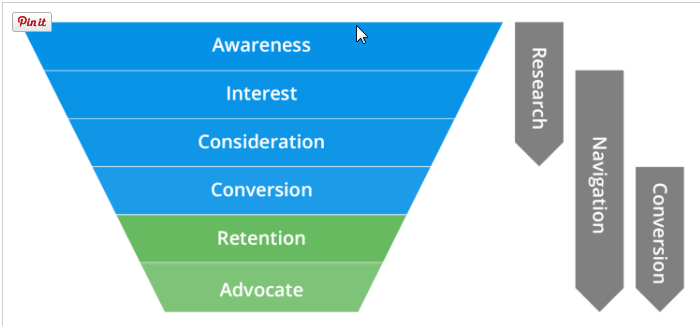
Here’s a slightly different approach to lining up content type with buyer readiness stage:

lining content with buyer readiness

Don’t forget the rest of your SEO arsenal.
This post has focused on how and why to transition from keyword targeting to focusing on customer intent and interest.
However, as I’ve mentioned, engagement is a driving factor in how Google gauges quality content that satisfies intent.

Because of this, we can’t forget the other areas of SEO that also impact engagement.

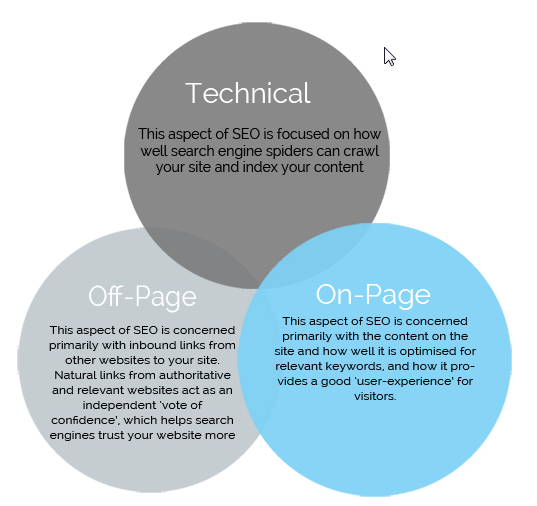
Technical and off-page SEO are just as important for positive customer experiences.

technical offpage and onpage seo

Off-Page SEO

Off-page SEO is primarily your internal and external link portfolio.

You need to develop a link building strategy that helps promote your site authority and helps show Google you’re a great match for customer intent.

One way to do this was mentioned earlier through the building of topic clusters and content packages.

However, you also need to keep a close eye on who’s linking to you, so that you don’t end up with backlinks that are spammy.

After all, backlinks are currently four of the top eight ranking factors.

backlinks in ranking factors

To keep your links clean, I recommend conducting a link profile audit on a regular basis to see how things look.

If you find any questionable sites linking to your content, make sure that you disavow them.

Technical SEO

Technical SEO can sound complex, but I promise it’s not as bad as it seems.

It’s also a critical part of any SEO toolkit.

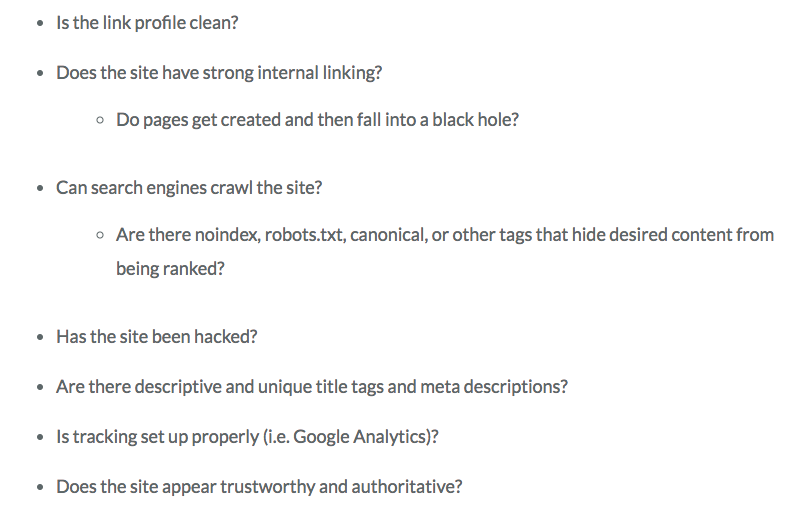
Here’s an excellent high-level summary from Moz on what parts of technical SEO you should begin to focus on:

technical seo questions

When thinking about keywords from a technical standpoint, you need to consider three main areas.

1. Content tags

There are two main types of content tags you should focus on: H1 (headings) and H2 (subheadings).

H1 tags are your titles.
H2 tags are subheadings.

You should still make sure one of your relevant keywords is in your H1 tag.

However, with the new algorithm changes, it’s less important that your H2 tags are riddled with keywords, and more important that they withstand a readability test.

Your content, including your subheadings, needs to be simple and flow well.

It should be written for someone reading at a 7th or 8th-grade level.

2. Site Speed

Google released an announcement in January that starting this July pagespeed will be one of their ranking factors for mobile searches.

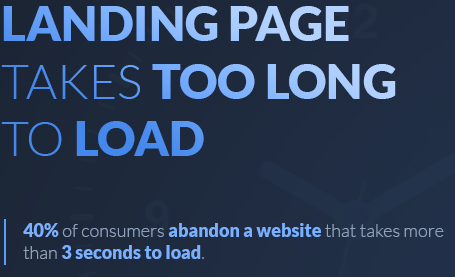
Not only that, but 40% of your audience will abandon your website if it takes longer than three seconds to load.

landing page loading stat

If your page speeds are slow, your bounce rate will increase, causing Google to think that you’re not doing a good job satisfying customers.

3. Mobile friendliness

I’ve already mentioned the importance of mobile earlier in this article.

Mobile landing page optimization is vital now that Google has switched to a mobile-first index.

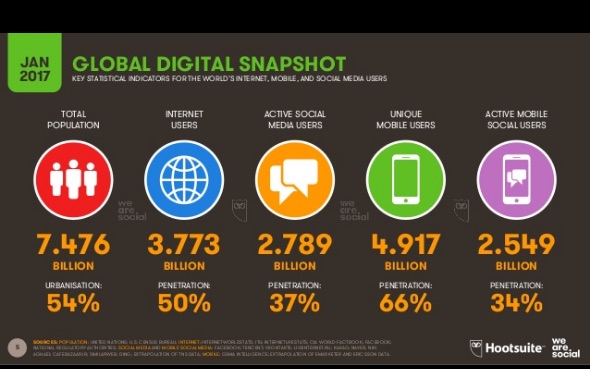
The number of mobile users continues to every year. Last year 66% of the population had a mobile phone.

global digital snapshot

Strong technical SEO will help improve important ranking factors such as time on page and bounce rates, by improving the user experience.

It should not be overlooked in any strategy, particularly as the importance of providing outstanding customer experiences increases.

Conclusion

Thanks to advances in technology, the algorithms used by search engines like Google are getting more advanced.

Instead of focusing on simple metrics such as keywords, they are now looking for content that provides value and engagement to audiences.

Google’s algorithm is continuing to advance toward voice search and conversational phrases.

This means the exact wording used in search boxes is becoming less important in which results rank well.

To get your content in front of your desired market, you need to focus on intent, interest, and engagement of customers.

You will need to account for the growing use of Mobile and Voice apps and ensure your content is optimized for them.

Then you need to engage your audience is make sure you understand what their intent is.

Make sure you understand what people are really looking for when they use certain keywords.

This means combining their searcher intent with where they are in the conversion funnel and using your content to target them properly.

You can use tools such as Behavior Flow, Site Search or Heat Maps to better understand the interest and intent of your current audience.

Then you can focus on building out in-depth topic clusters and content packages to target different customers.

Create ultimate guides and resource centers for customers early on in the conversion funnel.

Build out leadpages and conversion posts for customers near the bottom of the funnel.

Finally, continue to use keywords, but use them the right way. Don’t keyword stuff your posts. Looking for short phrases and referencing them multiple times is no longer enough.

However, you can use keywords to help you understand searcher intent and to build context into your articles and guides.

What tool are you using to cluster your content around customer intent and interest?

About the Author: Neil Patel is the cofounder of Neil Patel Digital.