Tuesday, May 23, 2023

How to land 1,830 ranking positions with only one article

Within months of publishing, our “resignation letter templates” article climbed to number one in the SERPs for a client. 

If you know how to engineer success before starting then this shouldn’t be surprising.

But hitting number one for a single keyword wasn’t the most impressive thing about this article.

Because after about a year, it was ranking for 1,830 keywords. 

That’s not a typo. It wasn’t a fluke.

And this article will explain exactly how to replicate it.

Long vs. short content? Here’s why you’re asking the wrong question

“It depends.”

Everyone is looking for a trick or a hack. A silver bullet that prints money without actually having to lift a finger.

But the unfortunate truth is that “it depends.”

  • Should you write a long, in-depth article or a short, snappy one? It depends.
  • Should you produce content in high volume or prune your site to limit the noise? It depends.
  • Should you try to target one keyword per article or multiple? Once again, it depends.

There is no one-size-fits-all approach. (Despite what LinkedIn gurus guarantee.)

Here’s a quick example:

✅ Typically, you’d want to create one article around one primary topic. 

✅ Add in your semantic themes and blend them together with similar-yet-complementary, laser-focused content. 

✅ Tie it all up in a bow with internal links to create a dense web of content.

✅ Then, let topical authority + some high-quality backlinks do their thing.

But this might not always be the case. 

Imagine you’re doing your keyword research. As you do. And you see something like this:

Keyword research
  • Lots of closely-related keywords sharing similar intent.
  • Volume on the low (to long-tail) side of the spectrum.
  • With lower keyword difficulty targets, too.

The next step isn’t to send all these to your favorite cheap writer. Or, god forbid, ChatGPT

‘Cause the wrong content or just plain bad content isn’t going to help you, anyway.

Instead, it’s to roll up those sleeves and do some basic investigating.

First, compare parent + child keywords (and ‘volume’ vs. ‘potential volume’)

The raw data an SEO tool spits out isn’t all that helpful – mostly because it’s garbage. 

Let me explain.

For starters, volume numbers are entirely inaccurate! Look up volume in three different tools and you’ll undoubtedly get three different answers.

You know what else those three answers will have in common? They’re completely wide of the mark from the actual, real-life volume or click-through rate data you might see.

While others, like keyword difficulty, heavily bias things like the number of page-level referring domains instead of the quality of said domains or even the overall domain strength (like domain rating) across the top 10 on any given SERP.

The point here is to focus less on the actual numbers and more on what the relationship of the numbers might be telling you.

Check out this “construction project management” example. Look it up in Ahrefs, then drill down into the “child” keyword ideas sorted underneath the primary “parent” topic.
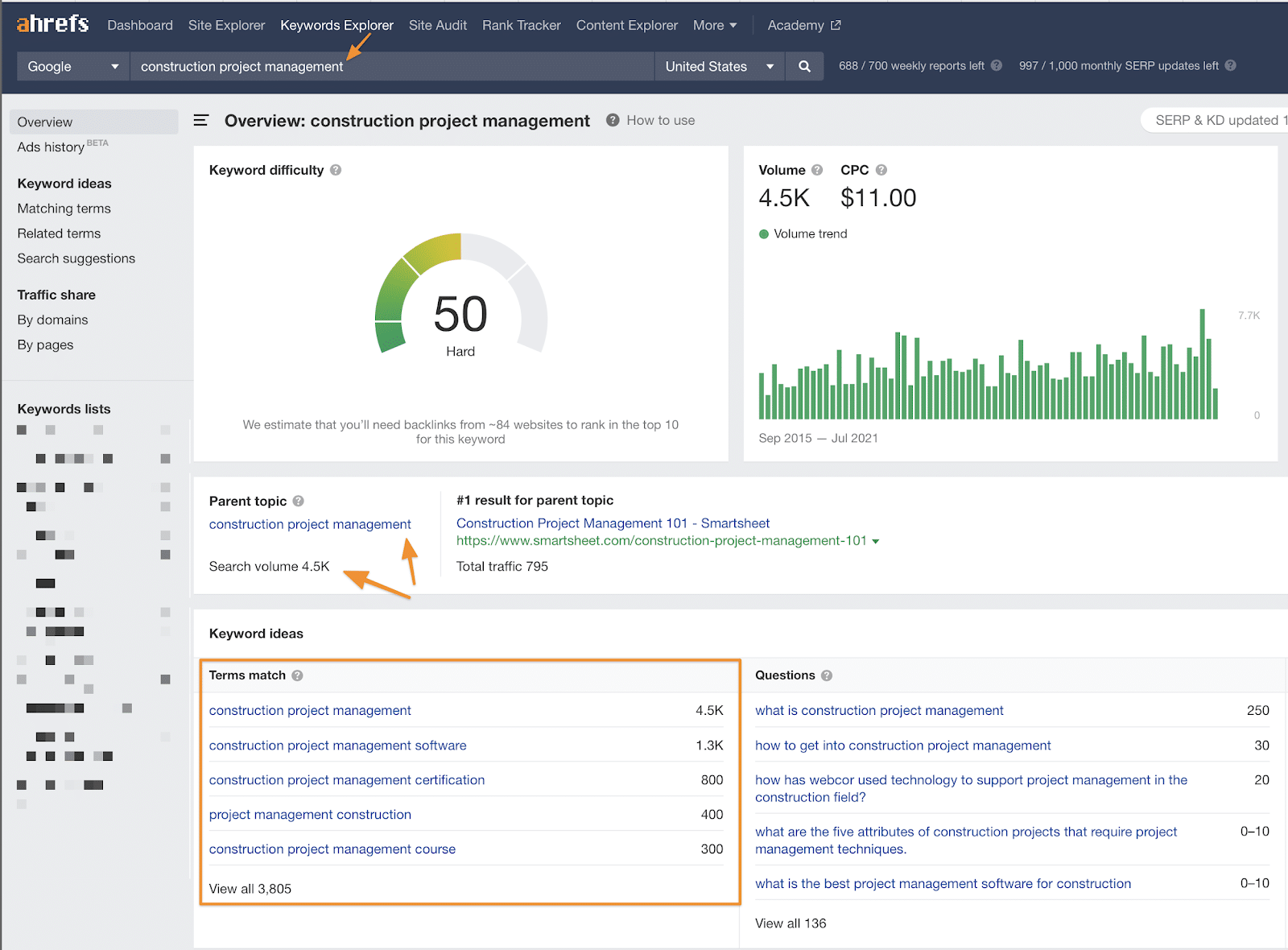
Ahrefs - construction project management

Now, you’ll see a list of closely related keywords that could be the perfect starting point for a brand-new cluster of a dozen or so articles.

Or it could just be one really long, in-depth article.

How do you know?

Ahrefs keyword list

Here’s a giant clue.

Compare the difference or ratio between Volume (local, specific to this keyword) and Traffic Potential (as in, with other keywords, too). You can even compare Global Volume if you appeal to international customers, too.
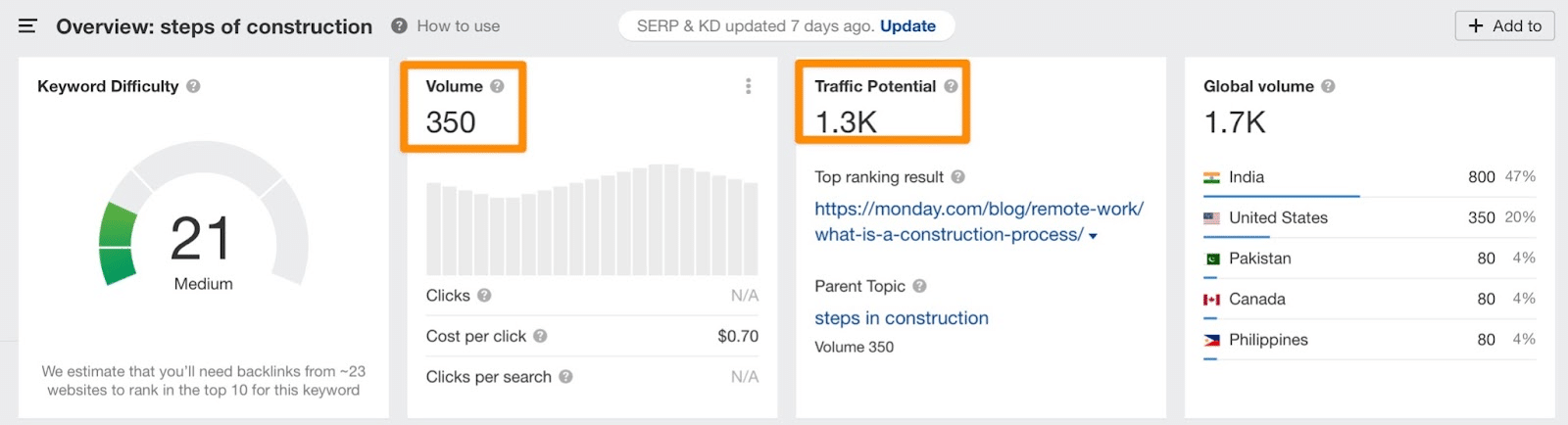
Ahrefs metrics

The fact that the Traffic Potential to Volume ratio here is ~4:1 tells me that you probably have a lot of very similar keywords displaying the same content pieces.

In other words, one really good, probably longer, and in-depth article on “steps of construction” will most likely be displayed for many long-tail variations around the same theme. 

This means you also don’t need to create unique pieces of content to rank for each.

And that’s exactly what happened.

We created one in-depth piece of content and picked up the first position for lots of similar keywords – effectively ~4xing (or more) the traffic to this article vs. what any keyword tool might have originally told us.
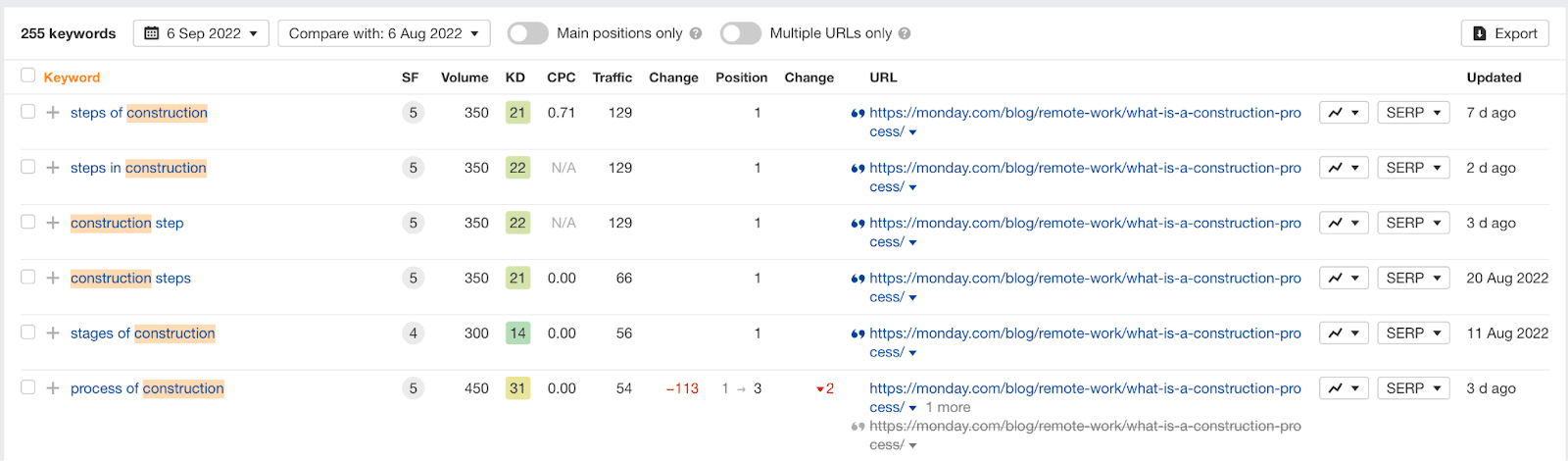
Ahrefs keywords

The good news is that you don’t have to rely on hunches or decades of experience to verify this. 

You just need to do a little additional legwork when you spot these clues. 


Get the daily newsletter search marketers rely on.

Processing…Please wait.


Then, compare the content currently ranking across each unique SERP to look for ‘overlaps’ vs. ‘unique’

SEO isn’t all that hard at the end of the day.

Yes, there are some complicated elements to think through. But it’s not a complete mystery or black box.

Heck. Google literally shows you exactly what works vs. what doesn’t. Hiding in plain sight.

That means whenever there are doubts about what people want to find out about a particular keyword and, therefore, what Google wants to display, all you have to do is simply…

Google it!

Seriously, don’t overthink it.

Pull up the keyword we’ve been discussing, like “steps of construction.” Then, look at the actual content already ranking for this query.

  • What do they have in common? 
  • What are they all doing well? 
  • What gaps are there that you think you can exploit?
  • And last but not least, how much of this same exact content is showing up for other closely-related keywords you’ve found?

The easiest way to do this is a simple side-by-side comparison. So take your “steps of construction” SERP…

Keyword comparison

 … and compare it with the top 10 articles ranking for “process of construction,” too.

Keyword comparison

See that? 

Several articles that are exactly the same, showing up for different (yet similar) keywords – that most keyword research tools tell you are actually separate or distinct.

But in Google’s mind, they’re not.

And at the end of the day, that’s the only perspective you should care about when it comes to SEO. 

Conclusion

Don’t lose sight of the forest through the trees.

SEO tactics or metrics or “best practices” – in isolation – are limited at best or completely misleading at worst.

That means Ahrefs' volume metric doesn’t matter. Same as Moz’s or Semrush, or [insert new cool hipster tool here].

At least not on their own. They don’t.

What matters is how you interpret the data and see the relationships or patterns in SERPs to understand what's happening under the surface.

That means sometimes you want to do more frequent, short articles. While other times, you want to do the opposite.

As the saying goes, everything looks like a nail to the man with the hammer. 

The post How to land 1,830 ranking positions with only one article appeared first on Search Engine Land.

Monday, May 22, 2023

20% of CMOs to invest less in paid search, SEO this year

Paid search advertising and SEO are among the channels most likely to have reduced investment in 2023, according to Gartner’s latest CMO Spend and Strategy survey. But it’s not all bad news for search marketing.

Search advertising. Although 26% of CMOs planned to reduce their investment in paid search, 40% of CMOs said they plan to increase investment in this channel.

SEO. While SEO was identified by 20% of the survey respondents as a channel to reduce investment this year, 46% of CMOs planned to increase their SEO budget.

Social advertising and beyond. Surprisingly, 53% of CMOs planned to invest more in social advertising, compared to 14% who are decreasing investment. Two other categories that can expect more budget in 2023: digital video advertising and influencer marketing.

Here’s the full chart from Gartner:

Source: Gartner 2023 CMO Spend and Strategy Survey

Why we care. Organic and paid search are two proven marketing channels that can drive visibility, brand awareness, leads, revenue, profit and more for brands. If you aren’t investing in search, you’re potentially taking money off your table.

Dig deeper. SEO vs. PPC: Differences, pros, cons & an integrated approach

Budget woes. Marketing budgets are flat – and 71% of CMOs believe they lack the budget successfully to execute this year’s strategies. So it will be important for CMOs to make smart decisions about where they spend their budget.

About the survey. 410 CMOs and marketing leaders were surveyed in March and April 2023. Respondents were based in North America and Europe, representing various industries and company sizes, with most reporting annual revenue exceeding $1 billion.

The post 20% of CMOs to invest less in paid search, SEO this year appeared first on Search Engine Land.
Google Site names now support subdomains on mobile devices

Google now supports Site names for subdomains on mobile devices, the search company just announced. Google wrote, “Site names are now supported for subdomains on mobile devices.”

Google updated its help documentation to specify subdomains on mobile.

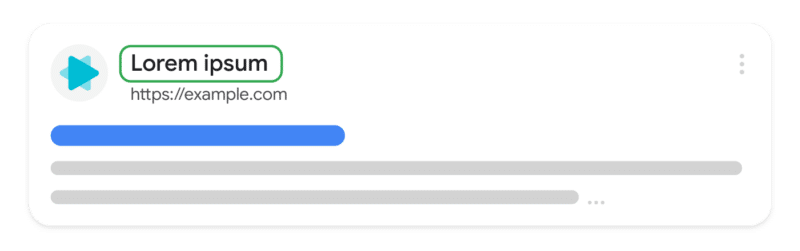
Site names. Site names is the title and name of the site Google shows in the search results listings. “When Google lists a page in search results, it shows the name of the site the page comes from,” Google explained.

What it looks like. Here is where the site name shows in the search result snippet:

Site names timeline. Here is the timeline Google posted of the evolution of site names since it launched in October:

  • October 2022: Site names for the domain level were introduced for mobile search results for English, French, German and Japanese.
  • April 2023 (I have this as March): Site names were added for desktop for the same set of languages.
  • May 2023: Site names are now supported on the subdomain level for the same set of languages and on mobile search results only.

Need support. Having issues with your site name? Google posted a support thread in the Google support forums over here, including more FAQs.

We recently saw some issues with site names, some of which Google resolved.

Controlling site names. Google back in October explained that Google Search uses a number of ways to identify the site name for the search result. But if you want, you can use structured data on your home page to communicate to Google what the site name should be for your site. Google has specific documentation on this new Site name structured data available over here.

Upgrading the favicon. Google also recommended revisiting the documentation for favicons for the latest best practices. Google is now also suggesting you provide an icon that’s at least 48 pixels and follows the existing favicon guidelines.

Ads. This is also rolled out to the Google search ads on desktop, so the size of the site name, favicons, and also the ad label will be more prominent in mobile search. In fact, Google rolled out the “Sponsored” label in mobile search last October and today on desktop, officially replacing the “Ads” label from January 2020.

Why we care. Now the site names will potentially show a different name for subdomains on mobile devices. So make sure to test to see how Google shows your site name for your subdomains on mobile, for multiple queries.

The post Google Site names now support subdomains on mobile devices appeared first on Search Engine Land.

Meta fined $1.3 billion by EU for privacy violations

Meta has been hit with a record $1.3 billion fine by the European Union for breaching data transfer laws.

What happened. Facebook transferred the data of EU citizens to the U.S., violating the EU’s General Data Protection Regulation (GDPR), according to the Irish Data Protection Commission. Meta’s European headquarters are in Dublin.

What the ruling means for Meta. Meta has been given five months to stop future transfers of personal data to the U.S. and six months to cease unlawful processing and storage of EU/EEA users’ data in the U.S., according to the ruling.

Why we care. If the ruling is put in place, Facebook would have to delete a huge amount of data and restructure its IT systems at a very fundamental level. It also would have enormous implications for any company transferring data between the two areas.

Only Facebook. The decision applies only to Facebook and not other Meta-owned platforms (e.g., Instagram).

What Meta is saying. The company plans to appeal, Nick Clegg, Meta’s president of global affairs, and Jennifer Newstead, its chief legal officer, said in a statement:

  • “This decision is flawed, unjustified and sets a dangerous precedent for the countless other companies transferring data between the EU and U.S.”

A conflict of laws. The best hope for staying the ruling is a new data transfer treaty between the U.S. and the EU.

Until 2020, these transfers were protected by the Privacy Shield treaty between the two governments. That year the EU’s highest court invalidated the treaty by ruling it did not sufficiently protect EU citizens’ data from American spy agencies. 

Negotiations have been underway since the high court’s ruling. Last year, President Biden and Ursula von der Leyen, the president of the European Union, announced the outlines of a deal, but the details are still being hammered out.

This decision may increase the pressure on the U.S. to get it done. However, the complexity of the issues makes it difficult to move quickly.

The post Meta fined $1.3 billion by EU for privacy violations appeared first on Search Engine Land.
Neeva is shutting down its ads-free search engine

Neeva will shut down June 2. The ad-free search engine launched less than two years ago.

Neeva’s failure was due to its inability to attract enough users, the rise of generative AI and LLMs and the current economic environment, according to the company’s founders, Sridhar Ramaswamy and Vivek Raghunathan.

Sridhar Ramaswamy statement. Ramaswamy tweeted the following:

“This was a very tough decision that took into account lots of things: our business progress so far, the current funding environment and our ability to continue to grow quickly in this vastly changed search environment. We are incredibly proud of what we have accomplished: building a search engine from scratch with a tiny team of fifty people and releasing the world’s first LLM powered answer engine that produced reliable citations.”

Why we care. Neeva’s search market share was tiny, but it offered an alternative to Google, which is always a good thing. Unfortunately, as has been the case with most Google alternatives – including Microsoft’s Bing – it’s nearly impossible to get people to break free of their Google habit.

History of Neeva. The search engine was founded in 2019, but it wouldn’t be until June 2020 we first reported on the new search engine. Neeva would be 100% free of advertising and subscription-supported. Neeva also said it wouldn’t track users, with personalization being done without data mining.

Ramaswamy believed the quality and usefulness of Google’s search results had been compromised by the focus on ad revenue. Their mission was to “take search back to its users.”

Neeva launched in the U.S. in June 2021, charging users $4.95 a month. In an attempt to expand its user base in 2022, Neeva began offering a free basic subscription.

In January of this year, the company announced NeevaAI, a generative AI search product that answered queries with summaries and citations – beating both Microsoft’s New Bing launch (announced Feb. 7) and Google’s Search Generative Experience (still hasn’t launched publicly).

Read the announcement. Next Steps for Neeva.

The post Neeva is shutting down its ads-free search engine appeared first on Search Engine Land.
Google has done its last mobile-first indexing switch today, a six-year process

Google started its efforts to move sites over to mobile-first indexing over six and a half years ago. Today, Google confirmed those efforts are now done, and the last batch of sites eligible for mobile-first indexing have been moved over.

Confirmation. John Mueller from Google confirmed today was the last batch on Mastodon today after I reported there was a massive batch of sites moved to mobile-first indexing in the past several hours. John said that this was the “last batch!”

Not all sites moved. John added that there will still be a “tiny handful of sites that really don’t work on mobile are left.” Those remaining sites, he said, will “just be crawled with desktop Googlebot going forward.”

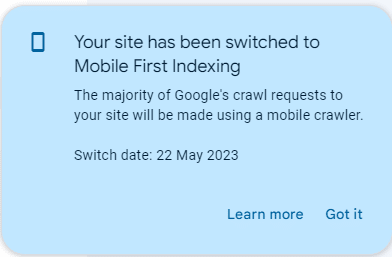
Notifications. Today, a number of SEOs noticed that sites that have been on desktop-first indexing were notified they were moved to mobile-first indexing. Here is a screenshot from Richard Hearne he posted on Twitter:

History. As a reminder, Google started mobile-first indexing over 6.5 years ago, and eventually, after publishing deadline after deadline, Google removed the deadline. Google first introduced mobile-first indexing back in November 2016, and by December 2018, half of all sites in Google’s search results were from mobile-first indexing. Mobile-first indexing simply means that Google will crawl your site from the eyes of a mobile browser and use that mobile version for indexing and ranking.

Google in early March 2020, before all the lockdowns began across most of the world, announced the deadline for all sites to switch over to mobile-first indexing would be September 2020. At that time, Google said, “To simplify, we’ll be switching to mobile-first indexing for all websites starting September 2020.”  Then in July 2020, Google moved that deadline once again to March 2021.

Why we care. So if your site has not yet been moved to mobile-first indexing, then it might never move to mobile-first indexing. Oh, all new sites by default, should be indexed over mobile-first indexing. The issue is, John said, sites that were not moved over “don’t work with mobile user-agents at all.”

This took a lot longer than anyone expected, but the process seems to be officially now done.

The post Google has done its last mobile-first indexing switch today, a six-year process appeared first on Search Engine Land.

Link-building companies to watch in 2023 by Admix Global

In today’s digital age, having a strong online presence is essential for any business looking to succeed, and link building plays a crucial role in achieving that goal. Quality links from the sites of real businesses that are growing are a long-term investment.

In this article, you will discover a compilation of link-building companies so you can make an informed decision and get a superior result.

Editorial.Link is all about scoring primo editorial links from websites that don’t sell them. These effective backlinks are obtained through established relationships with 2500+ businesses and originate from the blogs of diverse businesses, including top-notch SaaS firms: g2.com, cloudways.com, monday.com, blog.hubspot.com, hive.com, hostpapa.com, mageplaza.com, etc. As a result, customers get long-term outcomes.

Price: Editorial.Link provides a range of packages to suit different budgets, starting from $1,750/ 5 top-notch backlinks. For those who need more firepower, the prices go up to $17,500/ 50 backlinks. Also, there are custom offers.

Fields: IT, tech, SaaS, crypto, real estate, finance, marketing and more. 

Advantages:

  • All links are indexable and free from “sponsored” or “nofollow” tags.
  • They can get links from pages that are relevant, receive significant search traffic, and rank for numerous keywords.
  • The team also provides white-label link-building services. This enables solopreneurs to promptly provide top-tier links to clients and allows agencies to broaden the range of services they offer to customers.
  • They only charge for link placements that meet agreed-upon expectations, offer domains and pages for approval (clients have the flexibility to select the pages that are most suitable for the project they are promoting), and do not require prepayment.

Considering all the merits of Editorial Link, this service is a cost-effective solution for both clients and agencies.

2.   PageOnePower

PageOnePower is all about manual, white-hat link-building strategies, and they’re total pros at scoring high-quality backlinks from legit sources.

Price: PageOnePower operates on a monthly budget, with a minimum of $4,000.00 per month. The typical price per link is about $700 but depends on various factors.

Fields: Technology, ecommerce, healthcare, finance and more.

Advantages:

  • They prioritize building relationships with website owners and editors to ensure link placements are from credible sources.
  • Each custom campaign comes with a dedicated Project Manager. Their reportage is done through a series of Zoom meetings, Google spreadsheets, analytics reports and presentations.

Given all PageOnePower’s merits, it’s no wonder why they’re the go-to choice for businesses looking to enhance their online authority.

3.   Sure Oak

Sure Oak is a top-tier link-building agency that specializes in manual link acquisition.

Price: Sure Oak provides customized link-building packages to suit different budgets, starting at $300+ per link on average. They typically engage in monthly retainers where clients pay upfront for a guaranteed link volume that meets the stated metrics.

Fields: SaaS/Software, finance/fintech, ecommerce, health and wellness and many more.

Advantages:

  • Sure Oak strictly adheres to white-hat link-building practices. All links are indexable and free from “sponsored” or “nofollow” tags.
  • They provide custom Google Data Studio reports or shared Google sheets to track link placements, and they develop periodic formal strategy review reports that are shared with clients.

Based on personal interactions and feedback from other customers, Sure Oak can safely be considered one of the top performers in the industry.

4.   BlueTree

BlueTree specializes in digital PR for SaaS and technology companies. With a focus on editorial link building, BlueTree helps businesses scale their online presence in both short- and long-term ways.

Price: Basic package – $2,500 per month, Startup package – $4,500 per month, Enterprise package – $6,500 per month.

Fields: SaaS and technology companies.

Advantages:

  • BlueTree’s approach to digital PR is based on an editorial approach, creating long-form, topically-relevant content that includes seamless links to clients’ services and products.
  • Their team maintains strong relationships with more than 300 tech-focused websites.

With its dedication to ethical practices and extensive network of tech-focused websites, BlueTree has established itself as a premier agency in the field.

5.   uSERP

uSERP is a full-service link-building agency that specializes in building a client’s backlink profile through a white-hat outreach approach. They aim to outrank competitors through content gap analyses, URL analyses, and link reclamation for brand mentions.

Price: Startup – $10,000/month, Scaling – $15,000/month, Authority – $20,000/month.

Fields: Information technology and services.

Advantages:

  • Quick and smooth communication with customers and timely reporting;
  • They offer full transparency and do not resort to gray- and black-hat tactics.

uSERP is an excellent choice for businesses in the information technology and services industries looking to enhance their online presence.

6.   Сollaborator

Looking for quality backlinks to promote your website? Collaborator offers a variety of link promotion services to help you achieve your goals.

Price: Collaborator offers a range of pricing options depending on the type of link promotion service you choose. Insurance for deals is available for 10% of the transaction cost.

Fields: Collaborator offers link promotion services for a variety of fields and subjects.

Advantages:

  • Collaborator offers a variety of advantages, including a large catalog of quality sites, a range of pricing options, quick placement options and insurance for deals to protect articles from deletion and non-indexing.

Collaborator is a useful tool for anyone looking to promote their website through quality backlinks.

7.   FatJoe

FatJoe specializes in providing clients with natural in-content links that are curated using white-label methods. The agency also excels in content syndication by distributing pre-created content to media journals, news outlets and other high-quality sites.

Price: Pricing varies depending on the specific service being offered. Blogger outreach and niche edits – $75 to $403, HARO link building – $1,260 and $2,836, content syndication – $95.

Fields: Retail, manufacturing, technology and advertising.

Advantages:

  • With a focus on white-label methods and genuine outreach, FatJoe ensures that clients receive links that are of the highest quality and credibility.
  • The agency’s online dashboard allows clients to view every link FatJoe secures while also providing the option to create personalized DR and link goals.

For businesses looking to enhance their online presence and authority, FatJoe is a trusted partner.

8.   PRNEWS.IO

PRNEWS.IO is a platform that provides guaranteed placement of sponsored content in online media worldwide. It helps companies increase awareness among potential partners, boost sales, and gain link juice.

Price: The pricing of PRNEWS.IO varies depending on the type of content and distribution channels chosen. The PRO version runs on a subscription basis: $100/month or $1000/year.

Fields: PRNEWS.IO deals with businesses in a variety of fields (including politics and crypto if choosing a PRO version).

Advantages:

  • Using PRNEWS.IO makes content creation, optimization, and promotion faster by automating repeatable tasks and using intelligent algorithms.
  • There’s a convenient directory for choosing the sites for publication.

PRNEWS.IO is a compelling option for businesses of any size and type, even in “delicate” fields.

9.   Authority Builders

Authority Builders’ team of SEO experts uses proven strategies to acquire high-quality backlinks from authoritative websites in various industries.

Price: The price is calculated individually and depends on the DR of selected websites for link placement. A link placed on a site with a DR of 70+ will cost customers at least $297.

Fields: Finance, health, real estate, technology and more.

Advantages:

  • They prioritize acquiring high-quality links from authoritative websites rather than mass-producing low-quality links.
  • Personalized approach to link building.

Authority Builders is a reliable and effective link-building agency that can help businesses drive organic traffic to their websites.

10.  LinkBuilder.io

LinkBuilder.io is a reliable link-building agency that provides effective solutions for businesses looking to improve their online presence.

Price: The most popular package is Growth – $9999 / 27 Links.

Fields: Ecommerce, finance, health, technology and more.

Advantages:

  • LinkBuilder.io provides regular reports to clients detailing their link-building campaign’s progress.
  • They also use ethical link-building techniques that comply with Google’s guidelines to ensure the safety and effectiveness of their campaigns.

LinkBuilder.io’s affordable packages and commitment to quality make them a good choice for businesses of all sizes.

Conclusion

Any company mentioned in this article is highly likely to provide you with a strong performance of link-building campaigns. However, it’s critical to reach out to their representatives directly to ensure they can meet your specific needs and expectations.

The post Link-building companies to watch in 2023 appeared first on Search Engine Land.