Thursday, December 3, 2020

13 Reasons Why Direct Mail Isn’t Dead

direct mail effectiveness

In an increasingly digital world, direct mail seems old and boring.

You wouldn’t drive a horse-drawn carriage to work or use a pager to contact your friends, would you?

Of course not.

Direct mail feels outdated.

But direct mail is still a great way to reach your audience, grab their attention, and connect with them on a personal level.

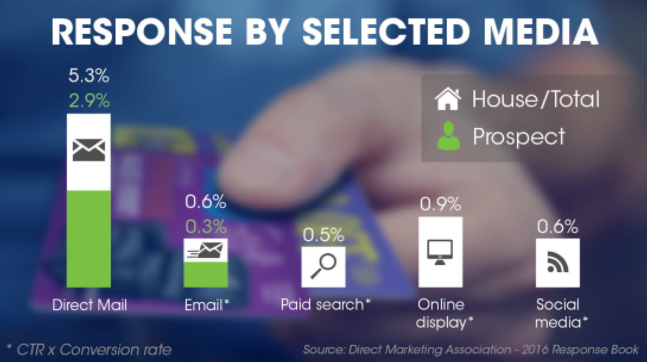
In 2016, The Data & Marketing Association reported that the direct mail customer response rate increased by 43%. Even better, the prospect response rate increased by 190% compared to 2015.
pasted image 0 754

Many marketers are in shock.

But the data is undeniable.

Direct mail is still effective, and using it is a game-changer for any serious marketer.

Here are 13 reasons why direct mail still isn’t dead.

1. Direct Mail has a High ROI

Would it surprise you if I said that direct mail gives you more bang for your buck than paid search and online display ads?

Well, it does.

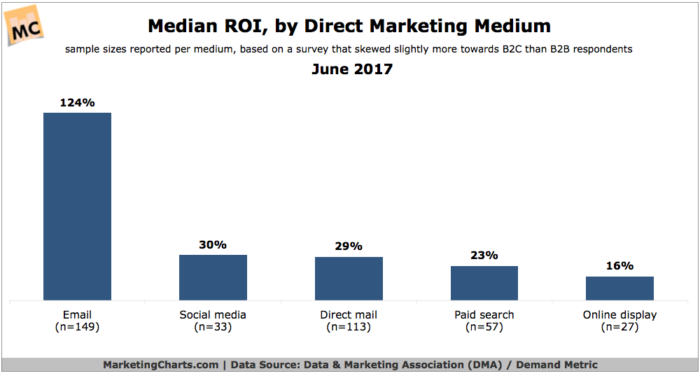
Direct mail has a median ROI of 29%, putting the ROI in third behind email and social media marketing in terms of ROI. Social media is ahead by only 1 percentage point.
direct mail ROI chart

That might not seem very high, but when you consider that paid search has an ROI of 23% and online display at 16%, that number looks a lot more attractive.

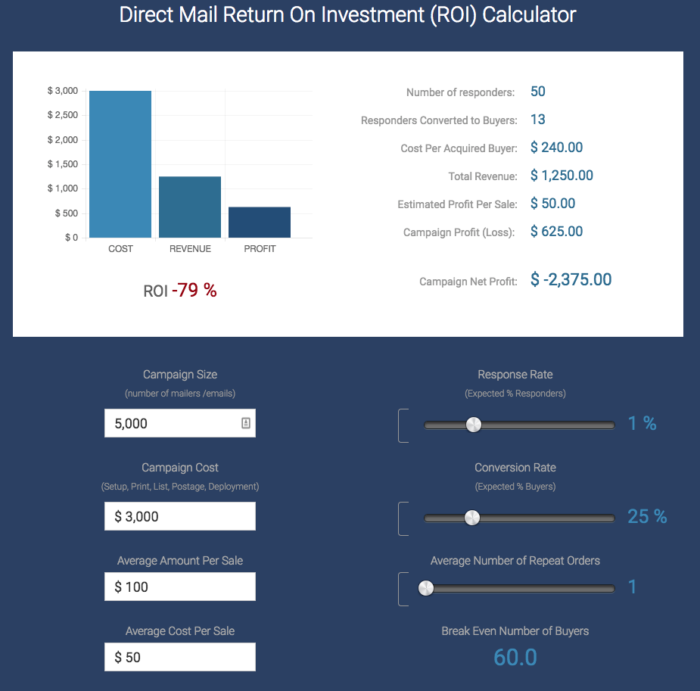
Are you curious about what your direct-mail ROI could become? You can go here to calculate it.
calculate ROI for direct mail

That baffling ROI says nothing of direct mail’s response rate, which is 5.3% for mail sent to houses and 2.9% for prospect lists.
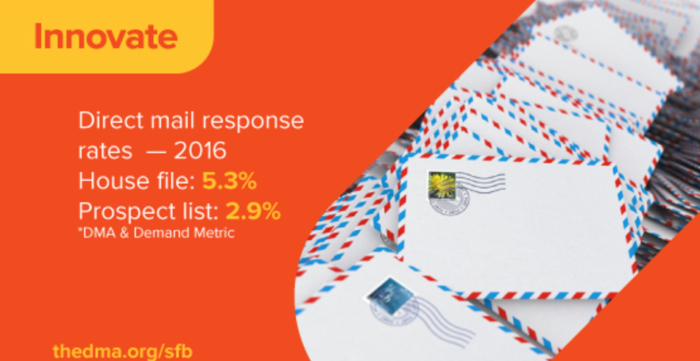
direct mail response rate

Now compare that number to email, which has an average click-through rate of about 2% or 3%. And that’s the click-through rate, not the response rate, which is 0.6%.

Despite what the haters say, direct mail is still holding its own against other marketing channels.

2. Direct Mail Works Great with a Digital Marketing Strategy 

Every great marketing strategy uses multiple channels.

Smart marketers wouldn’t run only Facebook Ads and call it a day.

They’d consider running Instagram ads, do paid search campaigns, and even use search engine optimization to increase traffic.

While you shouldn’t invest only in direct mail, you should consider it part of your marketing bag of tricks.

97th floor in Utah combined direct mail and digital marketing to increase loyalty with their clients.

First, they sent out a direct mailer to all of their clients with a holiday poem and a $20 bill with a scannable code next to it.
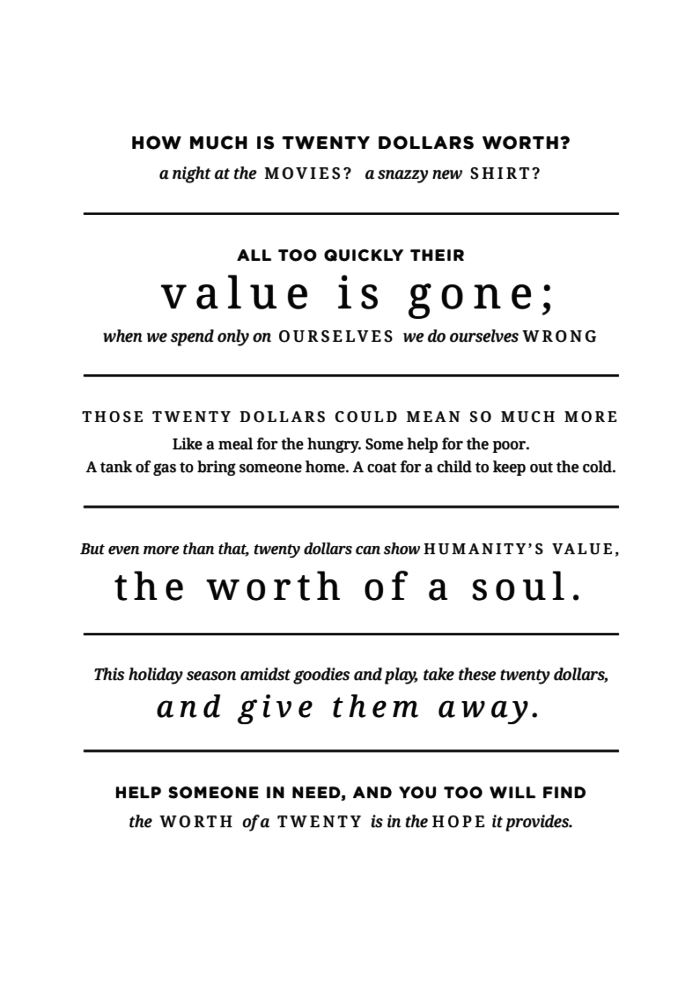
direct mail example

Endearing, right? But the beauty is when you flip over the card and look at the left-hand side. There’s a scannable code and a hashtag to use below it.
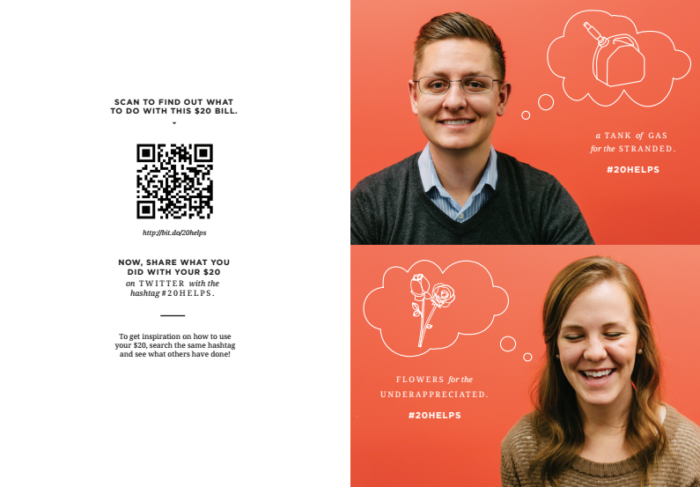
direct mail example back with tracking code

So what’s up with the $20 bill?

When someone scanned the code with their phone, it sent them to a video that encouraged them to spend $20 on someone less fortunate during the holiday season.

The agency then asked for everyone to share what they did on Twitter using the hashtag #20helps.
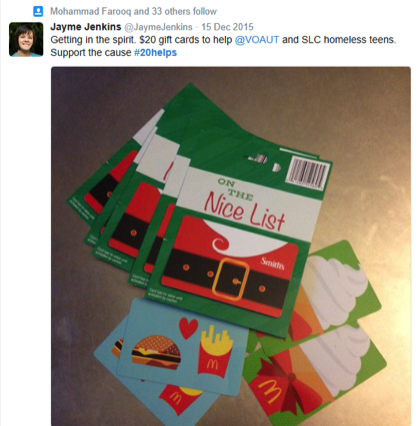
direct mail campaign hashtag on twitter

Combining direct mail with savvy digital-marketing techniques increases the personability of the message you’re sending.

When you give people something to do with your direct mail, such as watching a video, taking a selfie, or spending $20, few people resist the urge to participate.

3. Direct Mail is Easier to Target Than You Might Think 

On social media, targeting your audience is dead simple. Facebook, Instagram, and Twitter all offer tons of targeting tools based on interests, demographics, even behavior. 

But what about sending the right message to your customers using direct mail?

Can you target your ideal client well enough to make it worth your time and money?

Yes, you can.

At USPS.com, you can use their Every Door Direct Mail tool to send mail to different customers in different areas.
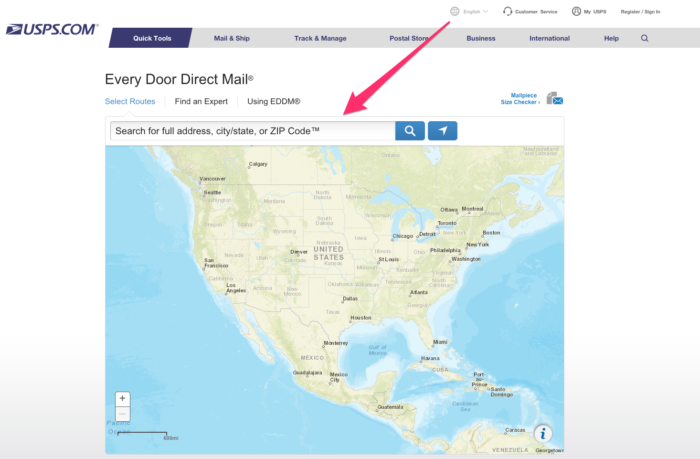
USPS com Every Door Direct Mail

Start by entering your city and state or zip code.
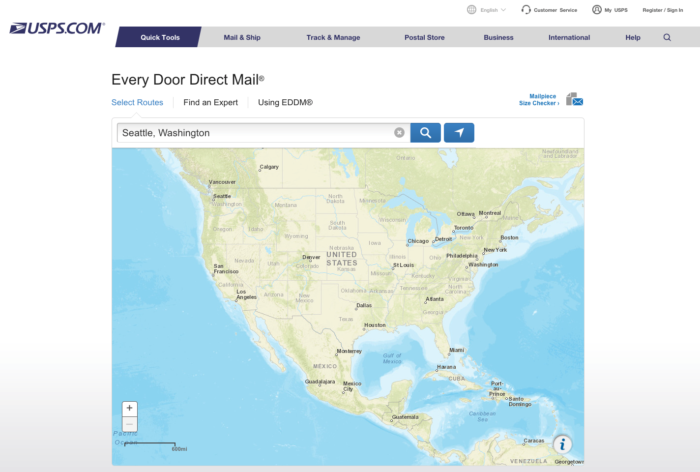
target direct mail USPS

Hit enter. Select up to five zip codes near your location.
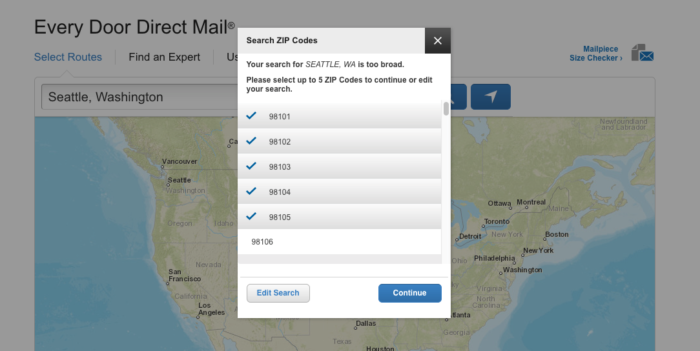
target direct mail USPS

Then click continue. You’ll see a map that looks something like this.
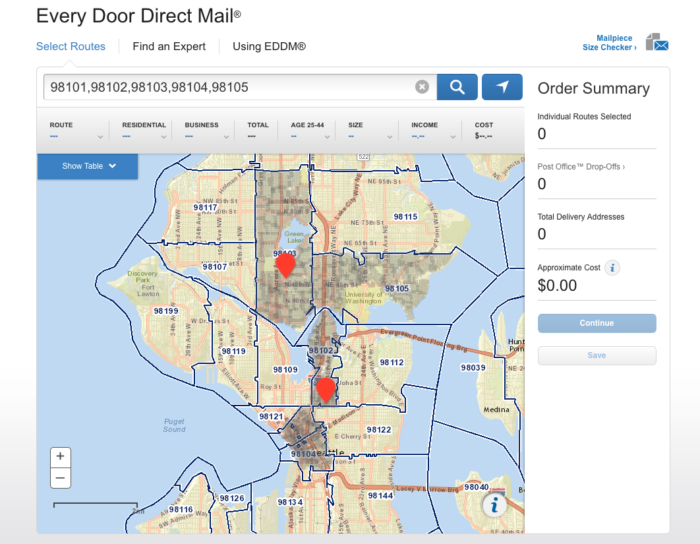
every door direct mail

When you hover your mouse over a route, the tool will show you the number of residents, number of businesses, age range, average household size, and average household income of that zone.

It even calculates the approximate cost of postage to send a mailer to that route.
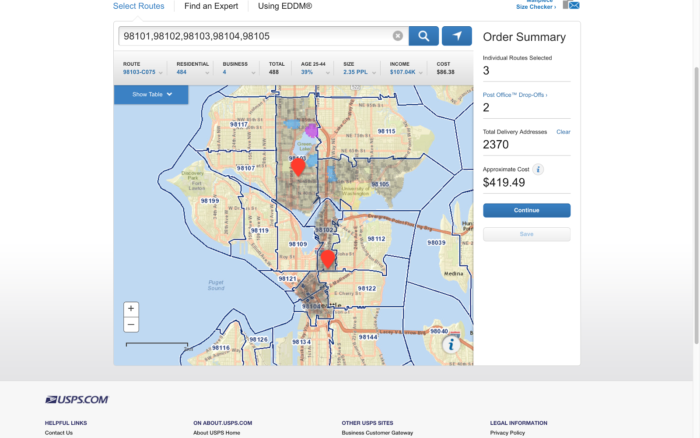
everydoor direct mail cost calculator

As long as you already know who your target audience is, direct mail can be highly specific.

4. Direct Mail is Trackable (Yes, really) 

Technically, there is no automatic way to track direct mail response rates, ROI, and general engagement. Unlike a Facebook ad, you can’t track that the user went from your ad to your product page. 

Maybe a customer visits your website after seeing your direct-mail piece. While this person would count as a lead from your website, they should be a lead from your direct-mail campaign.

But wait, I just said direct mail is trackable. 

It’s a little more complex, but tracking direct mail is totally doable. 

Here are a few tricks you can use to find out how well your direct-mail campaign is working.

First, if your goal is to get someone to call you, choose a unique phone number for that direct-mail campaign.

10 Tips for Sending Real Estate Direct Mail with examples

Similar to this, if your goal is to get people to visit your website, you can create a unique landing page to track your results.

When people visit or click on the landing page, you’ll know that they came from that direct-mail campaign.

10 Tips for Sending Real Estate Direct Mail with examples 1

Whatever CTA you choose for your direct mail campaign, use a unique tracking device, whether that is a phone number or website URL.

Then, you can count it as a lead from your direct-mail campaign.

5. Direct Mail is Less Common 

At first glance, that might not seem like a good thing.

Maybe fewer marketers are using direct mail because it doesn’t work.

As I’ve already shown you with the above statistics, that isn’t the case.

The answer is simple. Since everyone is familiar with digital marketing, it’s easier to start getting results than a direct-mail campaign. So fewer people do it.

In 2016, there was a 2% decrease in direct mail delivered from the previous year.
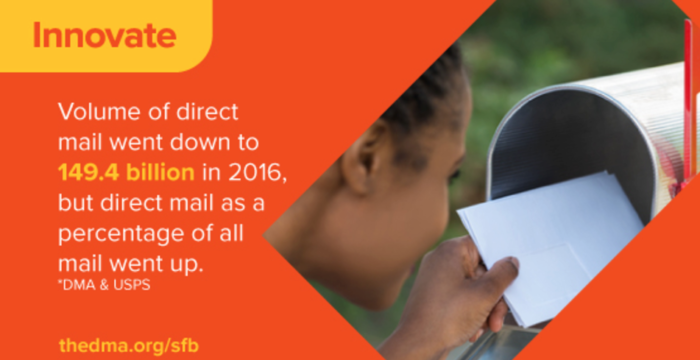
direct mail increase stastics

Why is that a good thing for your direct-mail campaign?

When fewer marketers are sending mail, your piece has a higher chance of standing out.

Think about how much harder it is today to rank in Google. If I type in “how to send awesome direct mail,” Google only shows me 10 results out of 6,470,000 possible answers.
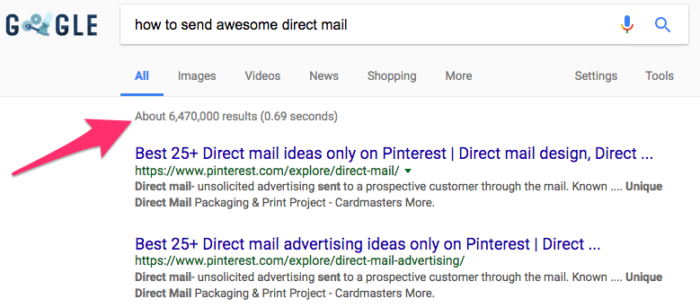
how to send awesome direct mail Google Search

In other words, the internet is full of marketing messages.

But mailboxes aren’t.

And that’s why direct mail still works so well in this digital age. Since it takes a bit more work than other digital marketing strategies, it’s less common and more effective.

6. Direct Mail Gives a Feeling of Romanticism

Like hot baths and candlelit dinners, direct mail has become romanticized in our culture.

Think about it. When you receive a handwritten letter from someone, what do you do?

You get excited. Someone cares enough to write you a letter. It’s not very often that you receive something like this.

What do you do next?

I’ll bet you sit down and read every word of that letter. But it’s not just you who loves getting letters.

73% of people said that they prefer direct mail as an advertising method.
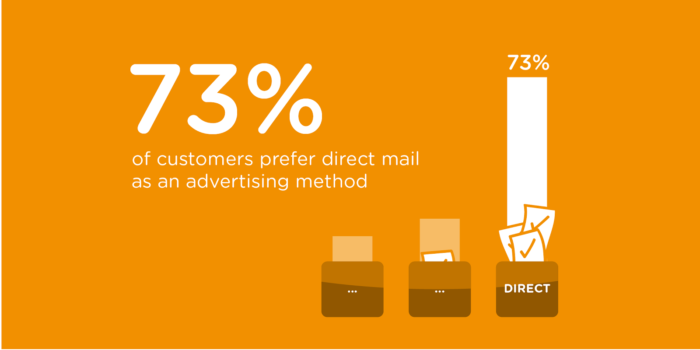
customers prefer direct mail stat

And, 59% of US consumers say they actually enjoy getting mail from brands. 

Since people are receiving less direct mail, each piece of mail is more exciting.

Especially if your direct mail is handwritten. Even if you add your signature.

In a world where everything gets written by a machine, handwriting on a direct-mail piece is a touch that receivers won’t be able to ignore.

Just check out this example from BiggerPockets.
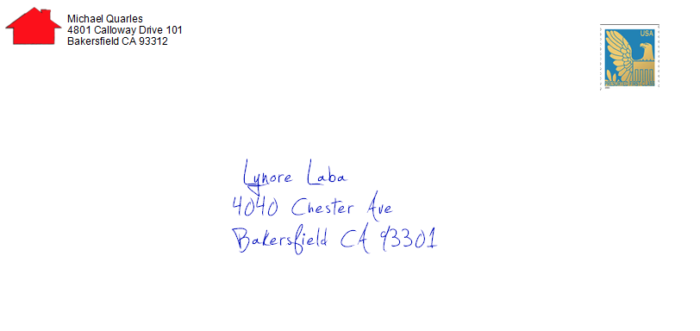
direct mail envelope example

It’s more like getting a personal letter from a friend than a marketing message from a business.

7. Direct Mail is Tangible

Imagine this. You receive a coupon in the mail for $10 off your next meal at your favorite local pub.

pasted image 0 744

If you’re like me, you set the coupon on your refrigerator for future use.

Then, you pretty much forget about it. For the next few weeks, the coupon sits in your kitchen with other unused direct-mail offers.

But one night, your buddy calls and wants to watch the big game at a restaurant. As you’re trying to decide where to go, you remember, “Oh! I have a coupon for our favorite pub.”

And at that moment, the coupon decides for you.

Even though the coupon is for just $10.

You could do the same thing with a haircut business.
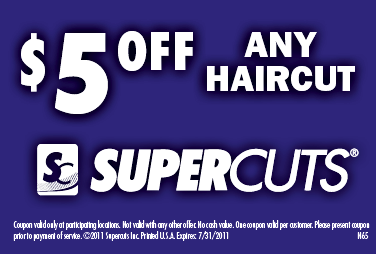
direct mail example superucts

Or an ecommerce store. No brick-and-mortar location needed.
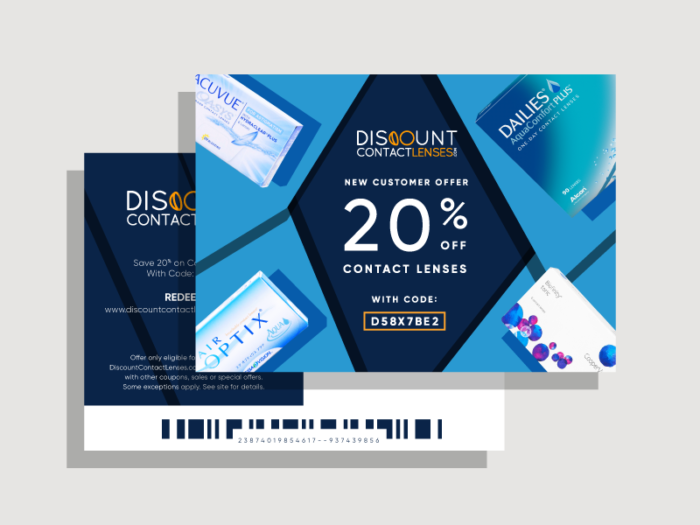
direct mail example discount contacts

Since direct mail is tangible, it sticks around. It clutters physical space.

Email is easy to forget about because it’s just a number on a screen.

As a general rule of thumb, about two percent of online advertisements garner our attention each day. In other words, only about 100 out of every 5,000 ad exposures have any meaningful impact on consumers.

But direct mail is unavoidable.

About 66% of people have purchased a product because of direct mail.

If your direct mail piece has a special offer, most people will save it for future use, and then they won’t be able to forget about it.

8. Direct Mail Gets Undivided Attention

A certain fear accompanies direct mail.

What do I mean?

When you open the mailbox and pull out a small stack of letters, you won’t throw away any of the mail without glancing at it first.

You don’t immediately know which piece of mail requires your attention and which one you’re uninterested in. There is a fear that you might miss out on something important.

Because of that, you don’t want to throw mail away without taking a peek at it first.

Right? 

When you receive an email, you probably have at least four (or forty) other tabs open on your computer. There are a bunch of notifications dinging on your phone and laptop.

The average American consumer is exposed to thousands of advertisements per day. In fact, it’s not unusual for the average consumer to see more than three hundred advertisements, of various sorts, within the first hour of waking up. 

But when you receive a piece of direct mail, you’re at home, after work, with some extra time to view each letter.

Direct mail naturally gets more attention because there are fewer distractions when people see it.

9. Direct Mail Increases Brand Awareness

As I’ve shown you, direct mail is tangible, meaning it has the potential to stick around for a long time in someone’s house.

For this reason, consistent mailing increases awareness of your brand.

How?

Consider this piece of direct mail from Le Tote.
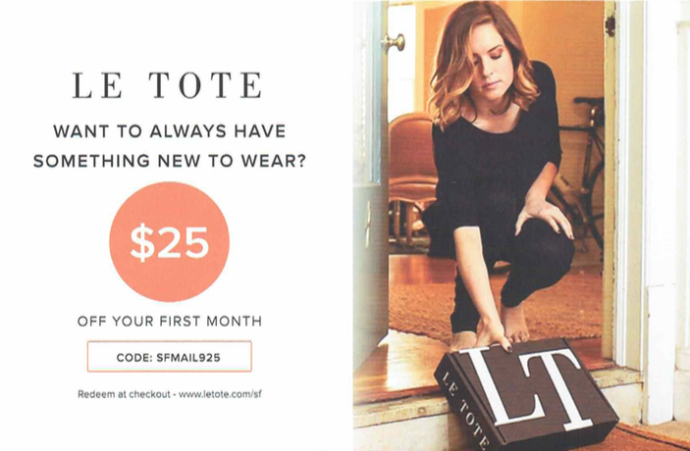
direct mail example from le tote

The front has the value proposition and offer, while the back demonstrates how easy it makes your life.
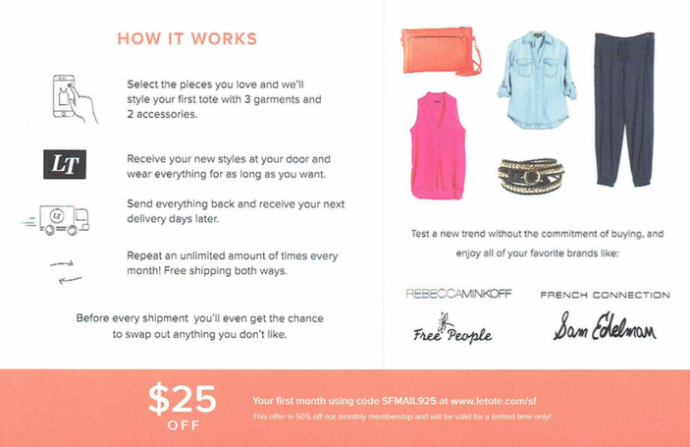
direct mail example le tote 2

Since this postcard offers a coupon, there’s a good chance that the recipients will save it for a later date.

But what if they don’t use it later?

What if they see it, read it, and then throw it away?

Did you just lose money on a poor direct-mail campaign?

Not necessarily.

Sure, your recipients might not have interest in your offer right now. But they saw your logo, your brand name, and what you do.

If there comes a day when they want your product, they might just visit your website and buy something from you.

Before the direct mail piece, there was no chance of that because they didn’t know who you were — that’s the power of branding. 

And that’s a win for any marketer.

10. Direct Mail is for All Age Groups.

I consider this one of the most compelling reasons that direct mail still isn’t dead.

If you send an email, use Facebook Ads, or do any online marketing, your chance of reaching an older demographic isn’t very high. 

Around 62% of people over the age of 70 use a smartphone. That percentage decreases all the way to 17% as the age increases.

Only 46% of American adults over the age of 65 use Facebook. And while that number is on the rise, that still means over half of older adults can’t be targeted on the larges social media platform in the world. 

In fact, 33% of senior adults don’t even access the internet. 
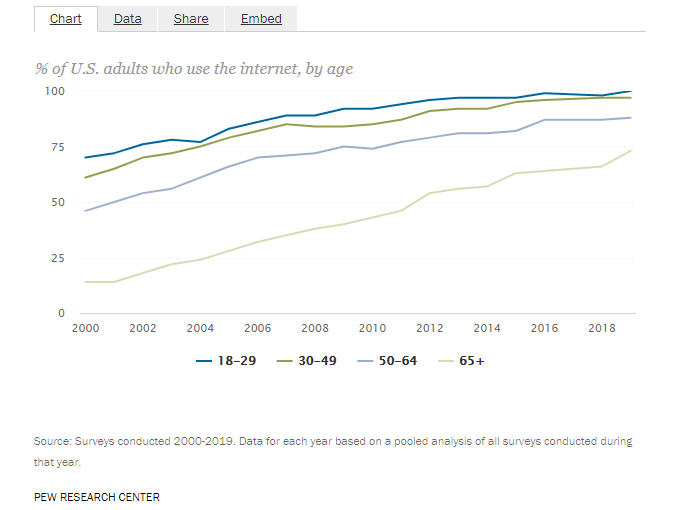
direct mail guide: senior internet usage chart

Conversely, direct mail reaches everyone, the young, and the old alike. Everyone checks the mail, and because of that, your postcards and coupons can turn just about anyone into a customer.

11. Direct Mail is Creative

When it comes to direct mail and creativity, the sky’s the limit.

Because direct mail is a physical product, sending stuff that stands out is just a matter of having fun with it.

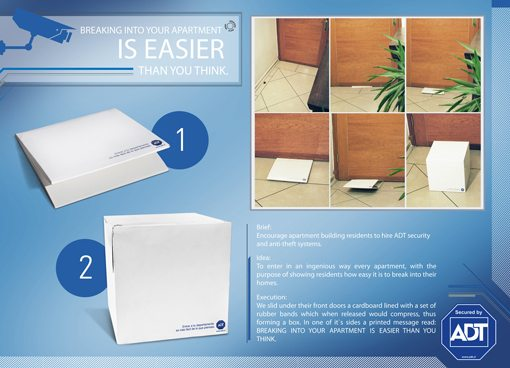
This example from ADT is a bit controversial in its execution. But it’s a great example of creative direct-mail marketing in action.
pasted image 0 742

Here’s how it works.

A letter-sized card slides under the door to the house of the receiver. But the letter is carefully engineered to pop-up into a box once it’s under the door.

On the box, it reads, “Breaking into your apartment is easier than you think.”

When someone sees it, they might immediately think, “What the… Did someone break into my house?!”

ADT highlighted a problem in action. What’s a good solution? Get an ADT security system.

On the less controversial side of things, a gym in Brazil struggled with members quitting because they didn’t see immediate results from their workouts.

As a reminder that getting results takes consistent time in the gym, they sent out calendars to their members that illustrated the gradual progress they’d see if they stuck with the program.

pasted image 0 732

Coming up with flashy ideas is not easy. If you’re not naturally creative, then talk with someone who is.

If a security-system brand and a gym can come up with interesting direct-mail pieces, the chances are that you can too.

It might just take a little extra thought.

12. Direct Mail is Multi-Sensory

With digital marketing, it’s impossible to hit all of the senses and difficult to hit more than two.

The five senses are touch, hearing, sight, taste, and smell.

At most, a digital campaign can only focus on sight and hearing. By making a digital ad interactive, some smart marketers can appeal to someone’s sense of touch. But even that experience is not the same.

By making a digital ad interactive, some smart marketers can appeal to someone’s sense of touch. But even that experience is not the same.

Everyone experiences the world through their senses. Direct mail can take advantage of all 5 of them.

George Patterson Y&R Melbourne sent out a cardboard box with two knobs on it and a baggy of electronic components. It included everything necessary to build an FM radio.

Everything, except for one thing: instructions.

pasted image 0 740

The mail piece went out to college engineering students.

When they put together the radio, an ad played, offering the student a fast track to an exciting military career.

Talk about multi-sensory. This cardboard radio took advantage of three senses, and some might argue 4 with the smell of cardboard.

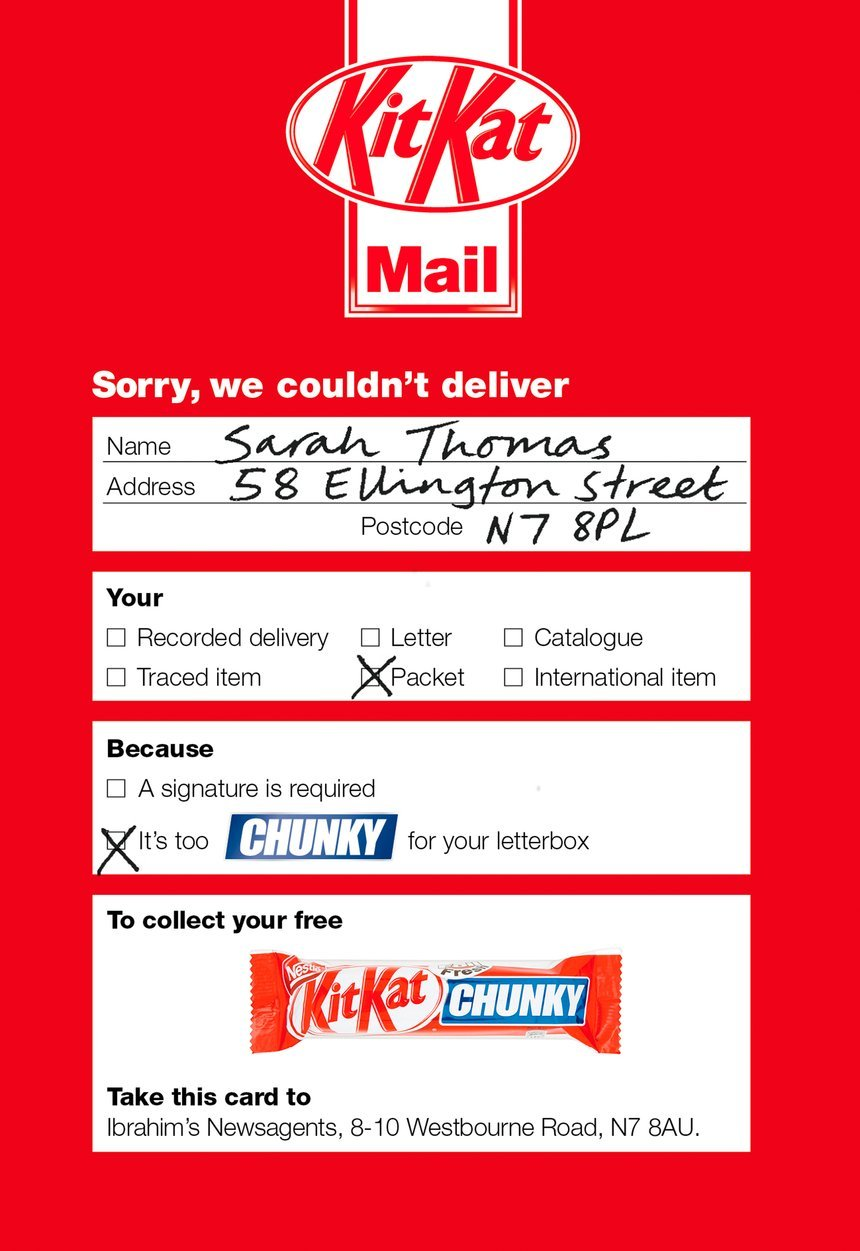
Consider this KitKat mailer.
pasted image 0 765

This direct mail piece acts as if you ordered a KitKat to your mailbox, implying that it was too “chunky” to arrive at your home.

Although there are technically only two senses involved, sight and touch, this piece does a good job of including taste by emphasizing the “chunky”-ness of a KitKat.

Not to mention, it’s fully interactive as you walk to the store.

Because humans experience the world through five senses, the more of these that your direct mail activates, the more likely recipients will engage with your message.

13. Direct Mail is Memorable

Advertisements now flash before our eyes at blazing speeds. Each time we search, stream, watch, read, scroll, click, or swipe, we are bombarded by advertisements.

But direct mail stands out. 

Imagine putting together a radio delivered to your mailbox.

Maybe you receive a box near your door that reads, “Breaking into your house is easy.”

Or you get a funny mailer from KitKat that says your candy bar was too “chunky” to arrive at your home.

Or you get a tiny record player in the mail.

direct mail example

If you’re like most people, you’ll tell your friends about these memorable pieces of marketing genius.

Because direct mail is tangible and endlessly creative, it sticks with your audience.

As long as you take the time to put together an amazing piece of direct mail, your audience won’t quickly forget the message you sent.

Conclusion

The expansion of digital marketing has only enhanced the return on investment for direct mail campaigns. 

If you’re wondering why direct mail should take a place in your marketing tool belt, the above 13 reasons are answer enough.

Direct mail campaigns give a high ROI and even a higher ROI than paid ads. They can work effectively in a campaign by themselves or alongside a digital-marketing campaign.

You can use direct mail to target the right customers at the right time. And it’s easy to track the results of each campaign you run.

With direct mail becoming less common, there is less noise. You can capture the undivided attention of your customers with its romantic appeal.

Because direct mail is more likely to get read, it increases your brand awareness, even if the first letter is unsuccessful.

Unlike digital campaigns, direct mail has a larger appeal to every age group.

Since direct mail is a physical product, it allows room for creativity. Thus it can appeal to more senses, leaving a lasting and memorable impact on your customer.

In the end, direct mail is powerful because it’s different from the digital way of doing things.

I get hundreds of emails every week. But I get a fraction of that number in the form of letters in my mailbox.

To stand out in a world where everything has gone electronic, consider complementing your digital marketing strategy with a direct-mail campaign.

It’s a missing personal touch in a hectic world.

And as every great marketer knows, being personal pays off.

What is the biggest reason you think that direct mail is still going strong?

The post 13 Reasons Why Direct Mail Isn’t Dead appeared first on Neil Patel.

How to Choose The Right Email Marketing Agency

Nothing converts like email.

Email beats all other marketing channels and can generate $37 for every $1 you invest. 

Even though email marketing can generate a ton of revenue, it’s still not easy.

You need to know which email tools are best, how to use them so you don’t end up in spam folders, and how to create emails that convert.

Even for fully-staffed marketing teams, it can be overwhelming.

Email marketing agencies are perfect for overcoming these challenges.

They know how to use the tools and run fully-scaled email campaigns. They can also distill your brand and offer into great campaigns that generate revenue.

Today, I’ll walk you through how to choose an email marketing agency that’ll help you unlock all the business value email holds. 

Good? 

Well, let’s start from the basics.

Know Your Goals and Desired Outcomes

Before you jump straight to the top email marketing companies and pick one to work with, it’s a good idea to pause first.

Why? 

You’ll get much better results.

Famous email agencies, like the ones I’ll recommend, usually have a track record of overseeing successful email marketing strategies and campaigns.

However, it’s never a one-size-fits-all situation. 

Some agencies only excel when working on specific projects or campaigns. Others drive better results when working with specific kinds of businesses. 

Knowing your goals and desired outcomes with email marketing gives you the right lens to evaluate different agencies and know which one is best for your needs.

Not to mention, it’ll help your agency get started a lot faster. The clearer the goal, the better the outcome.

Let’s take a look at some examples. 

Example #1: Build and grow your email list

Without an email list, you can’t do email marketing. 

And if you have a small list of, say, 33 email addresses, you’ll never get the full benefits of email marketing either. 

The first step is to build your email list.

You’ll achieve this by choosing an agency with experience executing list-building campaigns to get your first 100, 1,000, or 10,000 email subscribers.  

Take yourself, for example. 

You won’t give a company your email address for nothing, right? 

Absolutely not! We all get enough spam as it is.

Similarly, most people would only subscribe to your email list in exchange for something valuable. 

In the digital marketing world, this could be an ebook, a checklist, or other forms of relevant content promoted to the audience whose emails you’re targeting. Consider choosing an email marketing agency with experience creating and promoting amazing content. The better the content, the faster your list will grow.

Example #2: Increase your email open and click-through rates 

Low open and click-through rates will destroy your list. 

If your open and click-through rates are low, you’ll run into a cascading series of problems:

  1. Your audience isn’t seeing your offers. That’s less revenue.
  2. Email service providers like Gmail, Outlook, and Yahoo will notice your low performance. Then they’ll flag you as spam or stop delivering your email altogether.
  3. Now your open and click rates get even worse.
  4. Even if you improve your campaigns later, they won’t deliver nearly the same results.
  5. Improving your email reputation is REALLY hard.

Instead of risking this email cycle of doom, it’s a good idea to partner with an agency that knows what they’re doing.

They can look for early signs that something’s wrong, course-correct early, and keep your email reputation safe.

In this case, look for an email marketing agency that is exceptional at developing strategies and tactics to help increase your open and click-through rates. 

The two examples above were to show that your goals and desired outcome with email marketing go a long way in determining what agency to choose. 

They were also to demonstrate that no agency is a one-size-fits-all for all email marketing problems. 

Set your goals first, then look for an agency that specializes in those goals.

6 Characteristics That Make a Great Email Marketing Agency 

There are hundreds of email agencies out there. Maybe thousands.

And if you visit the websites of these agencies, every single one claims to be the best. 

But what characteristics make an email marketing company great? And how can you vet and choose an agency to work with?

1. Great Content Creation

Think of all the emails you receive from other companies. 

Do you know why you can’t wait to open and engage with some, but would ignore, delete, or unsubscribe from others right off the bat? 

In most cases, it’s because you don’t value the content of those emails. 

Amazing content keeps people opening and reading. Then when you send an offer, they’re willing to consider it.

Great content is the core of any serious email strategy. 

Check to see if they focus on a process for crafting engaging email content. The best ones always do.

2. An Impressive Client Portfolio

Excellent email marketing agencies didn’t achieve that status overnight. 

They worked with dozens or hundreds of brands to execute successful email campaigns. 

Because of this, they should have plenty of top-tier brands in their portfolio. And case studies that show you exactly what was done.

Not all of this can be shared publicly. But when you’re exploring options with agencies, ask for examples during your initial calls. The agency should have plenty of examples to point to. If they struggle to come up with some, look elsewhere. 

It’s a great way to quickly vet agencies of all types.

3. Thought Leadership 

Exceptional email marketing agencies are always on top of email trends. It’s constantly evolving and you don’t want to work with someone that’s using tactics from 5 years ago. 

An easy way to check for this is the agency’s blog, YouTube channel, or their own email list. Within 20-30 minutes of consuming their content, you should learn a ton. And it should all be cutting edge. 

That’s a good sign they’ll be able to apply those same tactics to your email campaigns.

4. Deep Expertise with Email Tools

Great agencies will have used them all.

If you ask them which tools are best, you’ll quickly learn:

  • Which are most popular
  • Strengths and weaknesses of each
  • The handful of tools to avoid

But don’t worry about which tool they recommend. Pay attention to their depth of knowledge when speaking with them. They’ll probably start by recommending a single tool. Then as soon as you ask any follow up questions, they should have plenty of qualifications, nuance, and detail to their answers.

You should get the feeling that the agency knows this stuff cold. If not, find someone that does.

5. Has Specific Rules to Avoid Spam

If you’ve been hit hard by spam flags, you might need an agency that specializes exclusively on reviving domains with negative email reputations.

Most of us don’t need to go that far. 

But you absolutely want to work with an agency that knows how to stay out of the spam box.

Also ask new agencies about how they stay out of spam, their processes to keep things clean, and early warnings that they like to look for.

You should be blown away with the thoroughness of their answers.

If not, keep looking.

6. A Great Company Culture

By choosing an email marketing agency to work with, you’re entering a business relationship with another business entity.

So, before you proceed, check that their company culture fits with yours.

Without a good fit on culture, you’re going to get email campaigns that don’t jive with your brand. You could anger your audience and turn them away. Or play things too safe and leave money on the table.

There’s no right answer on culture, just make sure their culture and yours fit well.

Ask for samples of recent campaigns that they’ve done. They’re likely to do similar work for you.

How to Work With an Email Marketing Agency

Working with an exceptional email marketing agency isn’t like dashing into a grocery store, filling your cart, and dashing out in a few minutes. 

There are steps you’ll need to take that ensure your partnership with one leads to business growth via email marketing. 

1. Align your in-house team

Most email marketing agencies won’t work in isolation but as an extension of your in-house digital marketing team.   

Hence, to ensure a smooth partnership between you and them, you should:

  • Have meetings with stakeholders in your company to align relevant teams on the need to work with an email agency.
  • Communicate how the agency’s work would impact your business and why it is necessary.
  • As needed, appoint employees to work directly with the email marketing agency. 

Doing this ensures team alignment between the agency and your company. Also, it keeps the agency in sync with your values, company culture, and the goals for choosing to work with them. 

2. Discovery session

As you first go out to contact an email marketing agency, they won’t jump straight into sending you a proposal or contract. 

The best email marketing agencies act like doctors who only prescribe after they diagnose. 

And to start diagnosing your challenges and goals with email marketing, expect to fill an inquiry form, followed by a discovery session.

3. Research & strategic recommendations

Before making a specific proposal, any good email marketing agency will do an extensive round of research on your current campaigns. This will include things like:

  • Signing up for your lists and looking at your current campaigns
  • Mapping out your signup flows
  • Checking landing pages and signup offers
  • Looking through social profiles and email funnels from other channels

Once they have a complete picture of where you are today, they’ll be able to put a proposal together.

4. A working contract with project deliverables

A typical work duration with an email marketing agency spans several months. 

To take on that kind of scope,agencies usually prefer to send a formal proposal and contract for you to sign.

Take your time and this stage and go through the proposal in detail. You should feel great about every piece. If you have any concerns, work through them now. It’s really easy to change scope, budget, or goals now.

Once you fee good about it, get the contract signed. 

5. Onboarding

Expect an onboarding process customized for your team after you sign the contract. 

During this step, the agency will usually ask for all your internal document and tool access. Expert to send them invites for your Google Analytics and email tools. Also put together every piece of internal documentation that you have on your email campaigns. The more info they have, the better. 

From here, the agency will get started on the work and should have regular check-in calls along the way.

How to Find The Right Email Marketing Agency For You

To choose an email marketing agency that’s right for your needs, the steps I recommend are: 

  1. Be sure about your business goals and desired outcomes from email marketing.
  2. Consider agencies with the characteristics above. 
  3. Choose an agency with expertise in the area you need help with. And where possible, also prioritize those that have worked with reputable brands.  
  4. Finally, know that email is part of your digital, and by extension, content marketing strategy. Hence, it’s best to choose a company with bandwidth for those. 

To help, we reviewed hundreds of agencies and found these to be the best.

The 5 Top Email Marketing Agencies 

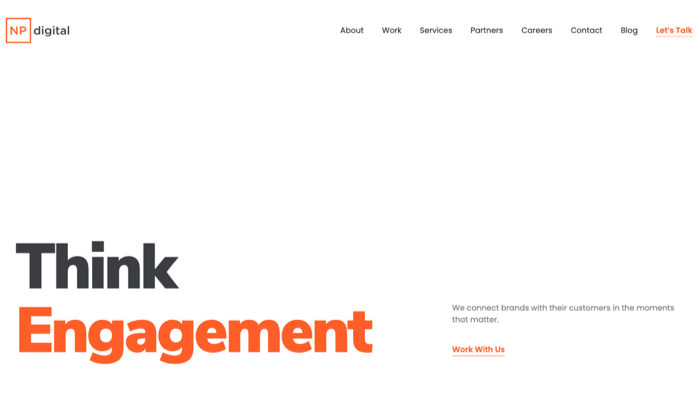
#1 Neil Patel Digital – Best For Email Content

Every time you send an email, people unsubscribe.

That hurts the long-term prospects of your email list. 

Since every email has a real cost and makes your list smaller, it’s best to make them count.

The best way to do this is with great content. Your unsubscribes will be lower, your list will be more engaged, and you’ll generate more revenue in the long-run.

Content, including email content, is one of the core areas of expertise at my agency, Neil Patel Digital. 

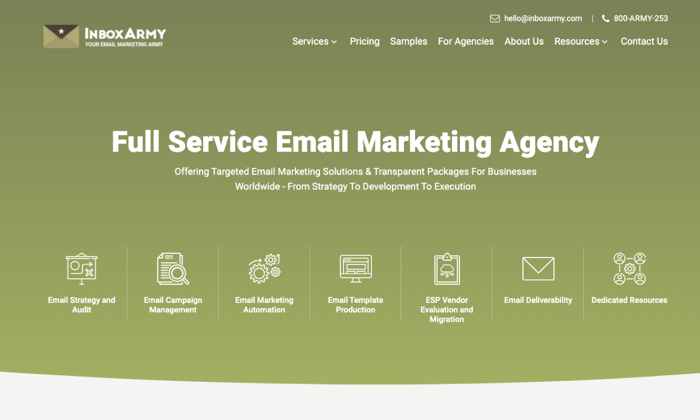
#2. InboxArmy – Best for Full-service Email Management

InboxArmy comes highly recommended, as a full-service email marketing and management company. 

This agency’s services include email strategy development, template design, email automation, and other. 

InboxArmyserves companies such as Airbnb, LandCentral, and Jockey. If you’re looking for serious email pros for your B2C company, I’d reach out to them. 

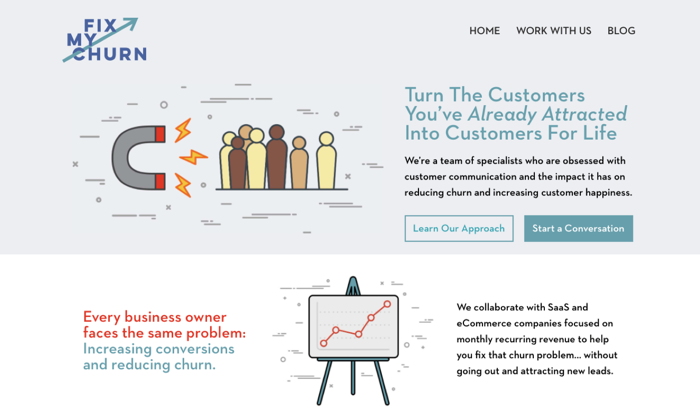
#3 Fix My Churn – Best for SaaS Onboarding Emails and churn

Fix My Churn works with SaaS companies.

User onboarding emails are a very unique skill set. The content, CTAs, sending logic and tools are completely different. If you want to improve your SaaS emails, you really need experts in this area.

Fix My Churn applies top-level SaaS copywriting skills to create email onboarding and churn-eliminating sequences to turn free and trial users into happy, long-term customers. 

Led by its Founder and SaaS email expert, Val Geisler, Fix My Churn has earned a reputation as an email marketing agency for SaaS companies like Buffer, Aweber, Podia, InVision, and others. 

I’d also consider them if your have any type of subscription offer.

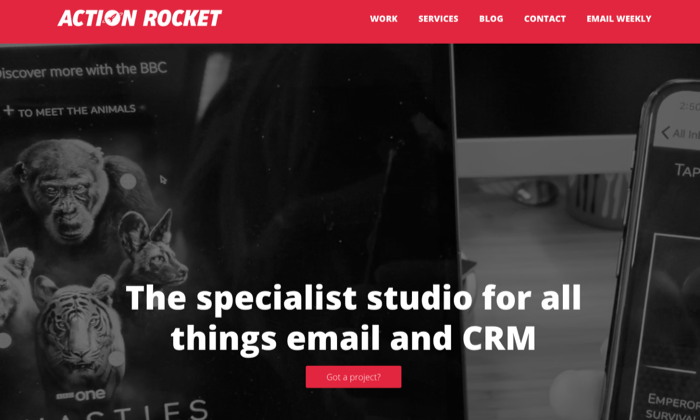
#4 Action Rocket – Best for Enterprise Email

Action Rocket needs no introduction as an email marketing agency for enterprise companies. 

This agency even works with leading email software companies like Campaign Monitor, MailChimp, Litmus, and others to shape the email marketing space.

Using its vast years of experience, Action Rocket strategizes and develops custom email and CRM programs for enterprise companies, including Marks & Spencer, the BBC, and others.

If you want serious muscle behind your email strategy, reach out to them.

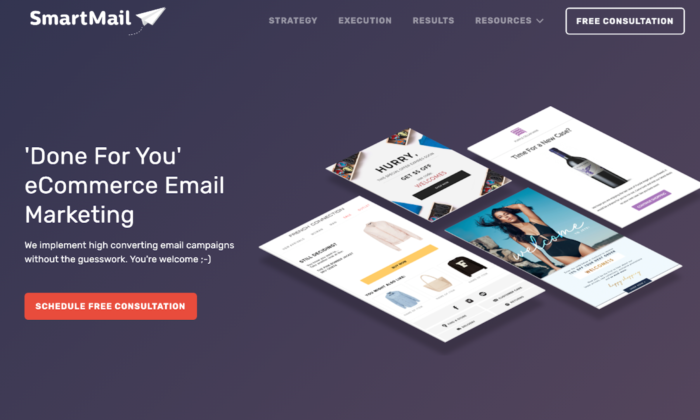
#5 SmartMail – Best for Ecommerce Email

SmarMail is our recommended email marketing agency for ecommerce businesses. 

Every business model has its own unique challenges with email and ecommerce is no exception.

You need cart abandonment emails, promotional emails, lifescycle emails for repurchases, and receipts with guaranteed email deliverability.

This agency excels at helping online stores acquire, convert, and retain customers by strategizing and launching email marketing campaigns based on automated triggers across buyers’ lifetime cycle: 

SmartMail has an excellent track record, helping ecommerce companies generate about $187 million in revenues. Their clients include French Connection, Skechers, and others. 

Get Email Right to Drive Growth

Email marketing isn’t going anytime soon. It is here to stay.

And it generates a ton of cash. Choosing the right agency will get you that growth a lot sooner.

Set your goals, then start looking for the right agency for you.

Even if you plan on doing email inhouse, the right agency can get everything set up correctly from the beginning. That will save your team a ton of time and prevent disastrous mistakes like getting all your emails stuck in the spam folder.

The post How to Choose The Right Email Marketing Agency appeared first on Neil Patel.

How to Hire SEO Freelancers

seo freelancers

Ranking a website or web page today is not as easy as it was a couple of years ago.

Not only is the competition stiffer, but the constant changes in the algorithms that determine rankings also make it more challenging to stay on top of your SEO game.

As a business owner, keeping up with all these changes and regularly updating your website is something you might not have time for.

That’s why you may need to enlist the help of an SEO freelancer.

How an SEO Freelancer Can Help Your Business

Before we go any further, let’s quickly define what a freelance SEO is.

Simply put, an SEO freelancer is a professional who helps you gain more visibility on search engines. If you hire the right one, they can get you to rank for your main keywords, thereby helping you drive tons of traffic to your website and business.

So how can an SEO freelancer help your business?

Keyword Research

One of the foundational principles of SEO is keyword research.

This is the practice of discovering search terms that users enter in search engines when they want to find something. Discovering the keywords used to search for your products or services is crucial to boosting your SEO.

This foundational practice is one of the ways an SEO freelancer can help your business rank well.

Content Strategy

Content strategy involves planning the entire process necessary to create content. It includes, among other disciplines:

  • Keyword research
  • Understanding user intent
  • Crafting optimized headlines
  • Creating content outlines
  • Determining content types
  • Choosing the best platforms on which to publish the content

Developing a content strategy is key to helping your content rank well, especially in a space saturated with content on similar topics.

Content Creation

Another integral part of SEO is content creation.

Creating SEO content is a science that not many people understand.

It requires knowledge of proper keyword placement, structuring and formatting content properly, and writing in your audience’s preferred tone, among other things.

While anyone can be a good writer, not everyone can be a great SEO writer.

Again, this is one of the few ways an SEO freelancer can help drive your business forward.

Link Building

Besides content, another critical aspect of SEO is link building. This is because search engines use links to gauge the authority of content and websites. The more authoritative a web page is, the higher search engines rank it for queries related to your keywords.

A successful strategy involves building relevant links on three levels:

  • Internal links: These are links between content on your website and must be chosen strategically.
  • Outgoing links: Links to other sites are important, but if done incorrectly, you could link to competitors, low-authority sites, or even spammy websites.
  • Inbound links: Also called backlinks, these point to your website, and search engines deem them votes of confidence in your website. Quality, not quantity, is the key here.

Good SEO freelancers also know the importance of monitoring your backlink profile. This is important because toxic backlinks could negatively impact your SEO.

Link building is a time-consuming endeavor that requires knowledge of the right kind of links to build and strategies that work.

To build links that will help your website rank better, you must get a professional to do, which is an instance where an SEO freelancer will come in handy.

As long as you want to make an impact online (of which you have no choice), you must invest in SEO. That’s why you must consider hiring an SEO freelancer.

How to Hire the Best SEO Freelancer

Hiring a good SEO freelancer can be a tricky business.

For one, most SEOs are self-taught, and typically the only way to verify their knowledge or experience is through their portfolio.

Secondly, the world of SEO is constantly changing and knowing which SEO freelancers keep their knowledge and skills relevant is almost impossible.

So how can you improve your chances of hiring the best SEO freelancer?

Here are a few simple tips:

Determine Your SEO Needs

The first step to finding the right SEO freelancer for you is to determine your exact SEO needs.

If you’re not sure how to do this, you may need to look for an SEO freelancer that has experience in conducting SEO audits. Of course, in most cases, this is an add-on service, so expect to pay for it separately.

Determine your SEO freelancer needs by conducting an SEO audit

However, if you want to do it yourself, check out my SEO checklist for direction.

Determining your SEO needs makes it easier for you to know what to look for in an SEO freelancer.

Features to Look For in an SEO Freelancer

Now that you’ve determined your SEO needs, the next step to hiring the best SEO freelancer is to know what to look for in one. Here are a few pointers:

Check their Track Record

Every SEO freelancer worth their salt has a track record that proves their knowledge and skill.

To be worth your consideration, they must have results to show their effectiveness in delivering the services you want.

So how do you check their track record?

  • Ask to see a portfolio of their work
  • Visit their website
  • Ask for references from past or current clients
  • Read reviews on their website or other platforms

Checking an SEO freelancer’s track record is critical because you want to hire someone who knows what they’re doing. Failing to do so could lead you to spend money on an SEO freelancer that won’t get you the desired results.

Interview Your Prospective SEO Freelancers

Once you’ve narrowed down your list of potential candidates, it’s time to find the best SEO freelancer for your business.

To do this, you might want to conduct an interview to get to know them better.

Thankfully, with technology like video calling software, you can conduct interviews from anywhere in the world.

Get to know them, their methodology, and how they plan to help your business rank well.

Give Your Prospective SEO Freelancer a Test Project

Another strategy that will help you find the best SEO freelancer for your business is to give your prospective candidates a test project.

This will help you:

  • Gauge their abilities
  • Have insight into what your working relationship will be like

Your test must be based on the core duties you’re hiring your SEO freelancer for. This way, you’ll know exactly what to expect from them in terms of performance.

Know Where to Look for SEO Freelancers

Once you’ve determined your specific SEO needs, the next step to hiring an SEO freelancer is to know where to look for one.

Some of the best places to look include (but are not limited to):

Job Boards

Job boards are a great place to source SEO talent. A big advantage you get from the most popular ones is that they vet all freelancers in their database. That helps eliminate unsavory characters from the platform.

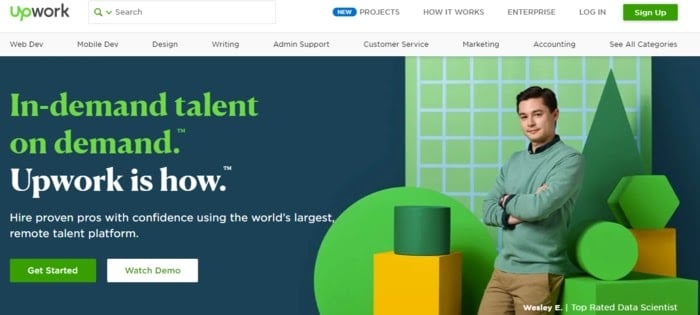
Upwork SEO freelancing

Some popular job boards you can get SEO freelancers on include:

  • Indeed: Has a large pool of SEO freelancers. Searching through candidates using different filters makes it easy.
  • Upwork: Arguably the most popular freelancer platform on the planet. Has a strict verification process.
  • ProBlogger: One of the best platforms if you’re looking specifically for SEO writers.
  • AngelList: Trusted by many startups for the high-quality talent pool. The best choice if you’re looking specifically for technical SEO freelancers.
  • Fiverr: Great place to find affordable SEO freelancers, but you may have to sift through a lot of profiles to find the right person.
  • Craigslist: Another great place to find good SEO talent. Unfortunately, however, you’ll have to do your own candidate vetting.

What if you want the freelancers to come to you? To source the best SEO freelance talent, you must know how to attract them, and you can do this by creating optimized job ads.

Hallmarks of an optimized job ad include:

  • Keyword focused job description
  • A killer headline
  • Detailed but to the point
  • Sells the benefits of working with your business

Once you’ve crafted your job ad and posted it, you’re sure to get a flood of responses from interested SEO freelancers.

Social Media

Social media is now playing a huge role in the recruitment process, helping businesses source top talent. If you’re looking for some of the best SEO freelancers, you’ll be sure to find them on social media platforms like:

  • LinkedIn
  • Twitter
  • Reddit
  • Facebook

Make sure to include a relevant hashtag (like #SEOfreelancers) when you post your need for an SEO freelancer.

Ask Google

Most SEO freelancers have websites to showcase their work, and if they practice what they preach, their websites should rank high on Google for their keywords (like SEO freelancer and other LSI keywords).

So if you’re looking for SEO freelancers, a casual Google search can help you discover professionals you can entrust your SEO tasks to.

If you want one who’s based in your locale, you can simply google “SEO freelancer+your area” to pull up results of the best local SEO freelancers near you.

When Not to Hire SEO Freelancers

As much as SEO freelancers have their advantages, there are times it wouldn’t be wise for you to go the freelancer route.

In those cases, you’re better off hiring an SEO agency.

Here are a few examples of such instances:

When Your Needs Exceed a Freelancer’s Capacity

Remember, SEO is a broad field. No one person can handle every SEO task you may need.

For example, if you want to execute a comprehensive on-page SEO campaign, you may require (among others):

  • A content strategist
  • An SEO writer
  • An editor

True, you may be able to find an SEO freelancer who can wear all three hats, but if your content strategy is extensive, you may need at least one content strategist, one editor, and a couple of SEO writers.

In this case, you’re better off going the agency route.

Carefully evaluate your SEO needs and determine if the scope of work is manageable by one person or if an agency better handles it.

When You Need Different SEO Services

If you need different SEO services, you’re better off going the agency route.

This is because agencies have different skill sets in their human capital, and all your SEO needs can be taken care of under one roof.

It makes for a streamlined and cohesive SEO campaign.

Giving different tasks to different SEO freelancers could result in a disjointed campaign, and in some instances, what one SEO does could conflict with what another has done.

If Stability With a Team is Important

An agency has all the resources (human and technological) needed to execute projects quickly. Because of this, you’re also assured of quality work because they have quality controls in place.

Another advantage of an agency that many people overlook is the fact that if a freelancer gets sick or if life happens, your project could be put on hold indefinitely. With an agency, however, there’s rarely any downtime as they can easily find a replacement.

Conclusion

With many people opting to ditch the 9 to 5 and work as freelancers, you’ll have plenty of choices when it comes to picking SEO freelancers for your business.

However, there are two sides to this coin.

In your quest to find the best SEO freelancers, you may come across a few bad ones that may cost you your reputation, rankings, or resources.

That’s why you must know how to hire an SEO expert that will help you achieve your business goals.

Have you ever worked with an SEO freelancer before? If so, what was your experience with them?

The post How to Hire SEO Freelancers appeared first on Neil Patel.
Wednesday, December 2, 2020

Why You Should Consider Selling Customized Products

Why You Should Consider Selling Customized Products

In today’s global marketplace, it’s a great time to be a consumer. The rise of e-commerce means more and more businesses are striving to get the consumer’s attention, offering better prices and services just to keep them interested. With online sales representing 16 percent of total retail ad spend, business owners don’t want to leave money on the table.

The smartest business owners know that the only way to consistently beat the competition is by offering more value to customers.

However, if everyone in my industry is selling the same products, at the same price, how can I stay competitive? The answer: Create memorable experiences.

If you’re looking for a unique way to offer value to consumers, customized products can be a powerful, engaging tool that improves customer satisfaction and drives up conversions in the process.

What Are Customized Products?

Customized products exist as a way for consumers to customize their purchases and walk away with a unique brand experience.

Examples include:

These examples showcase the importance of offering customization and customization.

It’s not just a theory. Epsilon’s research found that 80% of consumers are more likely to make a purchase when brands offer customized experiences.

The concept of customization was designed just a few decades ago to promote exclusivity. Customized products were a status symbol, a vehicle to make consumers with massive budgets feel special.

Although that’s still the case with certain products (exotic cars and designer handbags, for example), rapid advances in technology have made mass-customization a possibility for everyone.

Still, despite the lowered barrier to entry, product customization maintains a certain allure to consumers. This begs the question: If the key component of customized products is no longer there (the exclusive status symbol), then why are consumers still so interested?

The answer is actually pretty straightforward: Businesses were operating with a fundamental misunderstanding of what made customization so appealing in the first place.

Reasons Your Company Should Offer Customized Products

What massive brands around the world have figured out, and what e-commerce business owners need to understand, is that exclusivity was only a small piece of the puzzle.

Product customization can have a massive impact on customer satisfaction, and by extension, your e-commerce business’s success. Why? Because not all of your customers want to experience your product in the same way.

Think about it. When it comes to something like marketing, we understand that different customers have different needs. The first-time visitor to your site needs a different call-to-action than the customer with the abandoned shopping cart. Customized customer experiences are nothing new, it’s just time that e-commerce businesses started to expand their customization horizons.

Where things get really interesting for me is when you start considering the potential financial value this brings to companies all over the world. Let’s not ignore the fact that 91% of consumers are more likely to shop with brands that provide relevant offers and recommendations. More specifically, it puts business owners in a win-win scenario.

When you offer dozens of different variants and options to users, you’re creating a more inclusive marketplace, and different consumers with unique priorities can still walk away with something they like.

Even more interesting is the capacity for testing. You don’t need to make everything in your store customizable. Instead, you can test for specific features and determine the ones that people love.

Over time, business owners can collect data and use this information to build product offerings that their customers are statistically more interested in. More value for consumers, more value for the business. Win-win.

Understand What’s Driving the Popularity of Customized Products

The benefits of customized products are pretty easy to measure. When a consumer can personalize a purchase, it gives them a chance to “stand out” and be distinctive.

Let’s use the example of a custom T-shirt. On the surface, it seems like customers are simply modifying something to maximize the value of that product. In reality, the experience is a bit more layered.

For the sake of analysis, let’s break down a study conducted by the Journal of Information Technology Management.

We’ve established that customizing products brings consumers a certain level of enjoyment. We can view “Enjoyment” as the umbrella category.

Within that category, there are two subcategories of enjoyment. On one hand, there’s “Use Enjoyment” and “Design Enjoyment.” Certain customers will fall into certain categories, depending on what they value in particular.

Each of those subcategories had its own subdivisions.

Consumers who fell in the “Use Enjoyment” category either enjoyed the unique appearance of the item or enjoyed the functionalities of the item that fulfilled their unique needs. Consumers in the “Design Enjoyment” category either enjoyed innovating or enjoyed participating in the design process.

You can use this framework as a way to test what your consumers expect from your business, but the key lesson to keep in mind here is that product customization should be an engaging, exciting process for customers.

Examples of Customized Products

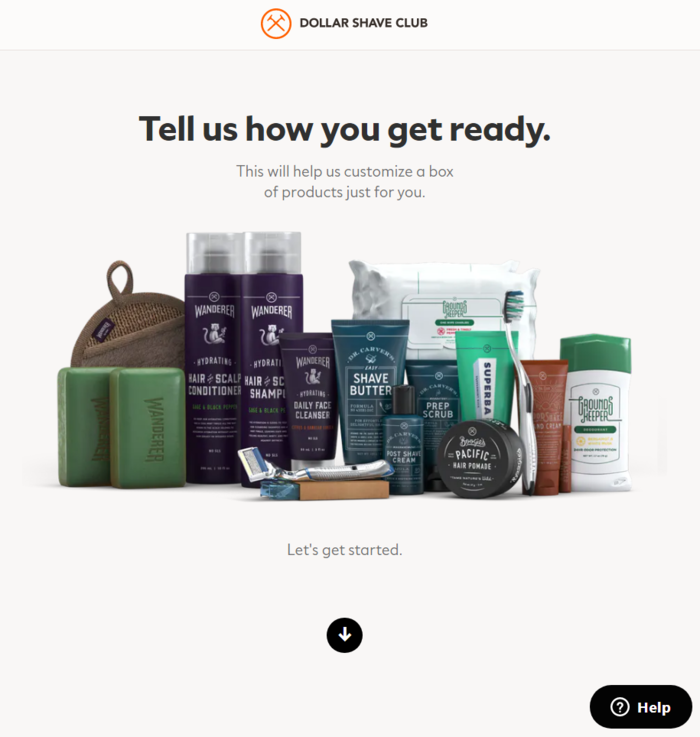
All of this can get a bit abstract, so let’s take a look at a tangible example. Here’s how Dollar Shave Club handles customization.

They start with some strong and clear copy, and with a single click, you’re building your custom Dollar Shave Club box.

customized products quiz

From there, you’ll complete a quiz and come out on the other end with a straightforward recommendation and a strong call-to-action. Of course, you can further customize your options by scrolling down the page.

On the surface, this might look like just another way to sell their products. In reality, that’s only half the story. Every aspect of this quiz is designed to ensure that consumers are presented with a solution that accurately addresses their pain points.

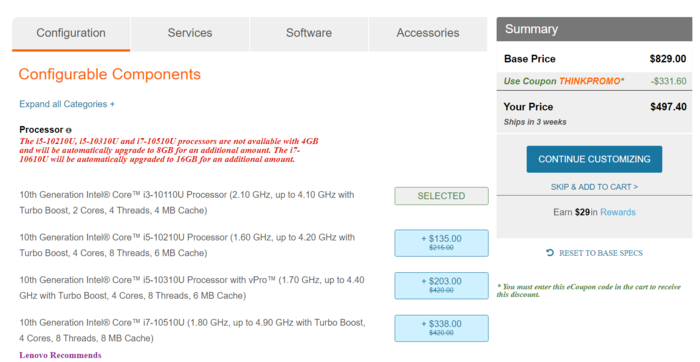
Lenovo, on the other hand, actually lets you build out your dream laptop.

It’s important to keep the limitations in mind, of course. While the laptop would be customized, the capacity of the laptop is limited.

When creating your customized product offerings, remember that removing concerns about compatibility can make life much simpler for your consumer. Unless they’re particularly tech-savvy, they probably wouldn’t understand why certain components just don’t work together.

customized products kit example

Alleviating friction before it becomes an issue is one of the many benefits that come from creating a rich customization experience.

Tips for Creating Customized Products

All of that looks and sounds great, but how on earth are you supposed to create customized products for your consumers? After all, offering 100+ options isn’t exactly budget-friendly.

Well, remember that consumers aren’t just interested in custom products. They want customized experiences. Most business owners already know this. It’s the reason so much time and money goes into marketing campaigns.

Focusing on customized experiences helps you develop a deeper relationship with your consumers. They can buy products anywhere, but your business is the only one that helps them customize their experience. Those better experiences lead to customer satisfaction, brand loyalty, and hopefully, repeat customers!

So, with that in mind, let’s take a look at some of the tools you can use to build tailor-made products and experiences.

Custom Fit

Whether you sell swimsuits, winter jackets, or everything in between, you understand that selling clothes online can be a customer satisfaction nightmare.

The biggest problem? Fit.

Everyone seems to have different definitions of small, medium, and large. While this can usually be fixed with a quick return and exchange, it tends to leave a bad taste in your customer’s mouth.

So rather than focusing on fixing the problem, let’s find a way to make sure it never happens again. Making it an engaging sales tool is just a bonus!

A Custom Fit quiz might seem simple but make no mistake: Making your customers feel more secure about their sizing choices means they’re more likely to purchase as possible sizing issues are avoided.

Customized Product Bundling

One of the most undervalued aspects of product customization is its potential for reducing friction.

When you offer to bundle an accessory with a particular product, you’re not just upselling to make some extra money on the sale. You’re addressing two possible customer pain points before they even arise.

Right off the bat, you’re making customers aware of the fact that a particular accessory is necessary to ensure they maximize their purchase. As a bonus, you’re able to confirm compatibility by clearly showing consumers which items they should pair together.

It’s a way to ensure that consumers walk away with everything they need after a single transaction. Further, it’s more than just a good sales tactic. It’s an effective, thorough customer satisfaction tactic.

Tips for Selling Customized Products

Maximizing your sales and profit margins is always going to be a priority, and every tactic here is designed to support that goal.

That being said, selling a consumer on the concept of customized products is less about actively selling and more about creating experiences that guide customers down the sales funnel with valuable information.

As far as I’m concerned, the best-customized experiences sell themselves. Of course, it helps if you’re building experiences that are so compelling and engaging that consumers can’t help but click the “Buy” button.

Use these tactics to drive conversions while still keeping the shopping experience engaging and personal.

Don’t Overcommit (Test the Waters)

All this talk of customized products might have you worried that you’ll need to spend tons of money on new inventory and be stocked up for potential buyers.

In reality, the process should start small. Unless you have a massive budget, your best bet is to test the waters and figure out what versions of products consumers are actively seeking.

If you’re experimenting with customizable T-shirt colors, you don’t need 50 new colors. Start with a few set colors, and give yourself plenty of lead time so you don’t have to rush production.

People aren’t interested in new colors? You can phase them out without worrying that you’ve let hundreds of dollars go to waste.

Customized Product Recommendations

We already discussed this a bit earlier, but the value of the customer quiz shouldn’t be understated.

Let’s say you frequently have website visitors that don’t have a well-defined shopping list yet. These are people who are just browsing and seeing what catches their eye.

Well, what if you could guide that person towards a sale, while also providing them with value in an engaging way? Sounds like a great way to kick-start your relationship, if you ask me. Keep in mind that 90% of consumers are willing to share their behavioral data if it’ll make their shopping easier.

By creating a simple quiz and offering customized product recommendations, you can accomplish so much.

For starters, customers will walk away with a much clearer understanding of their needs. They’ll also associate you with industry authority since your business showcased your know-how and expertise.

Beyond that, your consumers are one step closer to making a purchase through your site. All thanks to a simple, two-minute quiz.

Conclusion

Customized products are often seen as some sort of gimmick, a cheap way to offer variety instead of value.

Interestingly enough, I’ve found that well-designed customized products offer an impressive amount of value to consumers.

Consumers can be empowered by a process that simplifies their shopping experience. Or they can walk away with a deeper understanding of what they need from your business.

As long as your customized e-commerce experience is compelling, engaging, and generally value-driven, you can be optimistic that you’re enhancing your customer’s shopping experience and by extension, increasing your chances of making a sale.

What kind of customized products do you think offer the most value? Let me know in the comments below!

The post Why You Should Consider Selling Customized Products appeared first on Neil Patel.
How to Get Startup Funding

How To Get Startup Funding

Building a business is thankless, difficult work. Sometimes, you just wish you had a little breathing room.

Usually, business owners have an idea of how they’d like to scale and grow their business. The only problem? Capital. There’s just not enough money to drive the growth they’d like to see.

It’s around this time that some businesses start to consider startup funding. Access to more capital means implementing better growth tools, expanding the team, and generally making the journey to profitability much smoother.

All of this sounds great, but it brings up important questions: How on earth are you supposed to get startup funding? What kind of funding should you consider? Does your business need startup funding?

I’m going to demystify the topic of startup funding and help you understand your options when it comes to raising money for your business.

How Do I Get Startup Funding for My Business?

Right off the bat, we need to establish a few ground rules.

It’s important that you understand what “raising money” actually does to your business. You’re essentially doing one of two things.

When it comes to startup funding, you’re either trading money for equity or trading it for debt.

When the average business owner pictures startup funding, they’re usually thinking about equity. To put it simply, equity is when you trade a percentage of your business in exchange for capital.

That equity is based on the perceived value of your company, which means it’s vital that you have some established value before you walk into an investor meeting. Ideas are great, but trust me when I say that these venture capitalists and angel investors have heard it all before. You’re going to need solid numbers and data if you want a chance at their money.

Of course, if you don’t have the data to secure startup funding from an investor, you could always rely on debt.

I’m just going to come out and say it: Going into debt as a startup is almost always the wrong approach. Whether it’s bank loans or credit cards, those terrible interest rates will eat your business alive. As “Shark Tank” investor Mark Cuban himself says,

If you’re starting a business and you take out a loan, you’re a moron. There are so many uncertainties involved with starting a business yet the one certainty that you’ll have to have is paying back your loan.

All of this is vital to understand because it highlights the reality of startup funding. What you’re really doing is giving pieces of your business away in exchange for some cash. Think of it like you’re borrowing from your future self.

I bring this up because I’ve seen plenty of startups ask if they can raise money. Do you know what I don’t see? Startups asking if they even need to raise money.

Don’t get me wrong, if your startup ends up being as big as Facebook or Slack, you can probably afford to trade some equity to increase cash. But trading away pieces of your profits just to keep your business afloat won’t be the right path for everyone.

Before you continue down this path, you and your team need to sit down and establish your needs, as well as the potential risks and rewards associated with each form of startup funding.

Remember, every single startup is going to have different needs, different risk tolerances, and different definitions of success. Consider each of these startup funding options carefully and make informed decisions for your business. Your future self will thank you.

How Much Startup Funding Do I Need?

Before you start asking for investor money, it’s essential that you establish your startup costs and how much you’ll need to continue building your business.

Assuming your business already exists, you should have a clear idea of your current expenses. As your startup continues to grow, it’s vital that you consider how much money your expansion is going to cost.

How much will you need for your new offices? How many employees will you be hiring, and what will their salaries be? What’s your projected ad spend? These are just some of the questions that you’ll need to have answers before you receive a dime from investors.

If you’re struggling, the SBA has a great startup costs calculator you can use to simplify this process.

When we think of startup funding, we tend to think of massive sums of money with startups raising millions of dollars. A study by Babson College found that the average business was able to start up with just $15,000 of funding.

When it comes to startup funding, it’s not about raising as much money as humanly possible. The goal is to raise the money you need without giving away too much of your startup in the process. Here are some options to do that, starting with the most common when we think of “startup funding.”

Check Out Startup Series Funding

The concept of Series funding can get rather complex, so for now, we’re going to address the basics.

This type of funding is typically thought of in terms of rounds. Series A round, Series B round, and so on.

But before any of that, there are a few other rounds that take place. Startups don’t usually just go straight into Series A, although it is possible.

First, there’s the pre-seed funding. This is friends, family, and other people in your support network. Seed stage funding is next, and this is typically where equity funding official starts. Venture capitalists and angel investors are usually found here, and these rounds will raise anywhere from $10,000 to $2 million.

Next, we have Series A funding. As the potential for greater funding increases, so does the level of scrutiny your business gets put under. Monetization is key here. These rounds typically run from $2 million to $15 million.

The rounds can continue from here, with each letter representing both an expectation of growth, as well as a potential increase in access to capital for your business.

Find Investors for Your Startup

Let’s assume that you didn’t make it to “Shark Tank.” How are you supposed to find investors?

There are typically five ways to find investors. The first, which I’ve already covered, is friends and family.

From there, you can look at loans and grants, but those aren’t realistic for every business. The more common option explored by startups is private investors. If you’re looking for angel investors, the Angel Capital Association is worth checking out.

While angel investors are typically individuals with a high net worth looking to invest, venture capitalists are using investor money to fund your business. It seems like a slight difference, but the approach to funding is actually very different.

Angel investors are interested in working with you to maximize the potential of the business. Venture capitalists are usually looking to fund a business that’s already well-established. Choosing the right investor can and will have a massive impact on the future development of your business.

Bootstrap Your Own Startup

Funding your startup through personal savings is far from glamorous, but it’s still your smartest move.

Why? The less of your company you have to give away, the better. But there’s something else at work when you’re bootstrapping your startup.

You’re creating tangible data that’s going to make raising money significantly easier.

Think about it. Most startups walk into investor meetings with a poorly designed MVP, a flimsy proof of concept, and a massive ask. More importantly, none of them address the elephant in the room.

Investors don’t care about good ideas. Investors want something tangible. They’re not looking to gamble away their money. They want the best possible chance of maximizing their returns.

Now, imagine you walk in with a fully formed business. Suddenly, the conversations are different. You don’t have an underwhelming MVP, you have a product that converts.

You don’t have a weak proof of concept, you’ve already established real product/market fit. As far as funding goes, you’re able to bring more to the table because your business is already off the ground.

When you bootstrap successfully, you’re able to present a much more compelling investment opportunity, while putting yourself in a strong negotiating position. This means better deals for you and peace of mind for investors, who know that your business is likely to be a winner.

Take the time to bootstrap your business, for as long as you can. It might not be as exciting as getting millions of dollars, but a bootstrapped business is 100% yours, and that’s pretty exciting to me.

Look for Business Startup Loans

While I don’t think that business startup loans are the right option for most founders, there is a right way to handle them.

Let’s start with what you need to know. A startup loan can be as low as $500 or as high as $750,000. The higher your loan, the more heavily your business plan will be scrutinized.

As a bare minimum, you should expect to explain both how and when you plan to make money. From there, you’ll likely be asked to explain why you’re better than your competition, how much potential your market has, etc. With some lenders, you’ll be required to present collateral, in the event that you can no longer pay back the loan.

Repayment of these loans can range anywhere from one to five years. You can expect to pay between 8% and 17%, even if your credit is solid. It’s worth mentioning that while you’re repaying this loan, it will be significantly harder for your business to secure another type of funding. After all, investors don’t want to be involved with a business that’s still paying their way out of debt.

Really, there’s only one reason you’d ever take out a startup loan. In a perfect world, you’re doing this because your business is already successful, you don’t want to give up equity, and you have a clear repayment plan that doesn’t create an excessive burden on your business.

Get Startup Funding From Family and Friends

This one is a bit tricky. On the surface, it sounds fantastic. It has the perks of a startup loan, without any of the drawbacks. Your friends and family can offer you capital for a low, or sometimes nonexistent interest rate. They’re also significantly more flexible when it comes to equity distribution, so what’s the problem?

Well, it’s family. Your support network might be rooting for you, but taking their money means they’re suddenly involved in the process. Suddenly, your decisions aren’t your own. Even when you own the majority of the company, family members might have their own ideas about how things should be done.

While there are plenty of entrepreneurs that raise money from friends and family, it’s a delicate decision to make. There are plenty of personal relationships that never recover after going into business together.

Still, it’s definitely an option to consider. Your wealthy aunt may not invite you to Thanksgiving this year if you lost all her money, but at least she won’t kick you out of your house.

Listen, if you have a rich uncle that was going to spend $25,000 on an addition to his house this year anyway, go ahead and see if he’s open to funding your business. Just understand that you’re not just dealing with your uncle anymore. You’re dealing with his money, too.

Raise Startup Money Through Crowdfunding

The average startup tends to ignore the possibility of crowdfunding for a few reasons.

Over the years, crowdfunding has developed a reputation as something of an incomplete funding strategy based more on wishful thinking than sound business sense.

Horror stories of products like the OUYA still haunt startup teams who are considering raising capital this way.

startup funding ouya

The second and more common reason is that they simply don’t know how to get started. It feels a bit more like putting on a performance than it does a round of investing.

The reality is that getting started is actually pretty straightforward. Start with a financial goal in mind. A common concept implemented within crowdfunding platforms is the concept of a stretch goal. The more money you raise, the more you’re able to deliver at launch.

Of course, you aren’t just getting money for free. Your new army of investors expects something valuable in exchange for their money. But with a bit of creativity and a strong understanding of what you can afford to offer financially, you should be able to make this work.

Once you have your goal and stretch goals established, start to build out the marketing materials. Make a video on who you are, and why they should invest in your business.

Crowdfunding is a highly competitive space, so don’t expect this to be easy. But if you’re willing to work for it, crowdfunding might just be the right approach for your business.

Apply for Small Business Grants

For whatever reason, small business grants aren’t looked into by most startup founders I talk to. I just figured they’d never heard of the concept, but now I’m starting to think it’s because they don’t think they’d qualify.

For example, the U.S. government is offering low-interest loans and even grants to small business leaders. Economically, the government supporting entrepreneurs makes financial sense. After all, competing internationally is much easier when your economy is boosted by five or six massively successful companies.

What does that mean for you? If you’re building a new tech or science business, you actually have a strong chance of securing some of that free government money. Plus, you typically qualify for state and federal grants.  

Conclusion

Money being tight as an entrepreneur is nothing new. It’s natural to consider the option of startup funding. What’s important for you to keep in mind is that finding the right funding can make or break your business.

Take the time to consider your options carefully. If you can afford to bootstrap, do it for as long as you can. No matter what, protect yourself and your business so that it can develop properly over time.

Which kind of funding seems most interesting to you? Let me know in the comments below!

The post How to Get Startup Funding appeared first on Neil Patel.